Happy Season of Celebrations
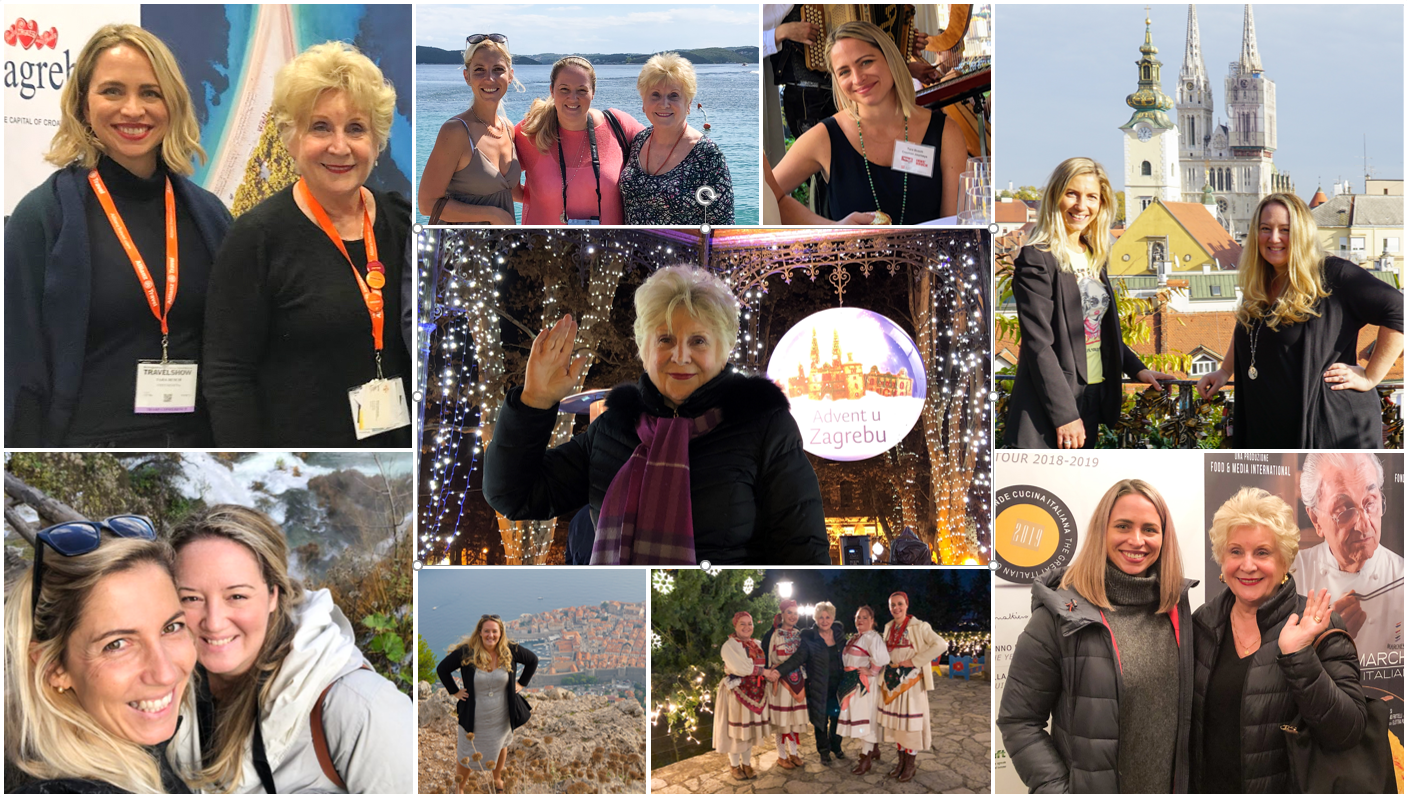
The all women team of Tasteful Croatian Journeys
A female owned and managed business, we are grateful for the blessings from which we benefit as a team of talented women.
An award-winning team of professional luxury travel advisers, and a unified team of women, collaborating, growing, and learning from each other every day as we tailor design travel experiences that are so often declared “Travel Experiences of a Life Time”.
Our travelers and our partners clearly benefit from the abundance of creativity coupled with our natural feminine traits of gentleness, empathy, sensitivity, caring sweetness, compassion and tolerance.
Today, as we enumerate and re-count our feminine blessings, we are careful to not overlook that we are a creative force of dedicated managers favorably blessed with strength, courage, independence, leadership and assertiveness.
As we complete this wonderful year, we remain grateful to all our extraordinary travelers, our service providers and partners, we are grateful for the lessons learned, and for the help and support received.
We wish you all a Kind and Happy Season of celebrations, may you always have the good fortune to be surrounded and be influenced by strong, smart, bold and gentle women.
It is our wish for you to always manage to be kind, patient and generous.
May 2020 be your special year filled with of happy rewards and personal successes.
Hotel Korcula De La Ville
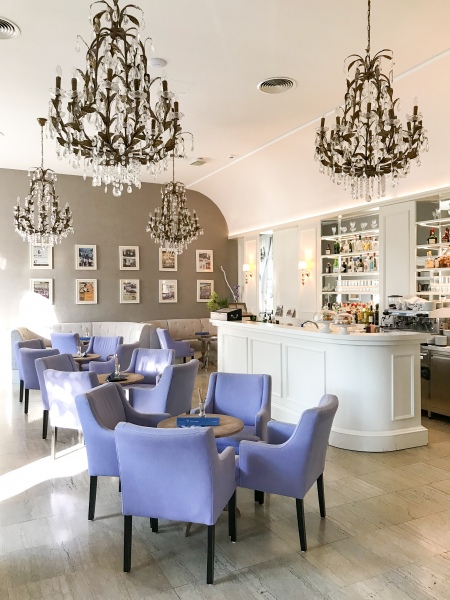
The Hotel De la Ville is a lovely boutique property within the heart of the picturesque Old Town of Korcula. A fantastic location near the seafront, excellent service from the warm and caring staff, and elegant style that speaks of a time of glamorous minimalism. It is easy to understand why the De la Ville’s guests list ranges from celebrities to members of Britain’s royal family, even the always elegant style icon Jacqueline Kennedy Onassis stayed at the Hotel De la Ville!
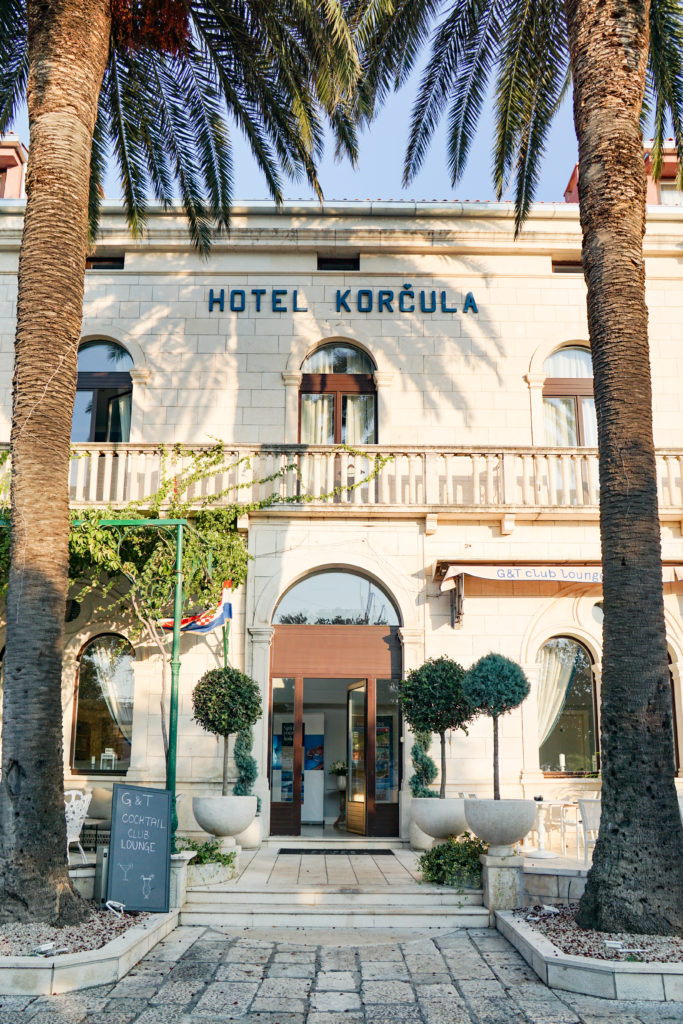
Welcome
Welcome to the Hotel De la Ville
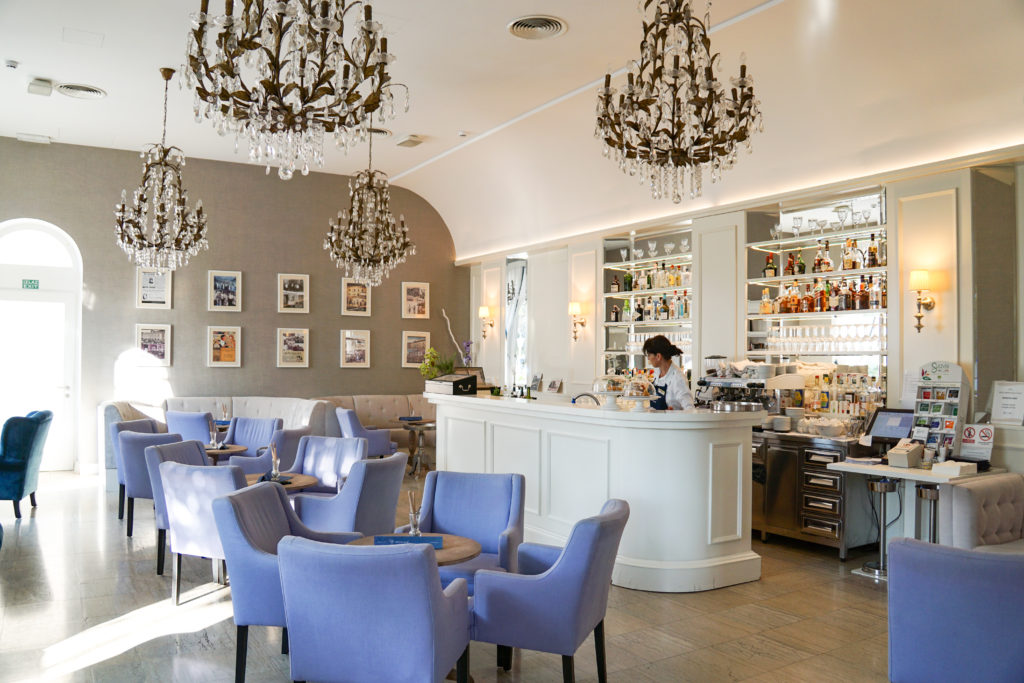
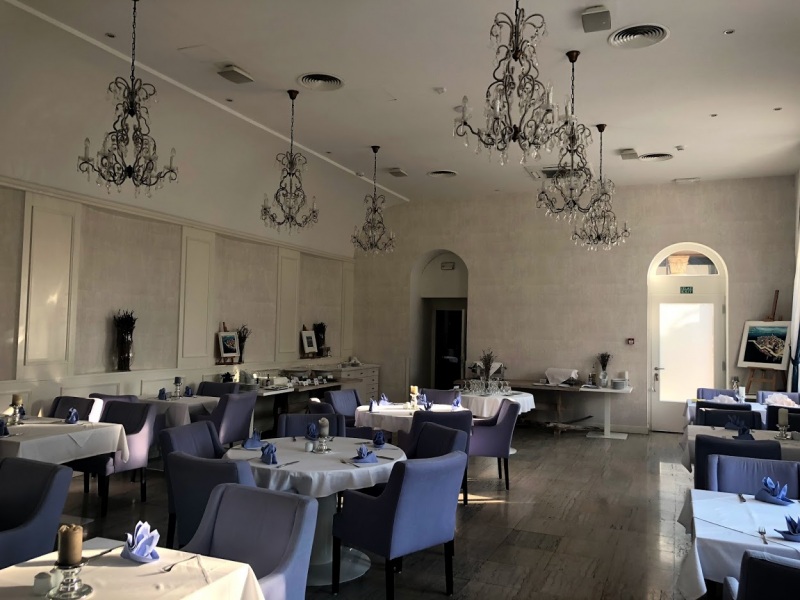
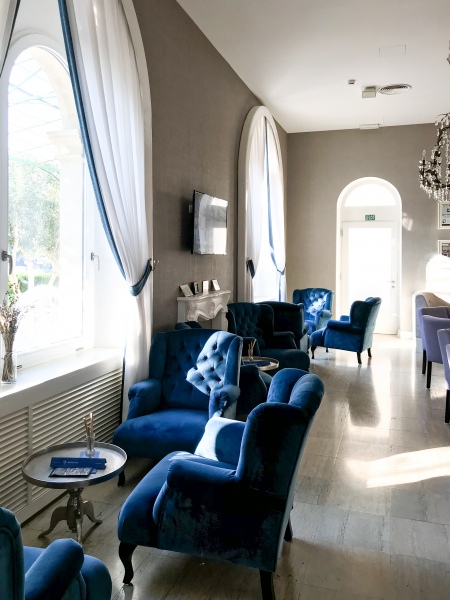
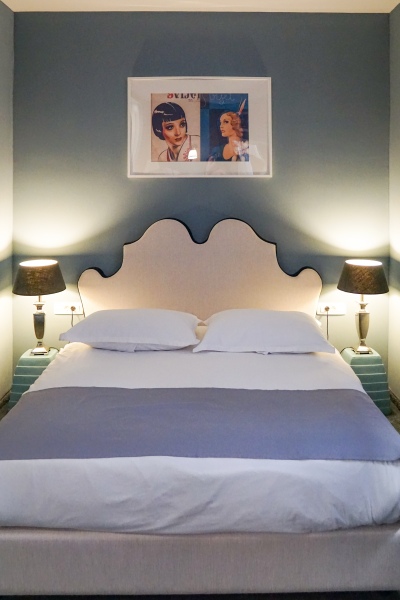
The oldest hotel in the town of Korcula, The Hotel De la Ville first opened in 1912, with its most recent renovations completing in 2015. The interior décor, with its color palette of soft purples and blues, mirrored bar, chandeliers, and vine covered terrace, speaks of la dolce vita – it is easy to feel transported to another age. The building retains its heritage, the rooms are not large, but are very comfortable, the property has only stairs, no elevator, but the fantastic staff will assure you are well cared for.
As with all our favorite properties, it is always about the people. The staff at the Hotel De la Ville exemplifies kind hospitality. The excellent team offers warm, attentive service and genuine kindness to each and every guest they welcome.
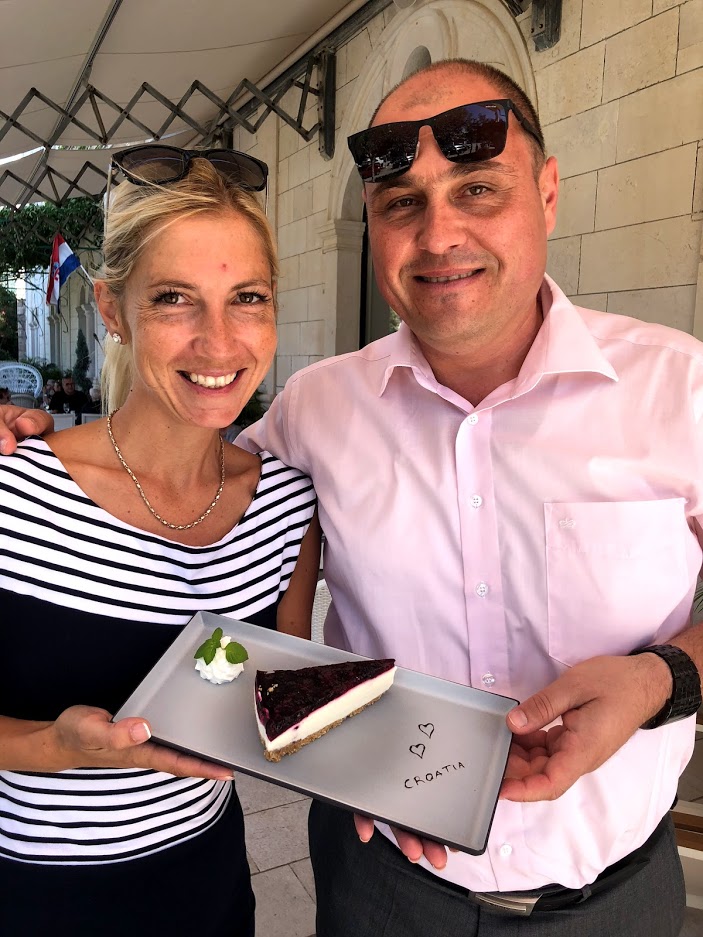
Mirela with General Manager Mladen Đeldum
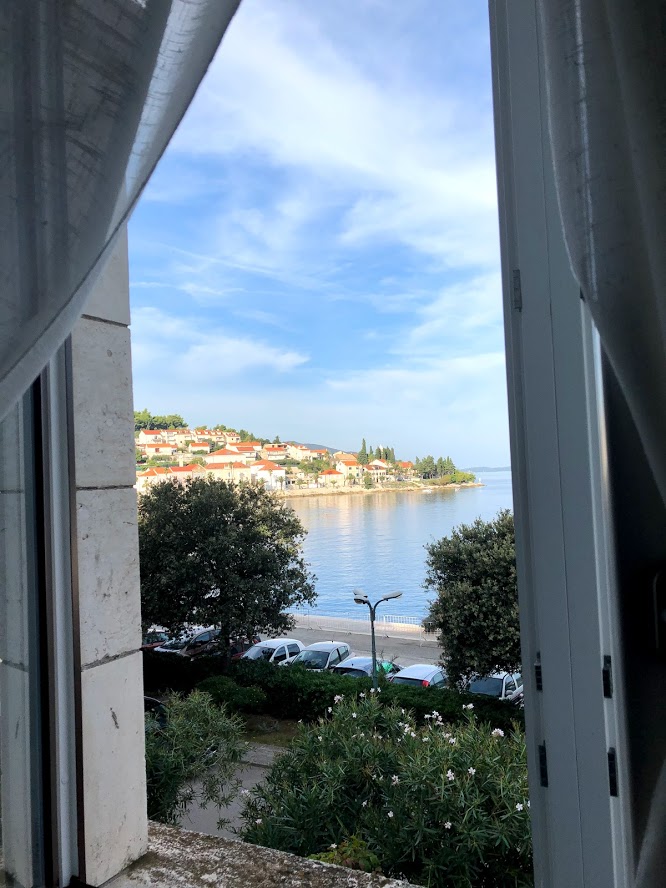
View from the Room
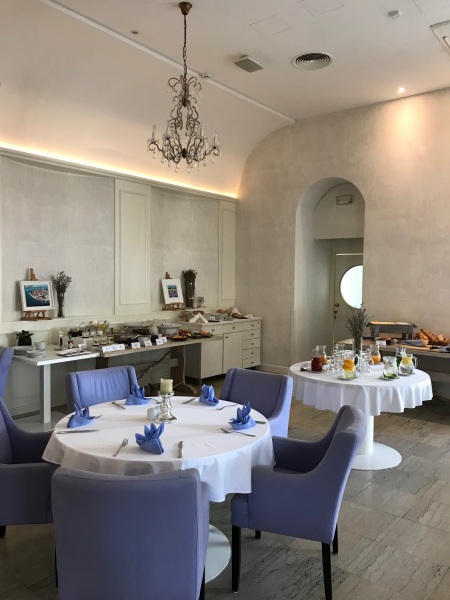
Of course we would be remis if we did not mention what is one of our favorite ways to begin the day, breakfast at The De la Ville! Tasteful Croatian Journeys Travel Designer, Tia loves their selection of freshly squeezed juices, paired with made to order eggs.
Take your breakfast in the main dining room, or outdoors while watching the ships come in.
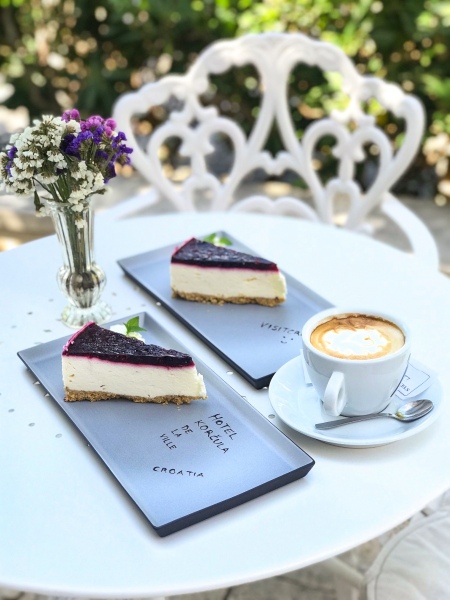
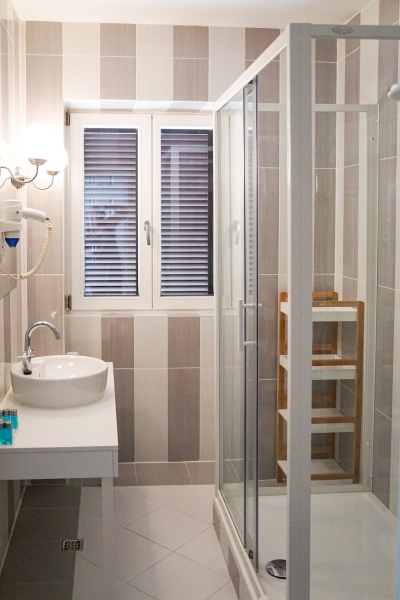
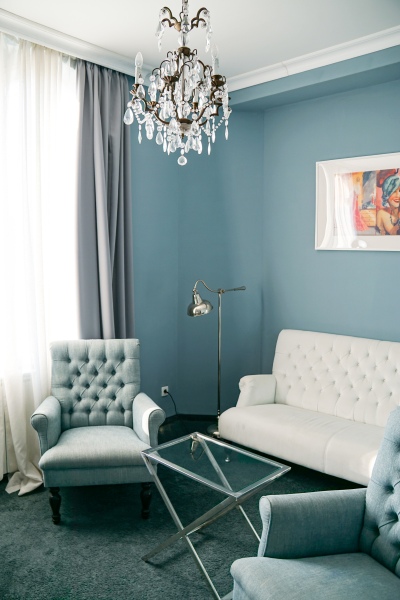
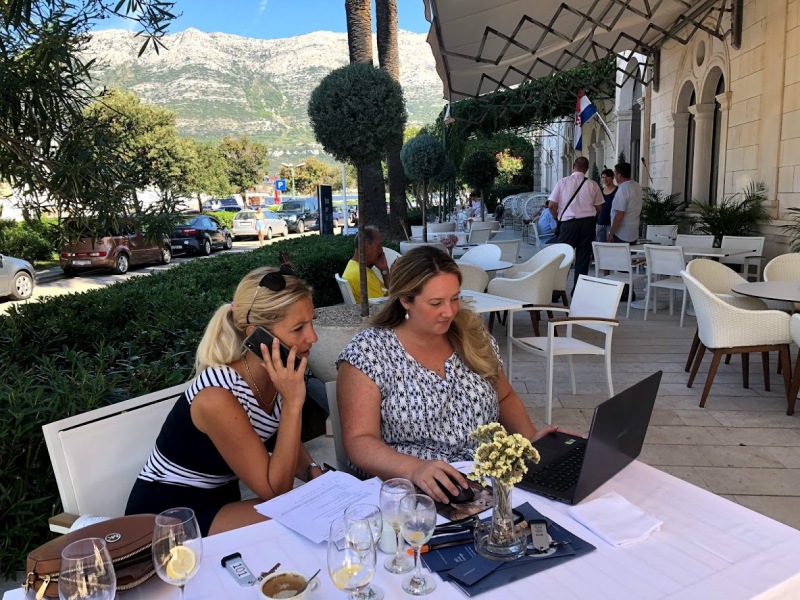
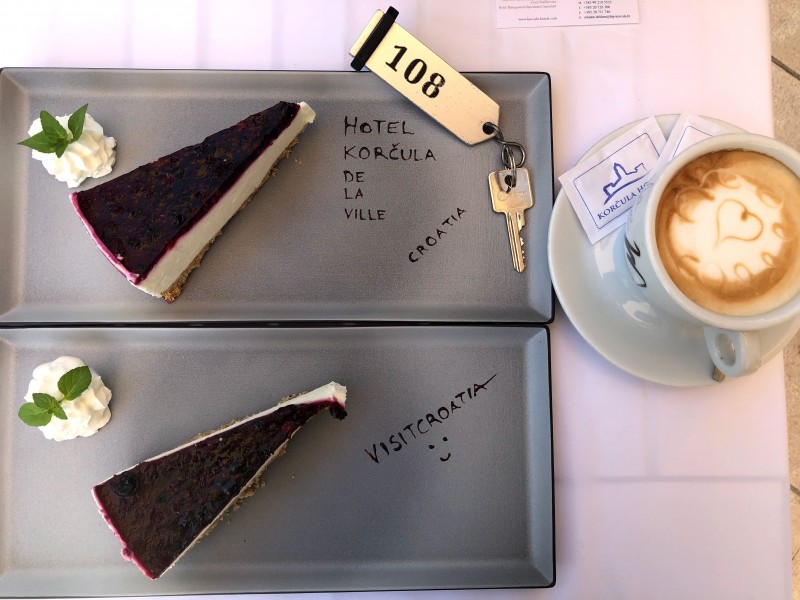
Within the heart of the picturesque Old Town of Korcula, the outdoor terrace is a unique feature of this property. Wanda recalls,
“the terrace is a popular place for the ‘local elders’ to meet and have coffee throughout the day, as they discuss happenings of the town. After a day of viewing, and exploring, when you are ready to slow down, the terrace is a nice place to take a break and enjoy a cold drink or cocktail and savor the spectacular sunset views.”
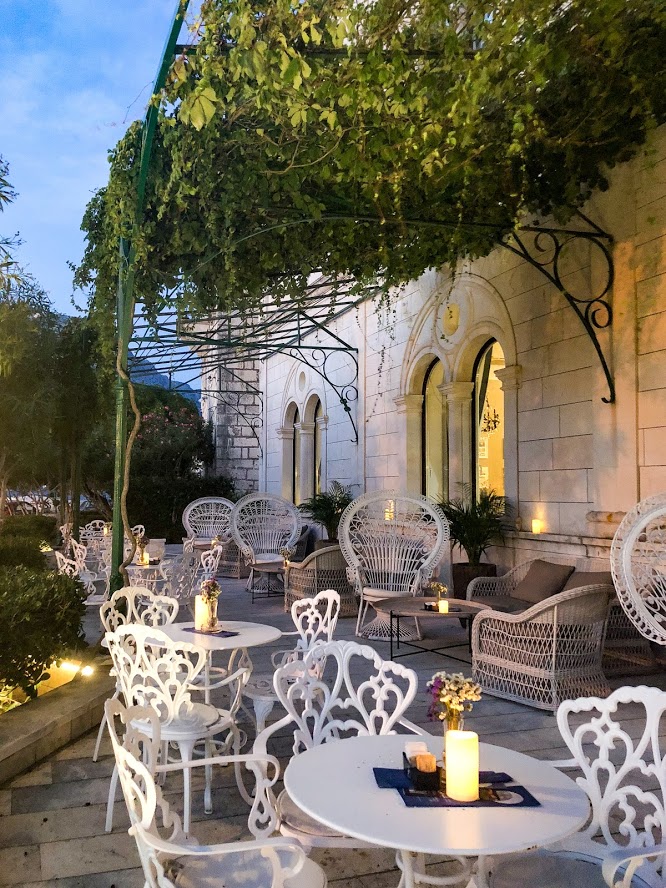
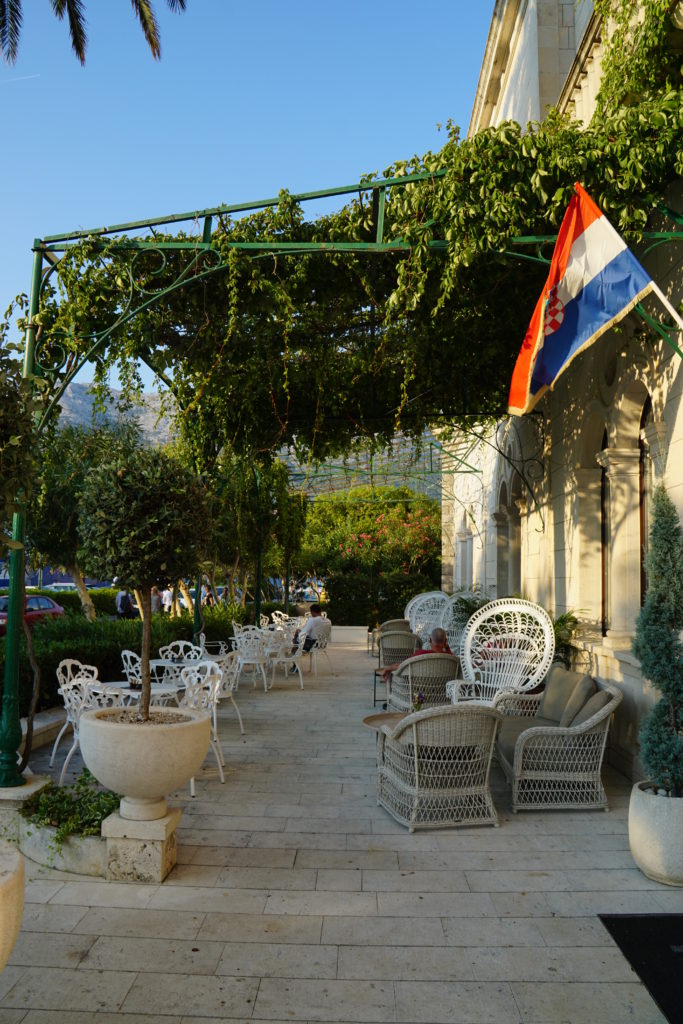
The G&T restaurant offers Dalmatian fare. Their Club Lounge offers a list of 17 different types of gins, plus gin-based cocktails, wine by the glass, chilled beers, herbal teas and coffee, served indoors or on the terrace in the center of Korcula town.

Mirela enjoying the terrace
About the Author:
Luxury Travel Designer and Destination Specialist, Tara Busch, has had a love of travel and an adventurous spirit since childhood. Tara’s background as a history and geography teacher, and avid world travel fueled her dream of pursuing a career in travel. Always seeking out authentic experiences, she enjoys spending time with locals, trying regional cuisine and slow travel.
The Palace Elisabeth, Hvar
The Palace Elisabeth embodies elegance, luxury, and classic Adriatic esthetic. A historical landmark on Hvar’s central square, she offers a one-of-a-kind experience on Croatia’s most coveted island. We invite you to experience the best of the best in Hvar!
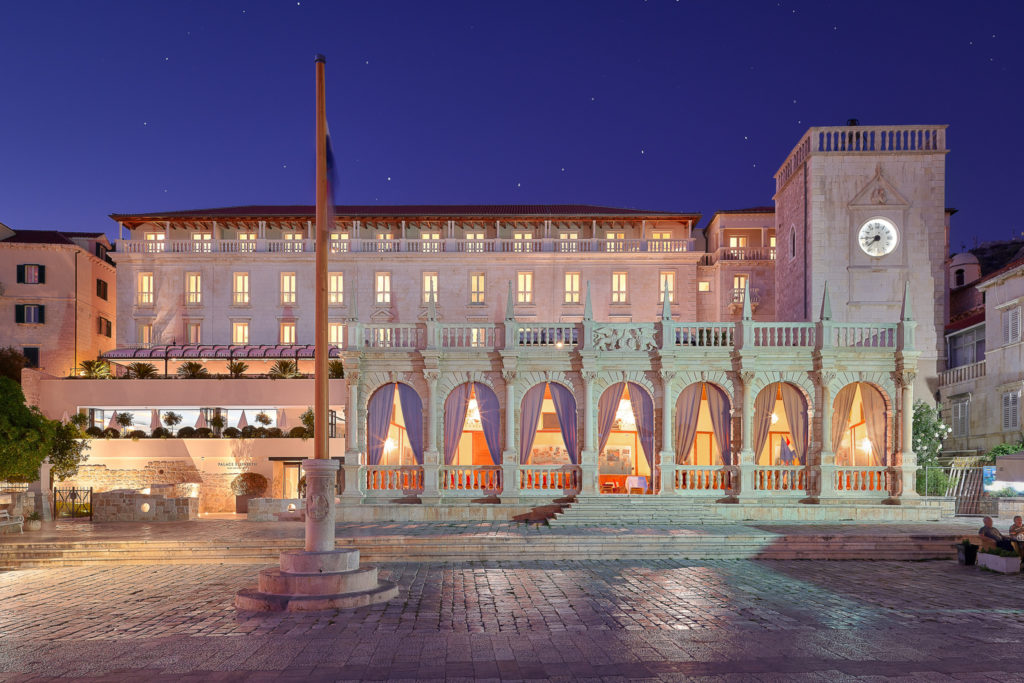
The Palace Elizabeth reopened late in the summer of 2019 after a total and complete renovation, to enter the scene as Hvar’s first five-star, full-service luxury property.
The location is perfectly central, in the heart of Hvar, on the main square overlooking the marina, and beyond that the adjacent islands and spectacular Adriatic Sea.
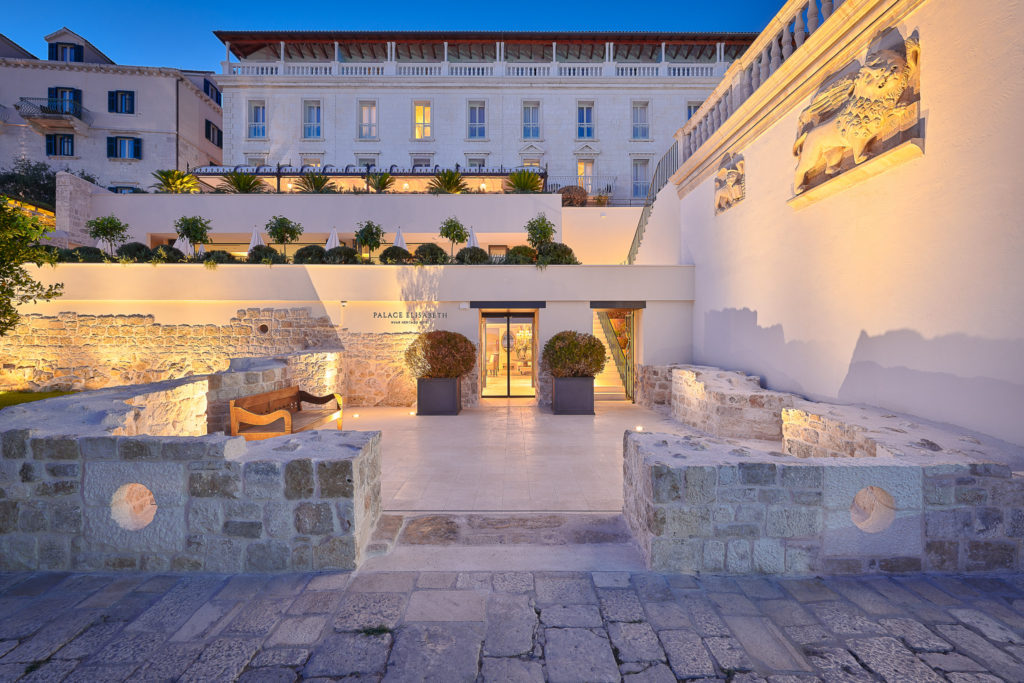
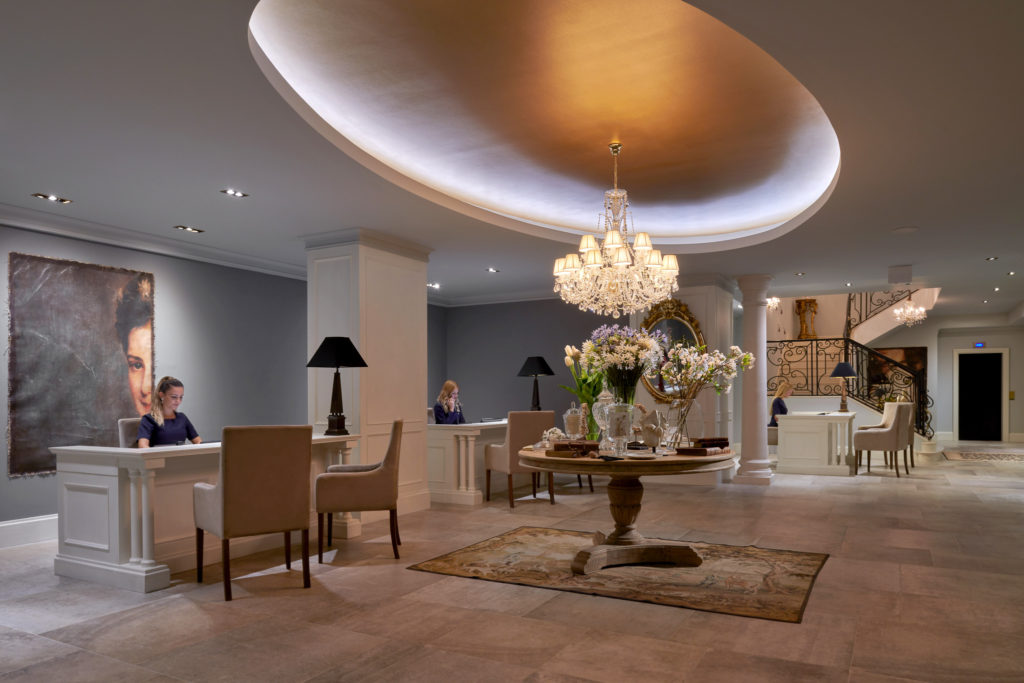
This is not simply a heritage property, but a historical landmark. The 45-room property occupies a late-19th-century building on the site of a 13th-century ducal residence.
The Palace Elisabeth has both Venetian and Austrian architectural elements, speaking to the history of Hvar, and Croatia.
The name, Palace Elisabeth, is an homage to a generous Austrian Empress Sisi, a patron of the hotel’s construction in 1899, when the Palace was rebuilt and opened under the name, Spa Hotel Empress Elisabeth.
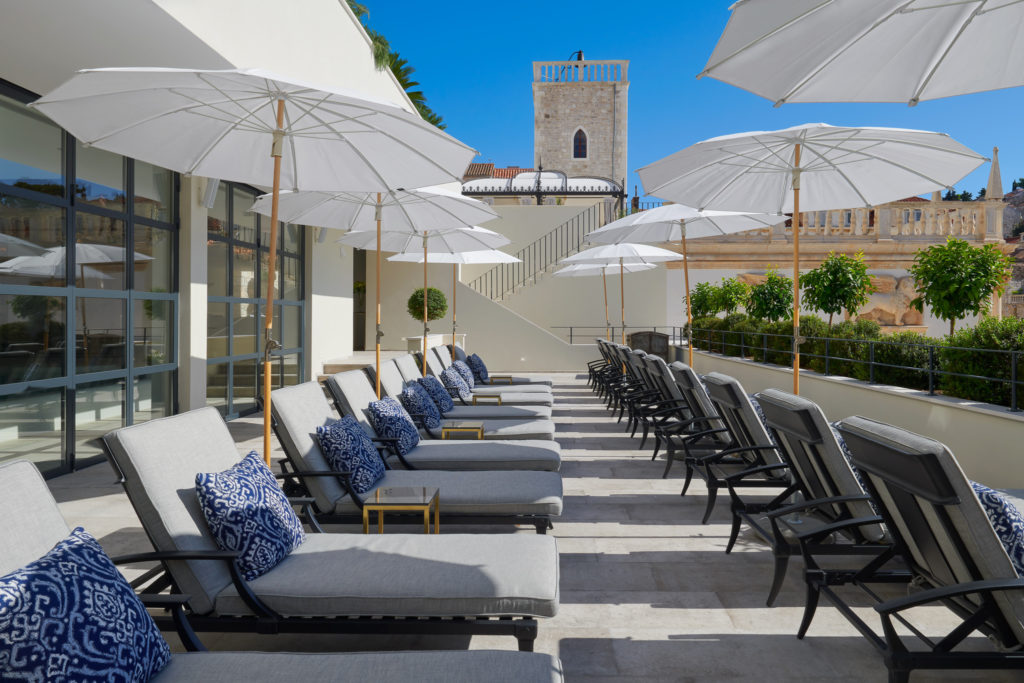
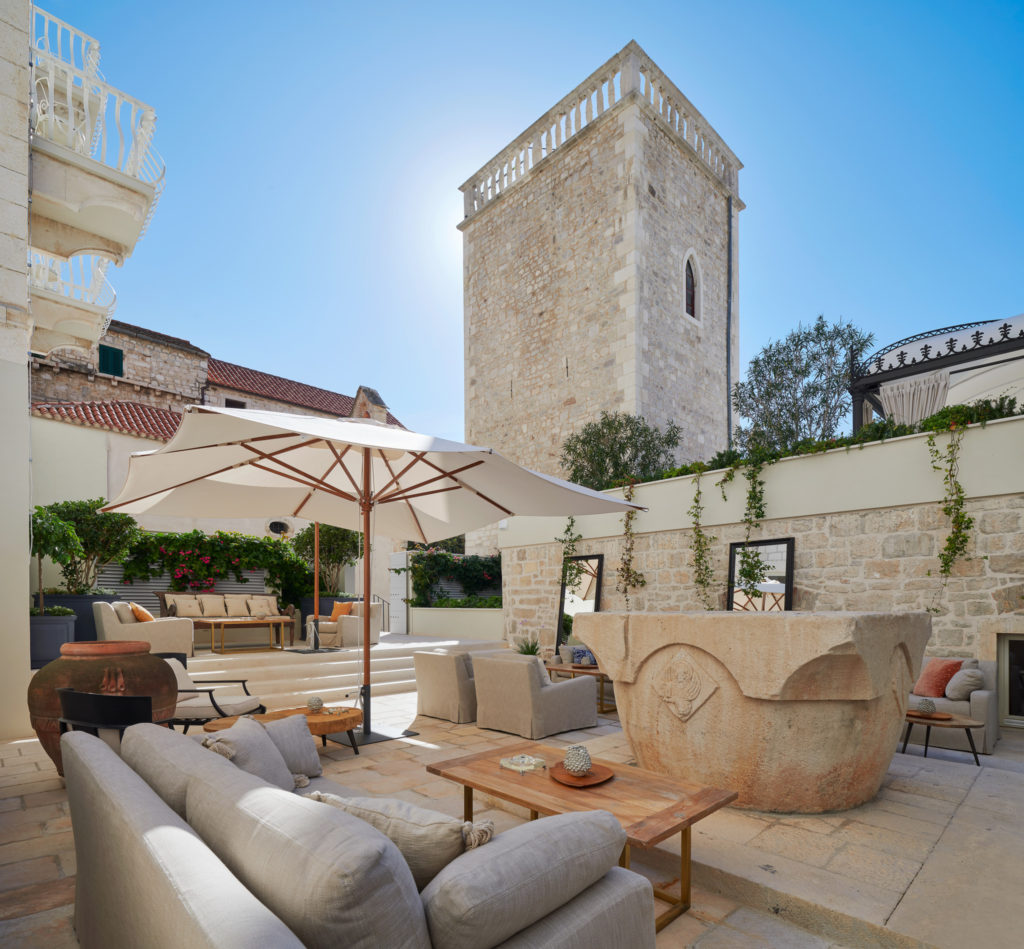
The luxurious rooms and suites are tastefully appointed, most feature balconies, and some have sea views.
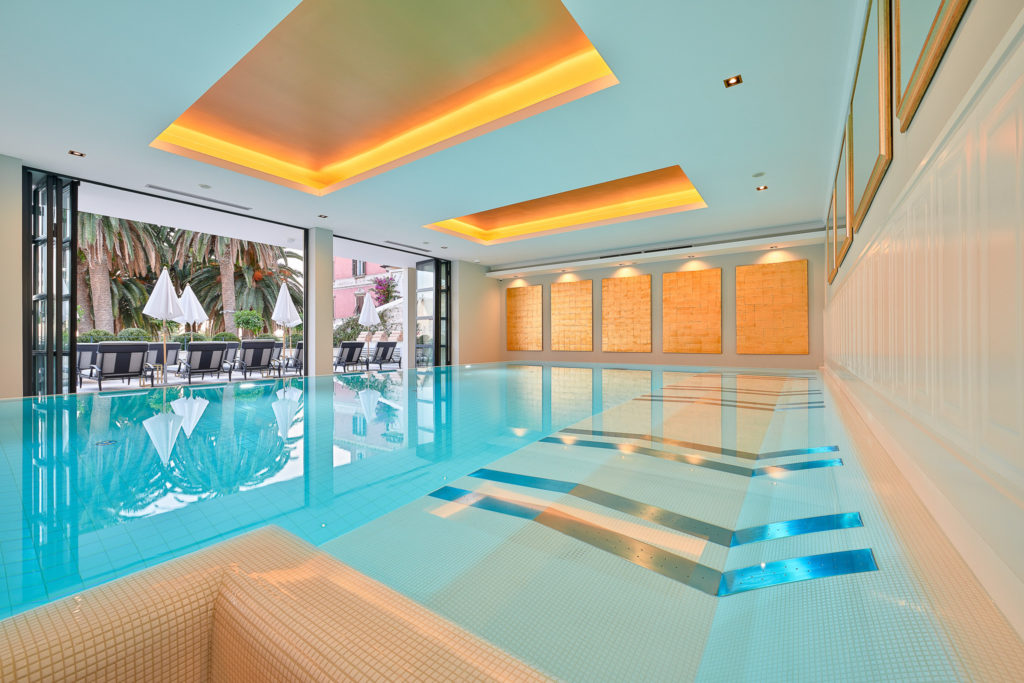
Unique features include an indoor swimming pool and a private outdoor courtyard pool, with a luxurious spa, each add to the tranquility of the experience.
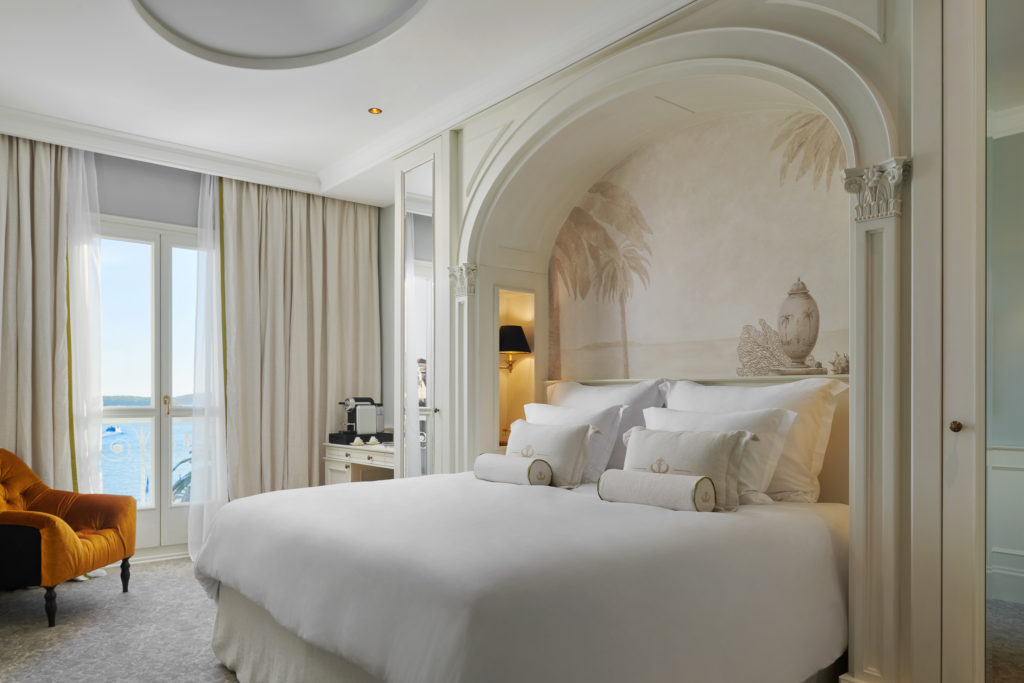
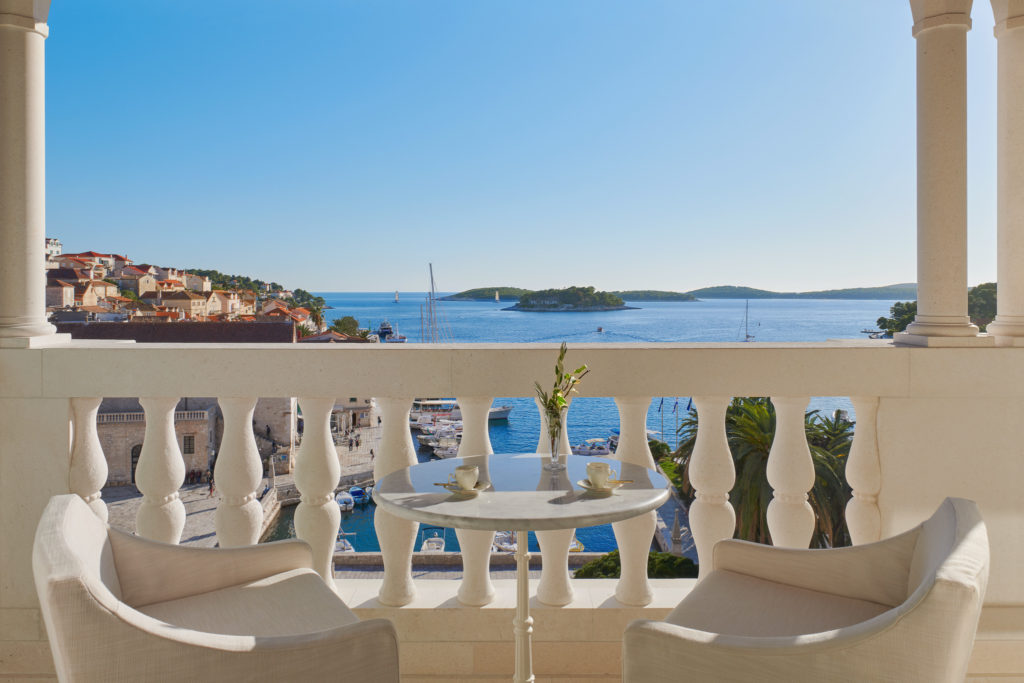
“I was there in July ‘19 when they were putting in place the finishing elements in preparation for the Grand Re-Opening in August. They have a great management team. We have been awaiting their reentry, and we expect this to be a true 5-star property for Hvar.”
Wanda
Experiencing the Palace Elizabeth is experiencing the best of the best in Hvar.
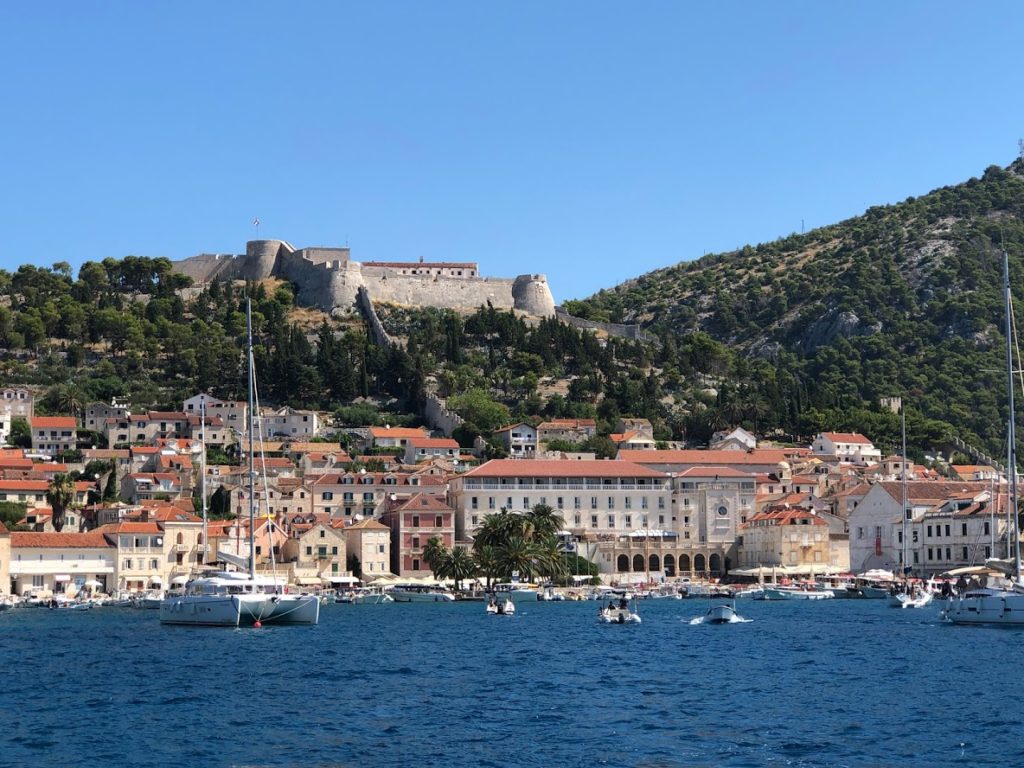
The Palace Elisabeth as we approach from the sea (July 2019)
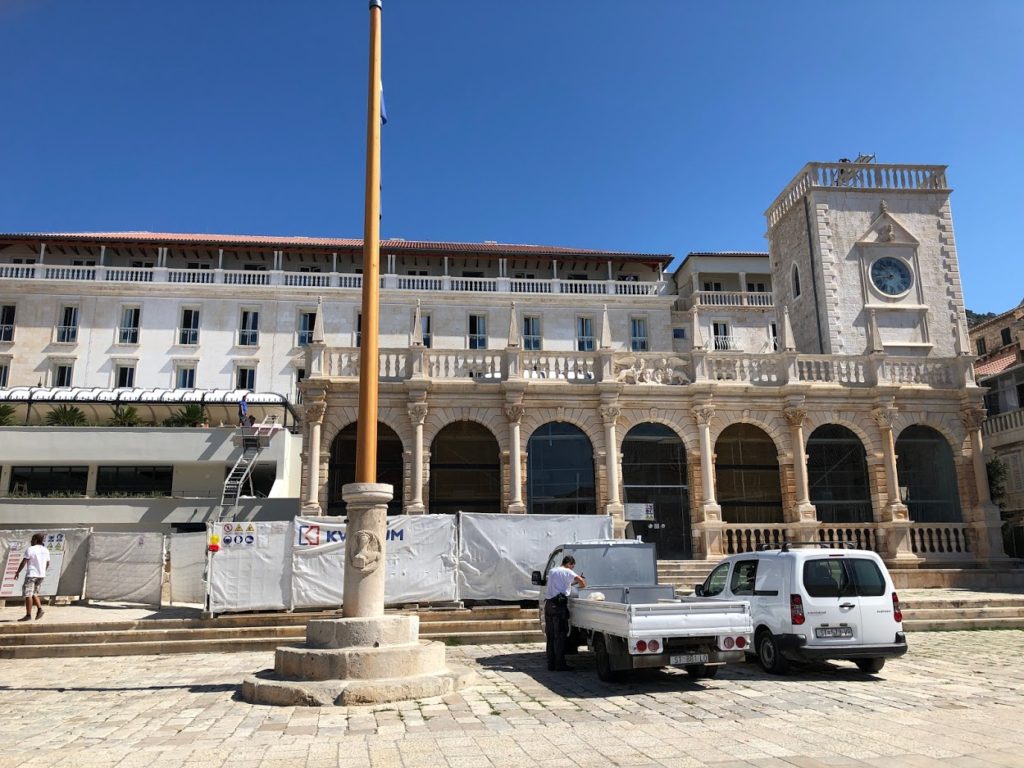
July 2019 prior to the Grand opening
About the Author:
Luxury Travel Designer and Destination Specialist, Tara Busch, has had a love of travel and an adventurous spirit since childhood. Tara’s background as a history and geography teacher, and avid world travel fueled her dream of pursuing a career in travel. Always seeking out authentic experiences, she enjoys spending time with locals, trying regional cuisine and slow travel.
A Local’s Guide to Christmas in Prague
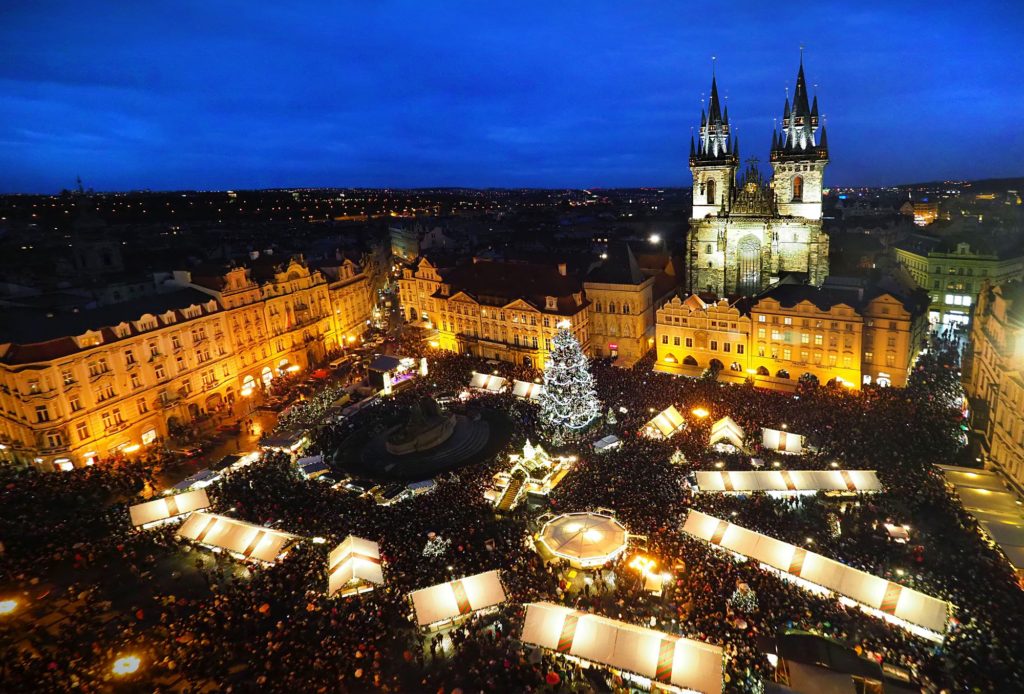
With fairytale castles, stunning medieval architecture, rich cultural traditions and a fascinating layered history, few cities can rival the allure or beauty of the Czech capital. Come Christmas, Prague’s compact city center is transformed into a winter wonderland, with vibrant Christmas markets scattered across the cobbled squares. The festivities are centered around Prague’s two main squares, Old Town Square and Wenceslas Square, which make the perfect jumping off point for seasonal shopping and snacking. Here to guide you to the best Prague has to offer is Tasteful Croatian Journeys’ Luxury Travel Designer, Tia Lovisa Moreira, who last April had the opportunity to travel to the Czech Republic on a Fam trip organized and hosted by the Czech National Tourist Board. Fam trips (Familiarization Trips) are educational trips organized exclusively for media or travel professionals to introduce specific regions and aid in building relationships and partnerships. On the trip, Tia accompanied Michaela Claudino, Director of CzechTourism in the USA, and a select group of North American travel specialists on a journey which began in Prague and went on to explore Western and Southern Bohemia. While there, she had the pleasure of meeting Irena Svejcarova, a local guide who has been living and working in Prague since 1995, and Helena Valtrova, the General and Sales Manager of the 5* Emblem Hotel in Prague. Today, they share their local insights and insider tips to Europe’s most magical holiday destination.

Tia: I have always loved Christmas in Europe. I find it to be a truly magical time of year. I lived in Munich, Germany for some time, and there was always a wonderful sense of anticipation when the holiday markets would open at the start of Advent. Living in Prague, what is your favorite thing about the start of the holiday season?
Michaela: Although I am from the Czech Republic, I have been living in NY for the past 20 years. I love going back to the Czech Republic , and especially during the holiday season because it is all about family, friends , pausing for a moment, and enjoying the wonderful Christmas atmosphere. I feel like people in the Czech Republic do slow down at the beginning of Advent, visit family , hang out with friends over a glass of a mulled wine, enjoy Christmas concerts, and are still respectful of traditions.
Helena: For me, it’s the festive season, the smell of the mulled wine everywhere, the Christmas carols, snow and magic in the air. The lighting of the Christmas tree on the first advent Saturday is when it really kicks off for me.
Irena: I love to meet my friends on Old town Square. I enjoy talking to them and sharing this special advent spirit while drinking mulled wine together.
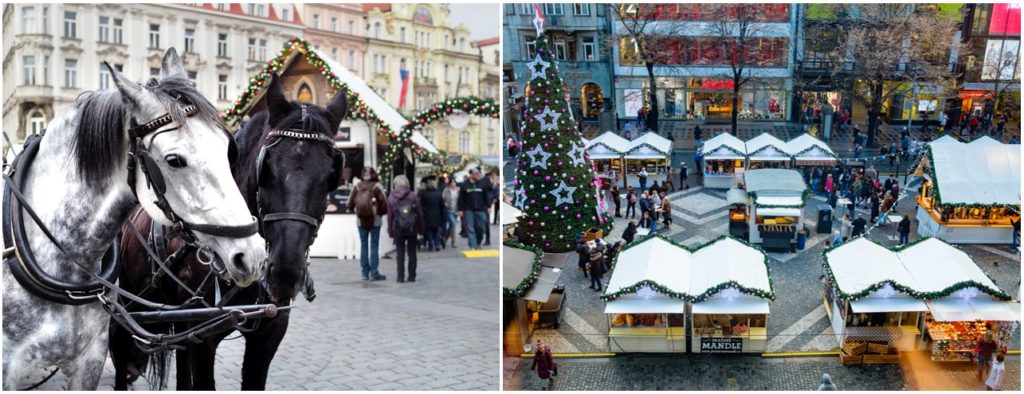
Tia: For our guests visiting Prague during Christmas, we of course know that the central Christmas Market is located in Old Town Square, but what is your favorite smaller and lesser known market in the city?
Irena: Nearly every smaller square in Prague organizes local small Christmas Markets – Lesser town, Prague castle, Náměstí Míru, etc.
Helena: Yes, there are literally markets on every square but the one that I like in particular is the one behind the St. Vitus Cathedral up on the Prague Castle – during the evening. It’s just magical with all the lights of the surrounding castle area.
Michaela: Another personal revelation- I am not from Prague , but from Brno – the second largest city in the Czech Republic, located in the eastern part of the country- called Moravia. Since you got some tips for Prague from my other colleagues, I can give you some tips for Brno. Brno was the first city in the Czech lands to erect a Christmas tree on its main square (96 years ago). Brno was again the first to introduce a system of returnable cups at Christmas markets. And only in Brno can you try the spiked cider drink, Turbomošt. The tree lighting ceremony really marks the beginning of the Advent and is worth attending. The main Christmas market is on the largest square, called the Freedom Square, and it also offers live performances every day, caroling and an impressive nativity scene carved from wood. There are however are two more Christmas markets in the city -one dedicated just to food and drinks. My favorite one is on the Cabbage Market (Zelný trh) and it offers a lot traditional handmade crafts and items.
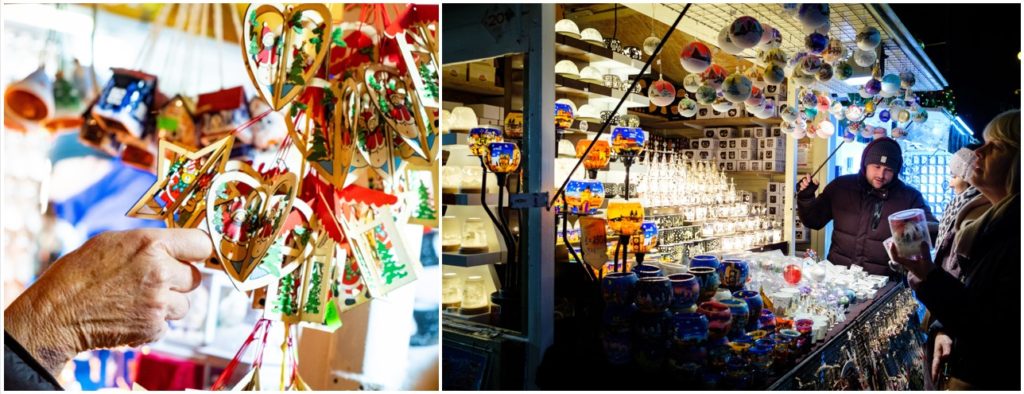
Tia: Christmas Markets offer such a wonderful variety of trinkets and treasures to be bought. What do you recommend for those searching for an authentic souvenir or gift? Is there anything in particular that is considered a truly “local” gift?
Helena: Honestly, this is the only down side of the Christmas Markets, as every year I find that it’s more about the food and less about the traditional gifts, let alone the authentic ones. Nevertheless, look out for usually a very small stall – sometimes it’s just a table and a chair – that has an older lady painting the glass Christmas tree decorations. They use the old method, usually the lady is dressed in traditional Czech national costume.
Michaela: I also always look for traditional Christmas ornaments. As you might know, Czech Republic is known for glass and jewelry production and many of the Christmas ornaments are exported worldwide. The production is not very large, many are made by local family businesses which makes it even more unique. My personal favorites are the handmade glass beads ornaments, made in a small village called Poniklá.
Irena: Me too. I usually search for some local hand-made decorations for my Christmas tree, something new and unique.
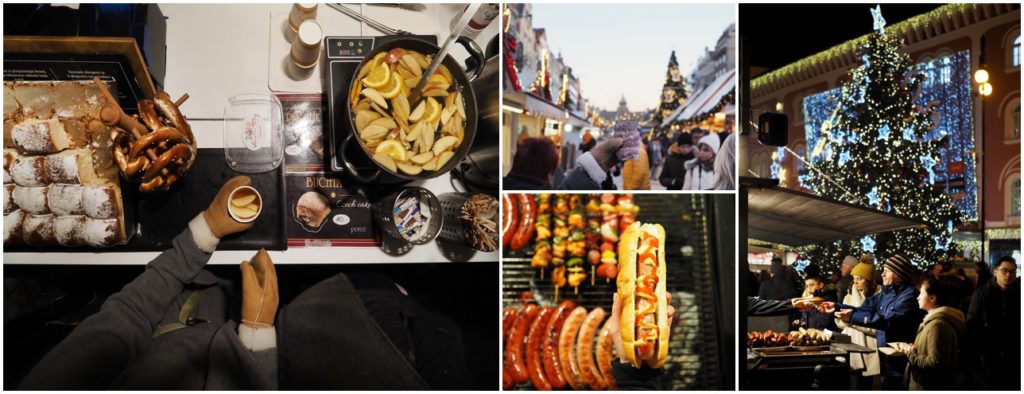
Tia: How about food? Do you have a favorite Christmas Market food or food stand? What should our travelers try while in the Czech Republic?
Irena: Every market offers nearly the same, such as “Trdelník,” a sweet traditional cinnamon roll, hot mulled wine, non-alcoholic drinks, and many local traditional meals like roasted pork, sausages, gnocchi with meat and cabbage, potato soup, cabbage soup etc.
Michaela: There are a few food and drink items every traveler must try : large chunks of delicious pork hams cooked on an open fire; tasty barbequed sausages; flatbread topped with garlic, cheese, and ketchup (langoš). There is also a variety of cakes and sweets to choose from such as spicy gingerbread (perníčky) or sweet dumplings (sladké knedlíky); and pancakes (palačinky). For drinks, you can sample the famous Czech beer, such as Pilsner Urquell, Staropramen or Budvar. Or opt for a hot drink: mulled wine (svařák); hot chocolate (horká čokoláda); honey wine (Medovina); or grog, a mixture of rum, water, lemon and sugar.
Helena: Your travelers need to try the mulled wine and the traditional Prague ham!

Tia: That all sounds delicious! Okay, last question… what one piece of advice do you offer our travelers visiting Prague during the holiday season?
Helena: Just enjoy the festive time but beware of pick pocketers and prepare yourself for big crowds. Find a local church and attend one of the holiday Christmas carol concerts.
Michaela: Yes, aside from sightseeing and shopping, don’t forget to include culture and visit one of the many concerts , theater performances or live outdoor performances. Dress up and enjoy the festive atmosphere!
Irena: I agree, at least once enjoy a Christmas concert in one of the local baroque churches. It has really outstanding atmosphere!
Interested in exploring Prague’s fairy-tale Christmas Market? Tasteful Croatian Journeys designs custom itineraries exploring some of Central Europe’s most beloved Christmas Markets. Contact us for more information.
All photos ©trhypraha.cz
The Best Authentic Souvenirs from German Christmas Markets
Planning to visit the colorful Christmas Markets of Central Europe this winter? Tasteful Croatian Journeys has got your guide to festive yuletide shopping. Luxury Travel Designer, Tia Lovisa Moreira, shares her curated list of the best traditional souvenirs from Germany – guaranteed to make a truly unique, inspired gift.
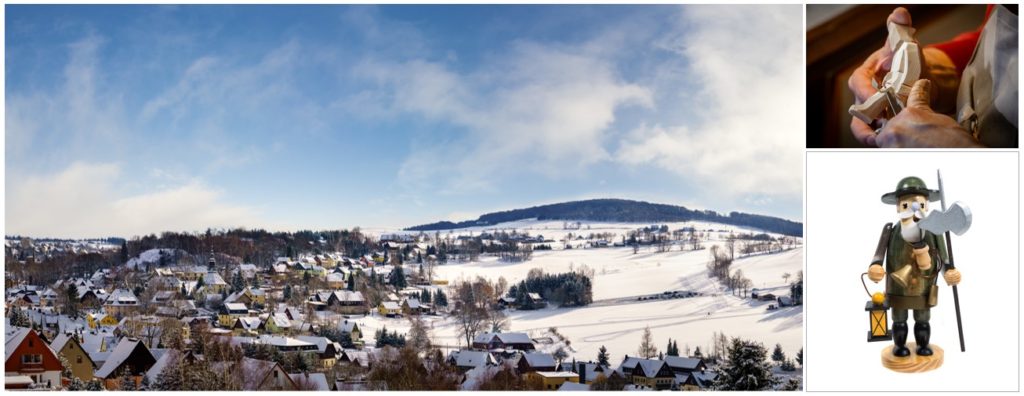
If you are searching for an old-fashioned Christmas – one of fairy lights and gingerbread and festively trimmed trees – look no farther than Germany. The country from which many of the world’s contemporary Christmas traditions originate is brimming with yuletide cheer come Advent. Here, centuries-old Christmas traditions are still very much alive today and even the handicrafts found in the country’s Christmas Markets honor its long and rich history, many of them originating in the Erzgebirge region.
A low, densely forested mountain range in Saxony, eastern Germany, the Erzgebirge region is the birthplace of many hand-carved wooden treasures. Known in English as the “Ore Mountains,” the area earned its name from iron, tin and silver ore that was once mined here. Largely uninhabited until the late middle ages, it was the discovery of these metals that attracted settlement here despite the harsh winter climate. From 1460 to 1560 the region was the most important source of silver ore in Europe, a designation which recently earned it a place on the UNESCO World Heritage list.
However, as the mining industry slowly declined, miners were forced to find other ways to support themselves and their families. Many turned to hobbies such as woodcarving and began creating wooden collectibles and other items to sell at local fairs and markets, many with mining motifs. This was a cottage industry in which the entire family was involved. Each family had a particular specialty – one making nutcrackers, another pyramids that spin in the heat of candles – all hand-painted and full of charm. By the late 1800’s, the Erzgebirge region of Germany was the largest Christmas item and toy supplier in the world.
Today, hand-carved wooden Christmas items and toys are still produced in the Erzgebirge region using the same time-honored methods as generations before, making the area and its products famous among collectors around the world.
For a truly authentic gift, these are the items to seek out…
Nussknacker | Nutcrackers
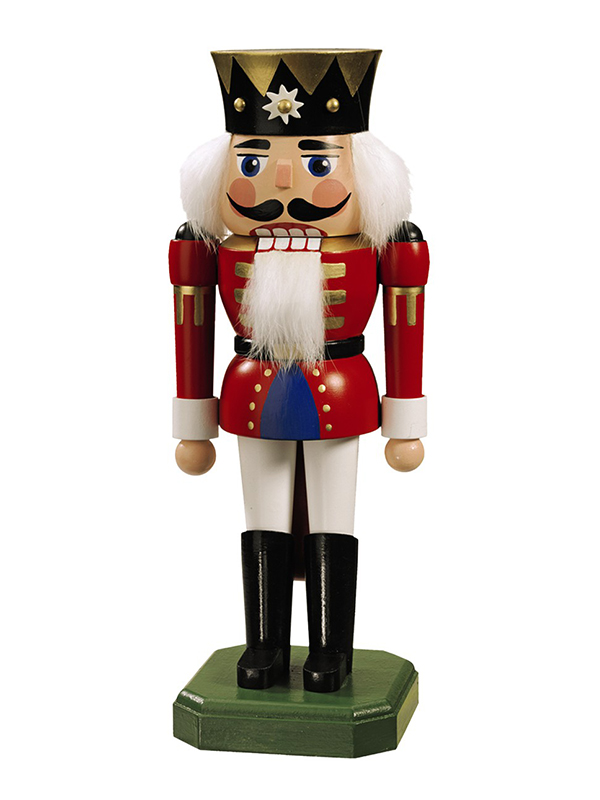
Perhaps the most well-known of traditional Erzgebirge items, the nutcracker as we know it today – a brightly painted figure resembling a toy soldier – was invented by Wilhelm Friedrich Füchtner some time around 1865. It is believed that he was inspired by the Heinrich Hoffmann story, “King Nutcracker and Poor Reinhold.” A form of satire, nutcrackers generally depict authority figures such as soldiers or kings. The nut which they crack is meant to represent the common people. The first nutcracker was made on a lathe from spruce wood, its eyes, moustache, and feet molded from bread dough; the beard and hair made of rabbit fur. Today, the Füchtner Family is still producing nutcrackers in their workshop in Seiffen. Another producer making unique, high quality Erzgebirge nutcrackers is Christian Ulbricht.
Räuchermänner | Smoking Men
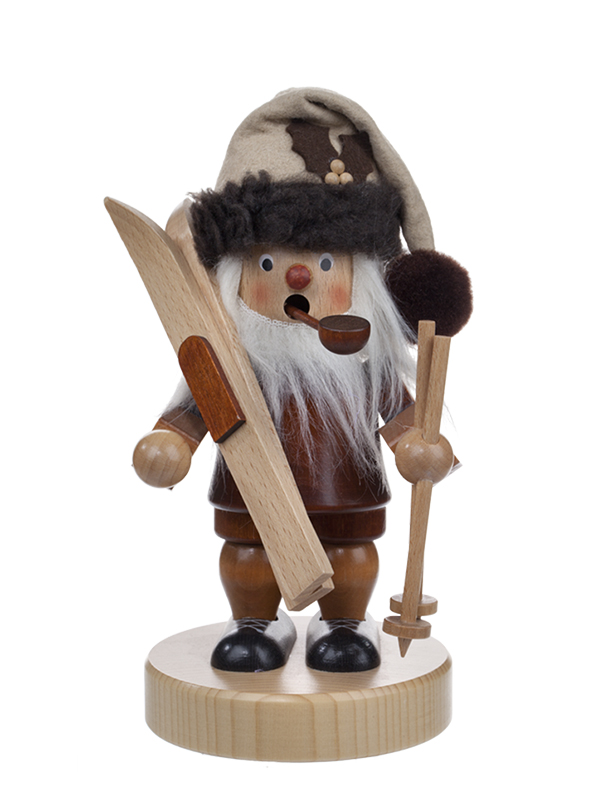
These charming wooden incense burners, commonly referred to as, “Smokers,” are carved in the shape of little men holding a tobacco pipe who puff smoke through their mouths. Unlike nutcrackers, who often depict authoritarian figures, smoking men traditionally resemble common folk such as miners, farmers, or tradespeople. Smoking men are made of two separate pieces which are placed on top of each other. The head and torso of the figures are turned on a lathe and the stomach hollowed out after. Inside, a räucherkerzchen (a small cone of incense) is burned, its smoke funneled through a channel which leads from the figure’s stomach to its mouth, giving the appearance that the man is smoking his pipe. The creation of smoking men is credited to Ferdinand Frohs and his nephew Gotthelf Friedrich Haustein. Today, a number of manufacturers produce them, including the Füchtner Family and Müller Family.
Weihnachtspyramiden | Christmas Pyramids
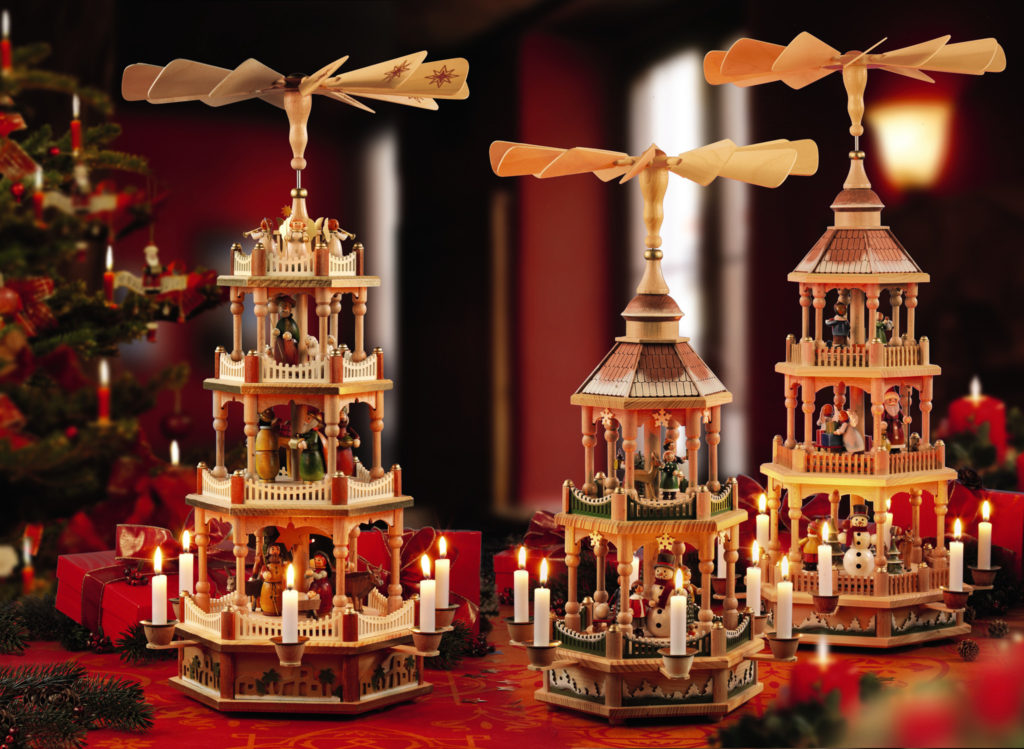
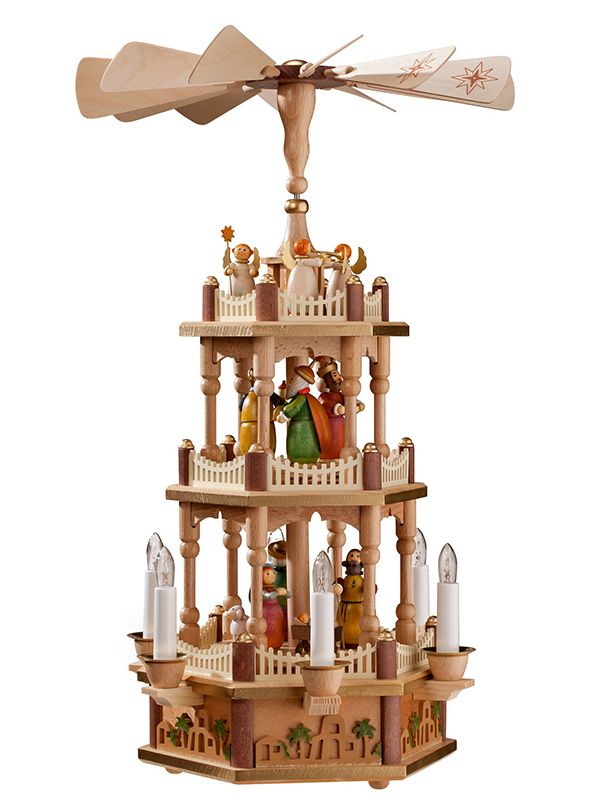
Beautifully ornate, Christmas pyramids, are delicate, tiered wooden carousels adorned with candles, which, when lit, generate hot air that turns a propeller at the top. The outer frame of the pyramid is typically decorated with nativity scenes or regional motifs. Until the turn of the 20th century, Christmas pyramids were only produced as individual pieces and passed down within families. However, as their popularity grew, so did commercial production, with the Holzwarenfabrik Carl Ludwig Flemming factory in Globenstein being the first to mass produce in 1902. Today, Christmas pyramids are available from many manufacturers in a wide range of sizes. One of the most significant producers is Richard Glässer.
Schwibbögen | Candle Arches
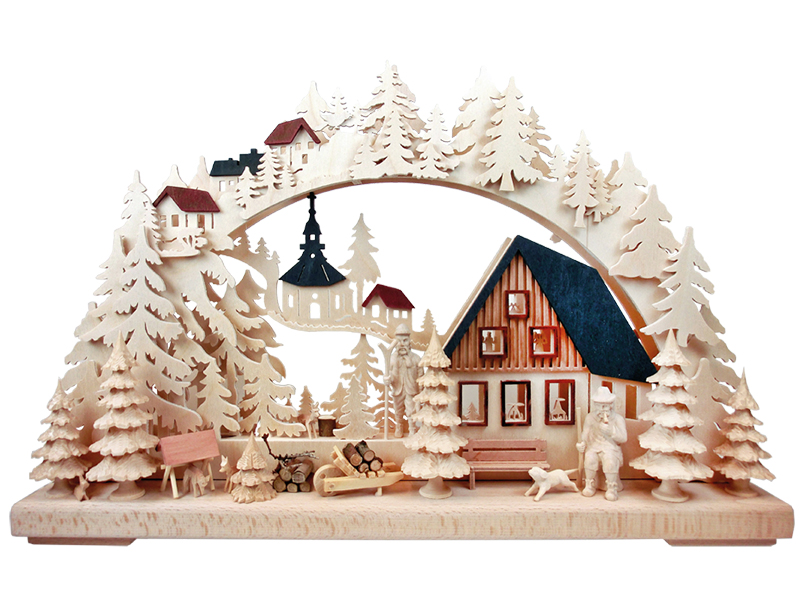
Perhaps the most symbolic of all Erzgebirge holiday decorations is the candle arch, whose history is closely tied to the region’s mining tradition. On Christmas Eve, the miners of Erzgebirge traditionally gathered and held a silent prayer around the mine lit by the flame of their pit lamps. After their final shift, they would hang their pit lamps outside the mine’s entrance. The hanging lamps formed a bright arch above the half-circle opening of the tunnel’s mouth. This arch is mimicked in the lighted arch of the Schwibbogen, which is an homage to the miners’ constant desire for light. The first Schwibbogen is likely to have been forged from metal by the mine’s blacksmith, Johann Teller, sometime around 1726 in Johanngeorgenstadt. Today, they are also manufactured from wood and produced by numerous Erzgebirge workshops. Among the producers are the Müller Family and RATAGS Holzdesign.
Spieldosen | Music Boxes
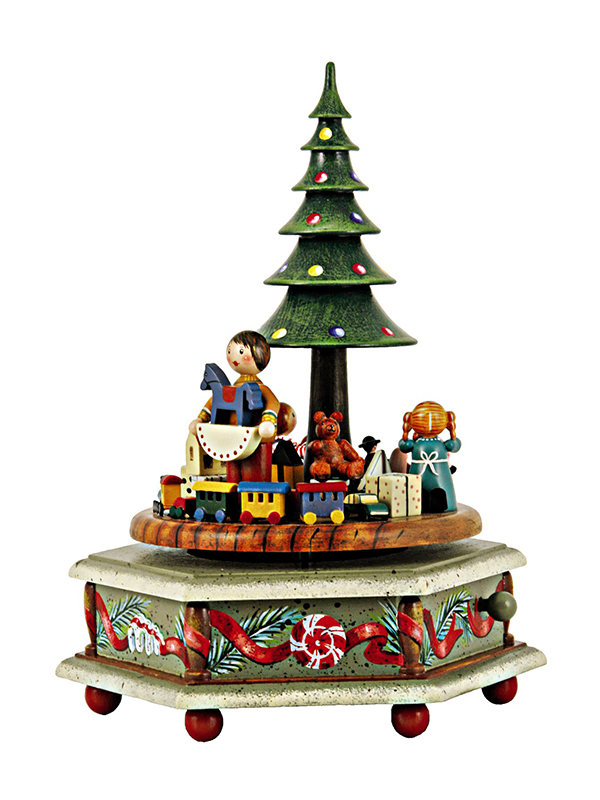
Erzgebirge music boxes have been a popular gift item for over a century, inspired by the musical pocket watch invented by Swiss clockmaker, Antoine Favre-Salomon, in 1796. Carved by hand, the first music boxes were beautiful but limited in their ability to produce a range of tones. Today, more advanced mechanical elements inside allow them to play clearly audible melodies. Erzgebirge music boxes are particularly well made, crafted by hand and normally depicting scenes of Christmas carolers, angels, or the birth of Christ. Well known producers of Erzgebirge music boxes include Wendt & Kühn and Kunstgewerbe-Werkstätten Olbernhau (KWO).
Holz-Figuren | Wooden Figurines
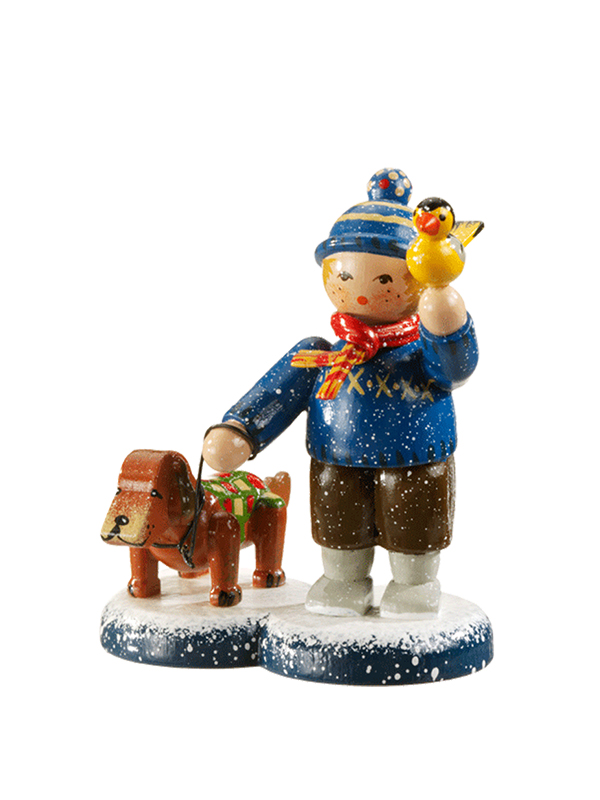
A variety of handmade wooden figurines are produced in Erzgebirge, both as toys and for decorative purposes. Nearly every workshop produces their own unique style. Among the most well-known are Richard Glässer’s exquisite nativity scenes, KWO’s exclusive Mozart Orchestra and the rosy cheeked angels of Wendt & Kühn, who are easily recognized by their signature green wings with white polka dots. Reifentiere (ring-turned toys), which were invented in Seiffen around 1800, are a particularly special type of wooden figurine. Named for their production method, the figures are formed from a wooden ring, shaped on a lathe so that the grooves create the silhouette of an animal. The ring is then sliced crossways creating a crude outline of the animal which is later refined and painted. The website of manufacturer Werner Reifentiere contains wonderful videos demonstrating the process.
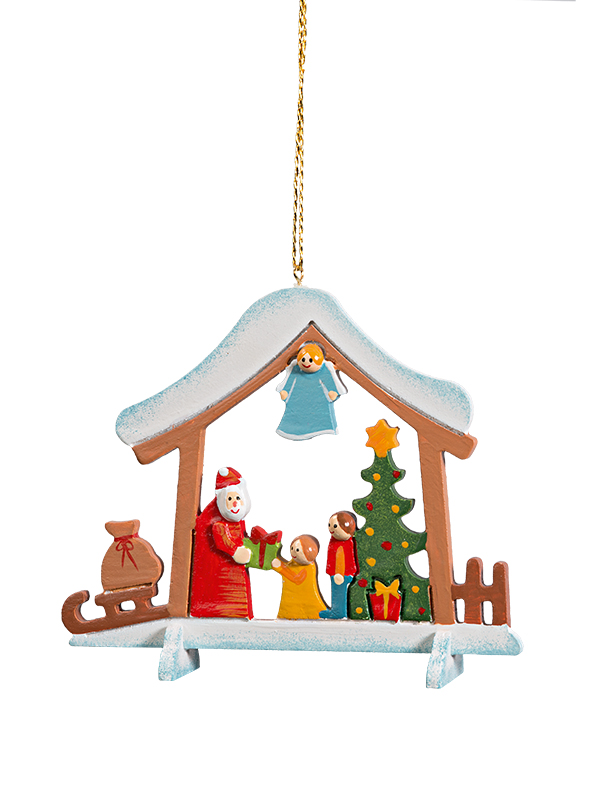
Baumschmuck aus Holz | Wooden Tree Ornaments
The tradition of decorating Christmas trees originated in Germany, where evergreens were first brought inside in the early 1600s and adorned with fruits, nuts, gingerbread, candles, and paper flowers to symbolize the promise of spring to come. Christmas tree decorations gradually became more varied as a result of the tradition becoming more widespread, growing to include ornaments made of cotton wool, pewter, and glass. The workshops of the Erzgebirge region produce wonderful, whimsical wooden ornaments portraying a variety of scenes. Christian Ulbricht offers a wonderful selection to choose from, while the brightly colored decorations by Graupner are especially playful.
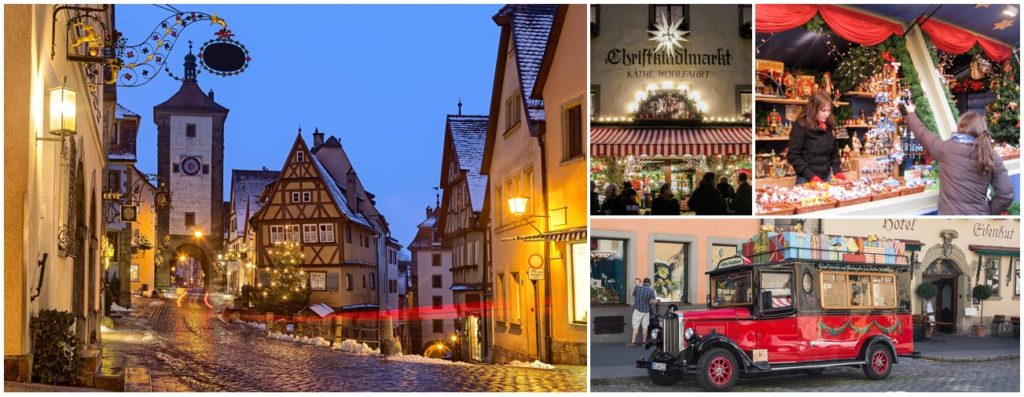
Where to Shop
The handcrafted wooden Christmas ornaments and toys outlined above are produced throughout the Erzgebirge region with many of the workshops having boutiques or showrooms in the town of Seiffen, roughly 50 miles from Dresden. These wooden crafts can also be found at Christmas Markets across Germany and Austria, as well as in many specialty stores.
For the largest selection of Christmas décor, including the specific items pictured above, visit Käthe Wohlfahrt. This family run business has become a worldwide ambassador of German Christmas traditions. Their flagship store and Christmas Village are located in picturesque Rothenburg ob der Tauber, offering more than 30,000 decorations from Erzgebirge and beyond, including their signature line from the Käthe Wohlfahrt Rothenburg Christmas Workshop. In addition to the Christmas shops, Käthe Wohlfahrt’s Deutsches Weihnachtsmuseum (German Christmas Museum) features a permanent exhibition displaying Christmas ornaments and memorabilia from between 1870 and 1950 – a delightful stop for those looking to learn more about German Christmas traditions.
Rothenburg ob der Tauber can be easily visited on a day excursion from Munich.
Not traveling to Germany this year? Fear not. Käthe Wohlfahrt offers international shipping so that you can have a little piece of Christmas delivered directly to you.
Interested in exploring Europe’s fairy-tale Christmas Markets? Tasteful Croatian Journeys designs custom itineraries exploring some of Central Europe’s most beloved markets. Contact us for more information.
Item photos ©Käthe Wohlfahrt
Krampus: the Christmas Devil of Alpine Folklore
For more than 30 years, Tasteful Croatian Journeys has been creating immersive, experience-based trips, designed to encourage meaningful engagement with local people and culture. We believe that travel is most enriching when it connects us to people and allows us to witness and engage in local customs, learning about regional traditions that would have otherwise remained unknown.
The folklore surrounding Christmas characters and traditions of Central Europe and the Alpine region have long been an interest of Tasteful Croatian Journeys Luxury Travel Designer, Tia Lovisa Moreira, who spent close to a decade living abroad in Munich, Germany. Here she shares the fascinating story of Krampus, the devilish counterpart of the good St. Nicholas.
Every year in early December, children in Germany and Austria anxiously prepare for a visit from St. Nicholas. Those who were good will be rewarded with presents and treats, but those who misbehaved will face his menacing partner, Krampus, the devilish figure who beats naughty children and drags them off to hell!
First Things First: Who is Saint Nicholas?
Neither fat, nor jolly, nor born in the north pole, the real-life St. Nicholas was a Greek born bishop in the late third century, who served in Myra, a small Roman town in what is now modern-day Turkey. Known for his wealth and generosity, he developed a reputation for helping people in need.
Of his many charitable acts, most famous is the story of how he helped a poor man with three daughters. Without money for their dowries, the girls would be unable to get married, and therefore were doomed to a life of prostitution or slavery. Legend has it that one night, Nicholas secretly dropped a bag of gold down the man’s chimney into his house, where it landed in a stocking that had been hung by the fire to dry. This served as dowry for the oldest daughter. Later, a second bag of gold came down the chimney, saving the middle daughter. Finally, the man was so determined to find out who had given him the money, that he hid by the chimney every evening waiting for the gold that would undoubtedly come to save his youngest daughter; finally he caught Nicholas. Though Nicholas begged the man not to reveal his identity, word eventually got out and any time someone received a secret gift, they believed it was from the good bishop.
Many true stories of Saint Nicholas’ good deeds are now so mixed with legend that it’s difficult to separate fact from fiction. However, what is known of the saint is that he was a fierce defender of church doctrine during the Great Persecution in 303, when Bibles were burned and priests were forced to renounce Christianity or face execution. Defiant, he spent several years in prison before Roman emperor Constantine ended the Christian persecution in 313. Nicholas also earned fame for his association with several miracles. In sainthood, he is the protector of many types of people, from orphans to sailors to prisoners.
Today, St. Nicholas’ Day is celebrated in his honor on December 6, the anniversary of his death in the mid fourth century. On this day, children in Central Europe hang stockings or put out their shoes hoping for a gift from the generous saint.
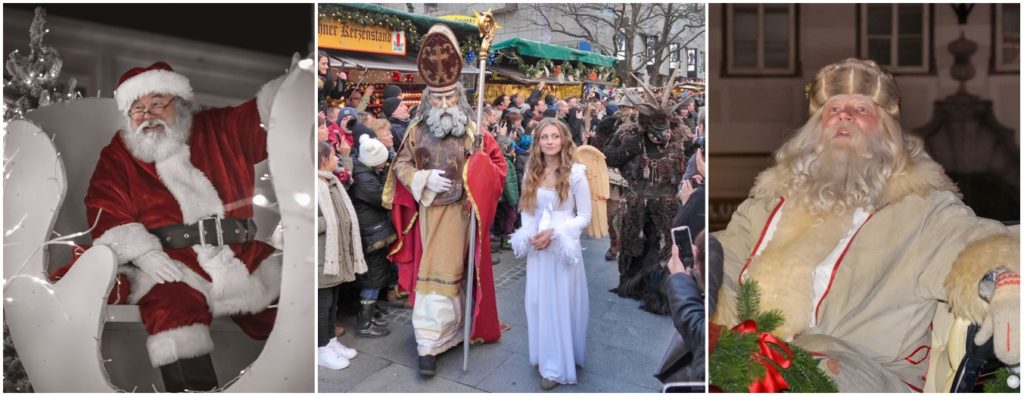
Is Saint Nicholas the same as Santa Claus?
Not exactly. Santa Claus is an American invention, an amalgamation of European history and tradition and American storytelling; the result of European immigrants (primarily of Dutch, British, and German origin) sharing their customs and traditions and blending them in the melting pot of 19th century America. The American image of Santa Claus comes primarily from the poem, “A Visit from St. Nicholas” by Clement Clark Moore which describes Saint Nicholas as a “jolly old elf” dressed all in fur, with a round belly, white beard, and rosy cheeks. That poem was the inspiration for artist Haddon Sundblom who created the modern image of Santa for Coca Cola’s 1931 “Thirst Knows No Season” advertising campaign. This newly depicted vision St. Nicholas laid the foundation for our present-day Santa Claus.
The name Santa Claus evolved from the Dutch nickname for Saint Nicholas, Sinterklaas, a shortened form of Sint Nikolaas (Saint Nicholas). Santa’s nickname, Kris Kringle, can be traced back to the German Kristkindl or Chirstkindl, which translates directly to Christ Child. In Germany, the Christ Child is a gift bearing angel, the spirit of Christmas, who delivers presents on Christmas. This tradition was made popular by protestant reformer Martin Luther in the 16th century. In general, as Protestantism flourished, Catholic traditions such as Saints’ Days declined, thus boosting the popularity of gift-giving alternatives to St. Nicholas, such as Santa Claus.
Other alternatives to St. Nicholas include Grandfather Frost, known in Slovenian as Dedek Mraz. Grandfather Frost, also referred to as Grandfather Cold, originated from the pagan culture of the Eastern Slavs, and was introduced to Yugoslavia by Russian communist society as a secular alternative to western beliefs. Grandfather Frost is frequently depicted as a slim man wearing a long white coat and brown furry Russian kučma hat. He hands out gifts at gatherings on New Year’s Eve. But, be careful not to confuse the Eastern European Grandfather Frost with British Father Christmas, who originated as a pagan bringer of spring. Influenced first by a Viking invasion, and later by a Norman invasion, Father Christmas shares many of the characteristics of other European Christmas characters. He is portrayed as an old man, with a long white beard and a blue hooded cloak who gives gifts to good children.
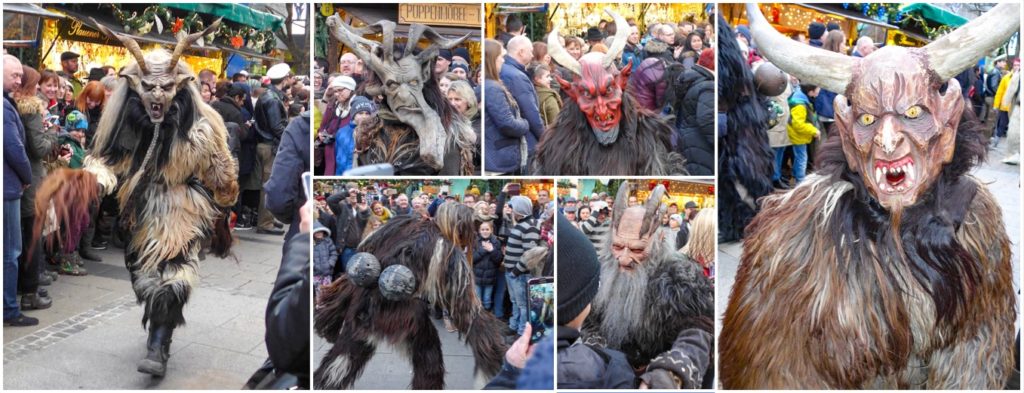
Krampus: the Christmas Devil of Austrian Folklore
So how does Krampus fit into this equation? In central European tradition, St. Nicholas is traditionally accompanied by an evil, or at least mischievous, partner. St. Nicholas bestows gifts to well behaved children, while his companion doles out punishment to those that were naughty. Through most of Germany, St. Nicholas is assisted by a character named Knecht Ruprecht, in Switzerland by Schmutzli, in France and Luxembourg by Père Fouettard, in the Netherlands by Zwarte Piet, and in Slovenia by Parkelj. In Southern Germany and Austria, St. Nicholas’ counterpart is Krampus.
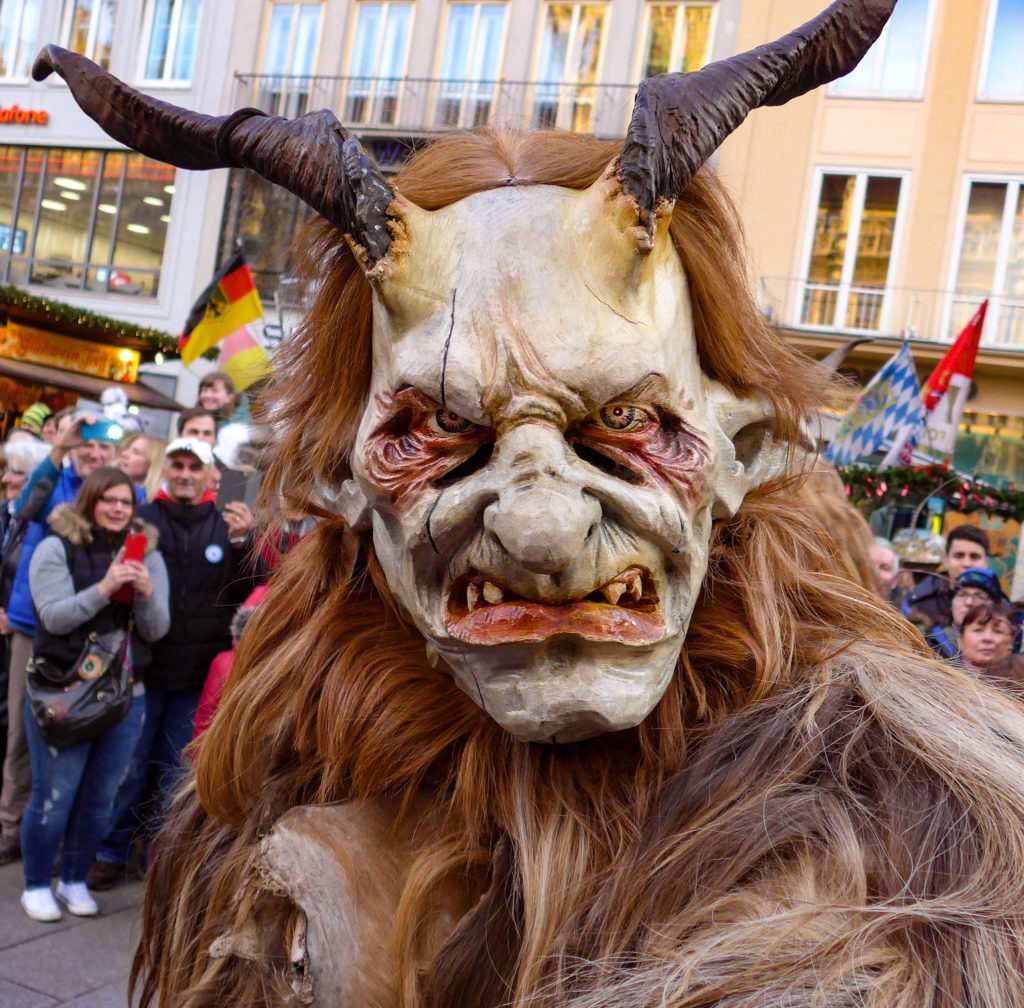
Krampus has origins in pagan celebrations of the winter solstice. He name is derived from an old Germanic word for “claw,” and he is said to be the son of Hel, who rules the realm of the dead in Norse mythology. Krampus is described as being an anthropomorphic figure, half-goat, half-demon, sharing many of the characteristics of fiendish creatures in Greek mythology, including satyrs and fauns. He has long horns, claws, and a goat-like beard. He beats children with birch branches or kidnaps them in his sack and takes them to his lair. Krampus’ original, pre-Christian incarnation may have been intended to watch over humans and protect them, scaring away bad ghosts and helping people overcome fear, similar to the Austrian character Perchta. Perchta was a female figure in Alpine paganism, a dual-faced goddess, both fair and ugly, dark and light. Eventually her name was also taken by the evil creatures that accompanied her, Perchten, and the custom developed that the young men of the villages would dress in furs and fearsome masks and roam from house to house to scare away evil spirits. These days, Krampus and Perchta have become largely conflated, their origins and physical traits blending, the distinction between the two becoming more and more blurred.
Throughout history, the Catholic Church and conservative Christian parties have made attempts to banish Krampus and Perchten celebrations due to their resemblance to the devil. During the inquisition, it was forbidden to masquerade as a devil and punishable by death. Because of this, the custom only survived in extremely remote and inaccessible regions of the Alps. From there, it slowly spread over the region again, increasing in popularity, and in recent years even gaining recognition overseas. Austrian actor Christoph Waltz famously joked about the tradition in a 2014 interview on the Tonight Show Starring Jimmy Fallon, saying that, “St. Nicholas comes with praise and presents and wisdom, and Krampus with a stick, a bag, and he threatens you… if you weren’t good you get stuck in the bag and hit and shipped off.” In 2015, Krampus hit the big screen in a blockbuster horror film. Despite this, the tradition is still mostly unknown to Americans.
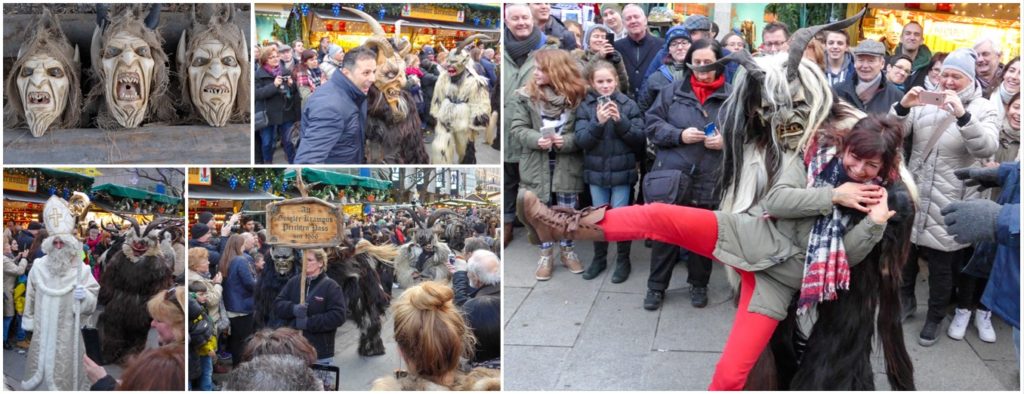
Keeping the Tradition Alive
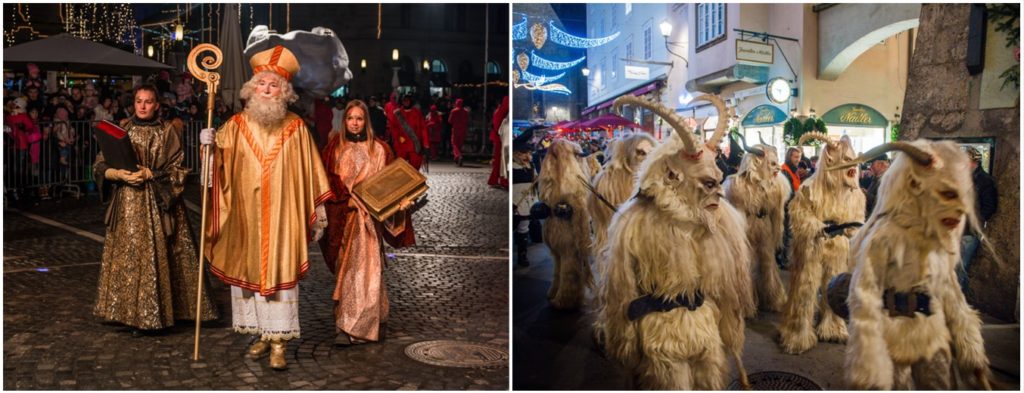
Today, the best way to experience this centuries-old folk custom is by attending a Krampuslauf, literally, a Krampus Run. Krampus runs are normally held from mid-November to mid-December (many on December 5th or 6th coinciding with St. Nicholas’ Day) in the Alpine region that includes southern Bavaria, southern Austria, and Slovenia. In bigger cities, such as Munich and Salzburg, these Krampus Runs take the form of parades which march through the central Christmas Market. The processions feature members of the local Krampuspassen (Krampus clubs or associations financed by local business sponsors) dressed in elaborate costumes, sporting hand-carved wooden masks, shaggy pelts, and clanging cow bells, running and stomping down the street. It’s an immersive experience, with the performers often pulling spectators into the procession, tussling their hair or swatting them with a switch made of birch sticks.
A Krampuslauf could be made up of up to 300 costumed participants, each portraying a specific role. The Krampuspassen each designate on person to carry a sign bearing the association’s name and locality, for example the Alt Gnigler Krampus Perchten Pass as pictured above. Following that, the procession is led by St. Nicholas, sometimes accompanied by the Christkindl. Behind him lurk an array of Krampusse (plural of Krampus) and Perchten, as well as Hexen (witches) and other figures from Alpine folklore. Krampusse can be distinguished by masks bearing 2 horns, Perchten normally have 4 to 10 horns. The intricate costumes are a truly a work of art, sometimes costing up to 2,500 Euro each. Of the hand carved wooden masks, no two are exactly alike, and each display extraordinary craftsmanship. The majority are made using mostly natural materials such as pine wood, driftwood, horse hair, animal teeth, furs, and horns from alpine creatures. Some masks are so lifelike, it’s hard to imagine that they aren’t real… then again, it is said that at every Krampuslauf, there is actually one real Percht among the imposters. So, when you observe these wild characters from a safe distance, keep a close eye. Did he blink? Did an ear twitch? Was that just the wind? It may be more than just tradition which is alive.
Watch the tradition come alive in this video by the New York Times:
Interested in exploring Europe’s fairy-tale Christmas Markets? Tasteful Croatian Journeys designs custom itineraries exploring some of Central Europe’s most beloved markets. Contact us for more information.
The History of Europe’s Christmas Markets
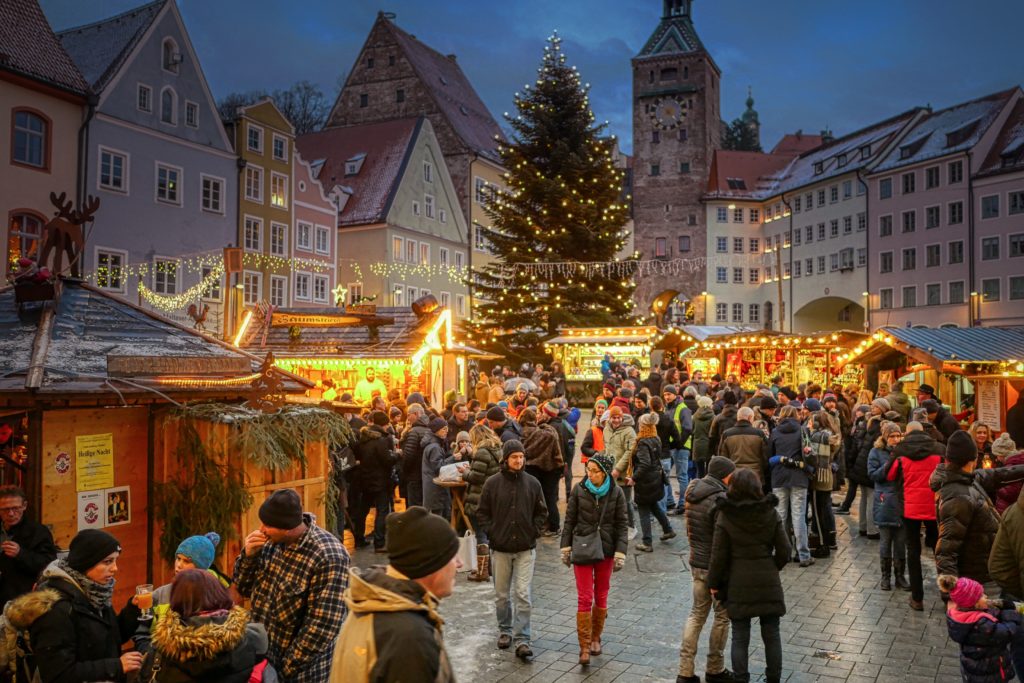
Typical German Christmas Market in Landsberg am Lech, roughly 1 hour west of Munich, Germany.
Luxury Travel Designer, Tia Lovisa Moreira, joined the Tasteful Croatian Journeys team after nearly a decade spent living abroad in Munich, Germany. From her time spent abroad, she brings with her a deep love and appreciation of German traditions. Today she shares with us the fascinating history behind one of Europe’s most beloved traditions.
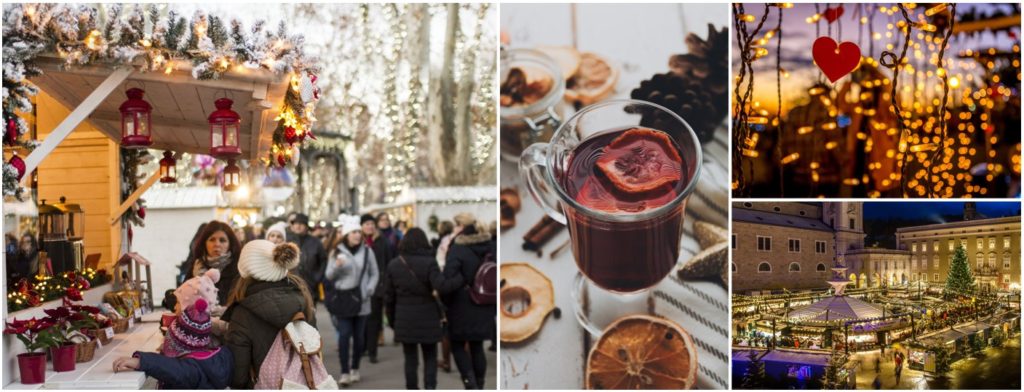
There’s nothing in the world quite like Christmas in Europe, where every year the start of Advent signals the opening of festive Christmas Markets, bringing with it a flurry of childlike excitement as cities big and small commence holiday celebrations. Combining the charm of tradition with the enchantment of the holiday season, these vibrant open-air markets immerse all who visit in festive holiday cheer, their convivial atmosphere the embodiment of joy and contentment – or as the Germans would say, Gemütlichkeit.
But how did this cherished tradition come about?
The story begins in German-speaking Europe during the middle ages. The precursor to the modern Christmas Market is widely considered to be Vienna’s Dezembermarkt (December Market) – also referred to as a Krippenmarkt (Manger Market) – which came about when Emperor Albrecht I granted shopkeepers the privilege of holding a market for a few days in early winter so that citizens of Vienna could stock up on supplies needed to last through the cold months of winter. First recorded in 1298, it predates the mention of other similar Wintermärkte (winter markets) which were held across what is now Germany and Austria. Some notable mentions of these winter markets are those in Munich in 1310, Bautzen in 1384, and Frankfurt in 1393. However, it was Dresden’s Striezelmarkt, first held in 1434, which is widely considered to be the first genuine Christmas Market. The word Striezelmarkt comes from Strüzel or Stroczel, a type of cake sold at the market with dried fruit and nuts, now known as Stollen or Christstollen.
The Striezelmarkt, like the other early markets, was traditionally held in the town square and began by selling only meat. Over time the markets evolved to include other everyday purchases, and eventually grew to include seasonal treats and handicrafts such as baskets, toys, woodcarvings, roasted nuts, gingerbread, and other baked goods, accompanied by singing and dancing. In the past, only local tradesmen were permitted to sell their crafts at the city’s market, which contributes to the distinctive regional character still seen in today’s markets.
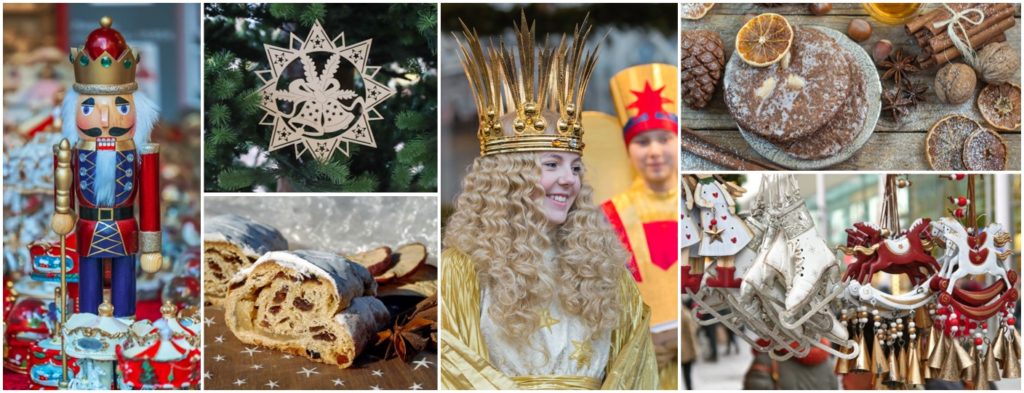
In the 16th-century, Christmas Markets saw an increase in popularity thanks to the teachings of German protestant reformer, Martin Luther. Prior to this time, gifts were traditionally exchanged on the saint’s days of St. Nicholas, on December 6, or of St. Martin, on November 11. However, Luther wished to turn away from the Catholic devotion to saints, and so he suggested the birth of Christ as a more appropriate day for gift-giving. He told his children that “Holy Christ” had brought them their gifts, or rather, the Christkind, which translates directly to “the Christ child” but usually refers to an angel-like “spirit of Christmas” rather than the literal Christ Child. Over the years, this fictional “Spirit of Christmas” took on form as a sort of angel, first being depicted in Christmas plays as either male or female, and later exclusively as female. Today, many Christmas Markets’ opening ceremonies include an appearance by the Christkind, often acted out by a local girl.
Luther’s tradition quickly took hold among protestant families who also began exchanging gifts on December 24th. As this custom spread, many Christmas markets began calling themselves Christkindlmarkts, especially in the south of Germany. The churches – who had originally encouraged markets to be held nearby in order to draw more visitors to services – soon found themselves competing for attention with the bustling markets. In fact, there is a now famous tale of a priest in Nürnberg who, in 1616, complained that he was unable to hold the afternoon service on Christmas Eve because no one was in attendance – his congregation was shopping at the market. It was during this time that Christmas gift-buying took off, with the markets serving as the main location for buying seasonal treats and toys.
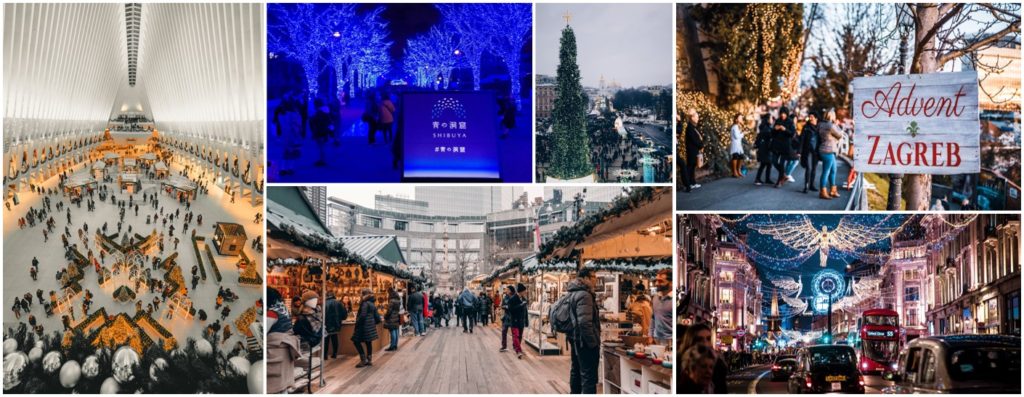
Today, there are more than 1,400 Christmas markets in Germany alone, and the tradition has spread not only across Europe, but across the entire world. Major holiday markets can be found in cities from London to Moscow, and New York to Tokyo, each with its own unique local flair. These modern markets serve much the same purpose as those of old – a jovial meeting place for locals and visitors to shop and celebrate the yuletide season. With such a rich and joyful history, it’s no wonder this beloved tradition has become a holiday fixture across the globe.