Exploring Croatian Heritage Through Travel
That is a number equal to almost two thirds of the entire population of Croatia! The United States alone is home to a significant percentage of the Croatian diaspora, however, there are also sizeable communities found in Argentina, Canada, Australia, Germany, and Chile.
From the late artist Ivan Meštrović to New England Patriots coach Bill Belichick, Croatians and their descendants have made headlines across the world.
Knowing all that, is it any surprise that so many travelers come to Croatia hoping to reconnect with their Croatian heritage?
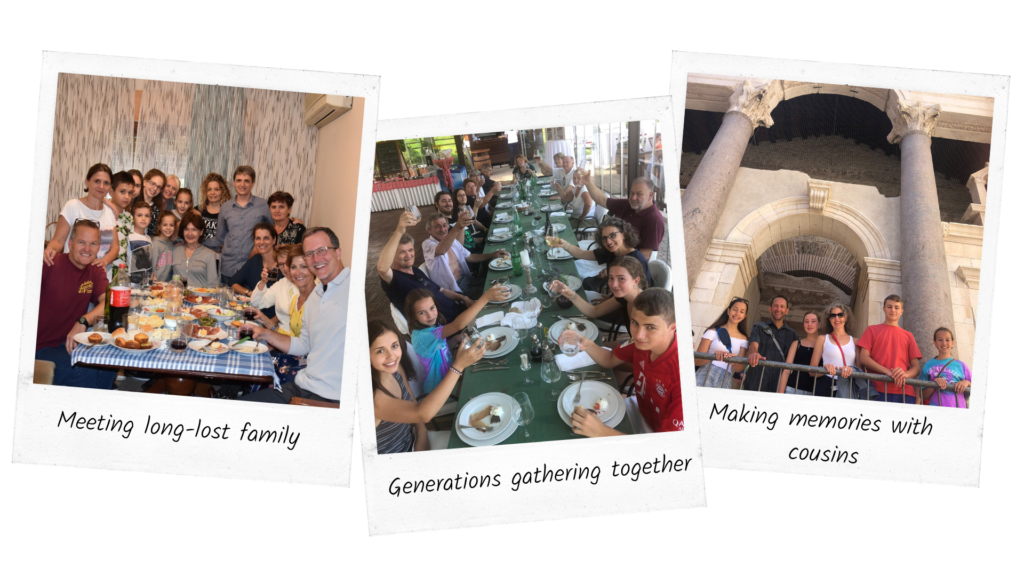
Researching Family History in Croatia
One of my jobs as Tasteful Croatian Journeys’ in-country concierge is conducting research and making connections for travelers who wish to explore their Croatian roots through Heritage Travel. I help to our travelers locate and visit their ancestral villages, and at times, even connect with long lost family members.
It is one of the most important and meaningful aspects of my work.
When a traveler approaches us with a heritage request, I begin the multi-step process of collecting the information necessary to begin my research.
First of all, it is important that we gather as much information as possible about our travelers’ families and ancestors. The more information, and more detailed that information is, the better. Some of the most important details we gather are the first and last names, dates of birth, and places of birth of parents, grandparents, etc.
The exact process of my research depends partially on the information provided, and partially on the situation on the ground. Croatia had several significant waves of emigration, from the expansion of the Ottoman Empire in the 15th century, up to the Homeland War in the 1990s. Unfortunately, the wars which spurred many to move also devastated the local communities. Therefore many documents may have been lost, or destroyed. This is one of the reasons it is essential to have a local, like me, on the ground assisting in research.
There are several starting points when researching ancestry and locating family members on behalf of our travelers. I usually begin at the Croatian State Archive in Zagreb. Next, I consult the local archives throughout Croatia as well as local Registrar’s offices and Parish offices. There have even been times when I’ve found helpful information from the City Governments and local Tourist Boards.
At the Croatian State Archive, they have registries of births, deaths, and marriages from the 17th to 19th centuries for some of Croatia’s regions. Until the mid-20th century, the registries were kept by religious communities, so it is necessary to know which religious community the family belonged to. At the State Archive, hard copies of the records are kept in addition to microfilm and CD-s which can be accessed upon arrival with prior announcement.
Sometimes, records are kept at local offices throughout Croatia, as well as local Parish offices. Usually, it takes several phone calls and written correspondence to gather this information.
Often times, our travelers’ origins trace back to small villages throughout the country. In these cases, we also receive support from the local population currently living there. It is not uncommon that families live in the same region for generations and generations, so with their knowledge we can also learn about the families of our travelers. In some cases, I have been able to provide our travelers with the opportunity to return to their ancestral village and visit the site of a family home.
When arranging genealogical tours, it is important to have a professional, English-speaking driver on the ground transporting and traveling with our guests so that they can explore the region, visit the local registrars’ offices, parish offices, cemeteries, etc. Their driver can also serve as an interpreter when needed. Once the guests arrive in the region of their ancestors, we arrange meetings with the local priests, living relatives, or locals who knew their relatives so that guests can learn more about their history and story.
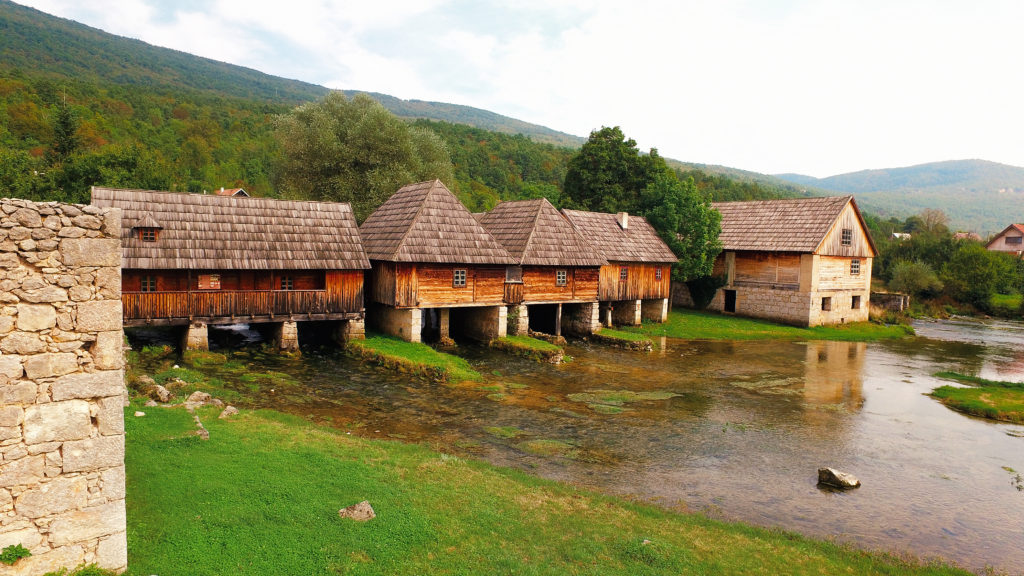
Making Connections With Family in Croatia: One Traveler’s Journey to Genealogical Discovery
This past season, Tasteful Croatian Journeys was fortunate to have a couple travel with us whose journey brought upon happy tears and a most beautiful experience of reconnecting with their roots.
Our travelers, Mr. Daniel and Mrs. Mary Ann Skaljac, wanted to stop in a small village where the Mrs. Skaljac’s ancestors were from and potentially learn about their family home and if there were any existing relatives.
Mr. and Mrs. Skaljac provided information about the first and last names of their parents and grandparents as well as the name of the village where they have lived.
With my first of many phone calls, I learned from the local registrar’s office the exact names of several other relatives that have lived in the region, as well as locations of their houses in the village. I also learned one very important piece of information – that the village is Orthodox and the one that would help me best is the local Paroh.
Immediately, my second call was to the Paroh himself, who was very kind in offering his assistance and support in gathering more information. Generously, he offered to meet our guests in person, and to show them around the village and take them to the local cemetery. My excitement grew more and more as I knew this would indeed be a very interesting moment for our travelers, because priests in Croatia “know everything about everything.” I knew he would be able to share details about the village in the past as well as life there today, which our travelers would surely find interesting.
The next thing I learned from the Paroh was that the village was completely destroyed in the war in the 90s and that unfortunately many of the families had moved away, with only couple of inhabitants left living at the village. The fact that so few people remained made the Paroh’s contribution even more valuable, for he would be one of the few people able to share the story of the village.
I provided the details I had collected to our travelers, including specific meeting information. Meanwhile, I would remain in touch with them, and the Paroh, to coordinate behind the scenes.
In the weeks leading up to their trip, I continued the search for any additional information, like Sherlock Holmes, making use of every resource at my disposal. As I was checking the phonebook, I discovered that there were some people registered to be living in the same village, with the same last name as our travelers’ ancestors. One of them, who I reached out to – born, raised and still living in the village – also offered to welcome and meet Mr. and Mrs. Skaljac upon arrival. He mentioned that his mother; a kind, elderly woman, remembered some of their relatives and that she as well could share her stories.
In the end, life is made of stories, right?
When I shared details of our findings with our travelers prior to their departure, they could not hide their great excitement of the adventure – their journey to reconnecting with their Croatian roots was underway!
After some time spent in Zagreb exploring Croatia’s capital and a visit to Plitvice Lakes National park, the moment had finally arrived when our guests would journey to the village of their ancestors. I had already provided details to our driver and connected him with the Paroh and locals who would welcome them. It happened to be that our driver was helping to rebuild destroyed houses with his father in the same region back in the 90s after the war. Because of this, our travelers had the opportunity to learn even more details about the history of the region thanks to his firsthand experience. They also had the opportunity to meet some of the locals he knew in the area. Upon arrival to the main city of the region, the Paroh welcomed Mr. and Mrs. Skaljac and showed them the main orthodox church and together they proceeded to the village of their ancestors. At the village, they visited the local church which the Paroh opened exclusively for them. While speaking, it happened to be that the Paroh knew one of the locals who our driver met while repairing houses after the war, and shortly after speaking with him, he kindly offered to join them. Indeed, it was a moment to remember, as through the conversation with the local Mr. and Mrs. Skaljac were exhilarated to learn that he knew everything about Mrs. Skaljac’s mother, family, and cousins. Walking around the village, learning about their family, and lastly, visiting the house of their ancestors as well the local cemetery brought tears to their eyes. It was a moment of happiness and joy that our travelers would never forget. After speaking with the driver at the end of the day, and learning about their experiences, I knew my mission was accomplished.
Helping our guests to gain deeper knowledge and understanding of their family’s past is always a very moving experience for me, and something I am very proud to be a part of.
Interested in exploring your family’s Croatian heritage? Tasteful Croatian Journeys arranges personalized genealogical tours and heritage journeys, assisting our travelers in tracing their Croatian roots and ancestral ties.
Click here to learn more about the services we offer.
About the Author:
For Tasteful Croatian Journeys Concierge, Mirela Benic, it was all about tourism from an early age. She attended the University of Tourism and Hospitality Management in Opatija before beginning her career working in hotels and travel agencies. After several years spent living abroad, she returned to her native Croatia continuing her adventures with new perspective. Learn more about Mirela here.
How I Wrote a Guide Book for the First Time
A guide book is an important tool for any traveler, which is why we at Tasteful Croatian Journeys originally developed our Croatia Marketplace. We wanted to share our favorite guide books and literature about Croatia, so that those thirsty for more knowledge would have a resource for learning more. Occasionally, we are lucky enough to meet the authors of the books we recommend. Recently, we had the pleasure of speaking with Annie Bozac, who recently completed her first book, a guide book celebrating her “second home,” Rovinj.
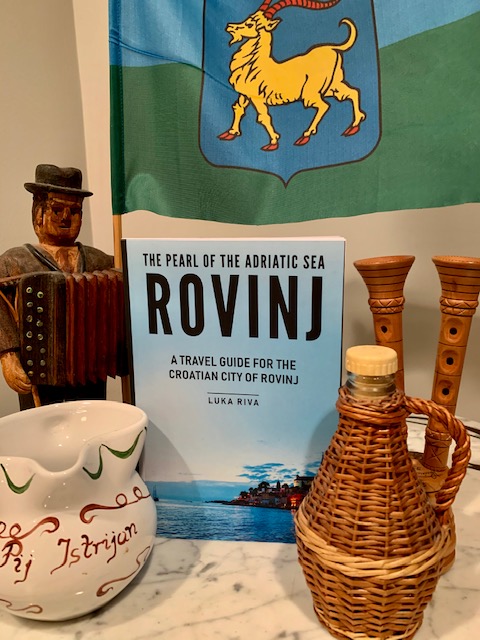
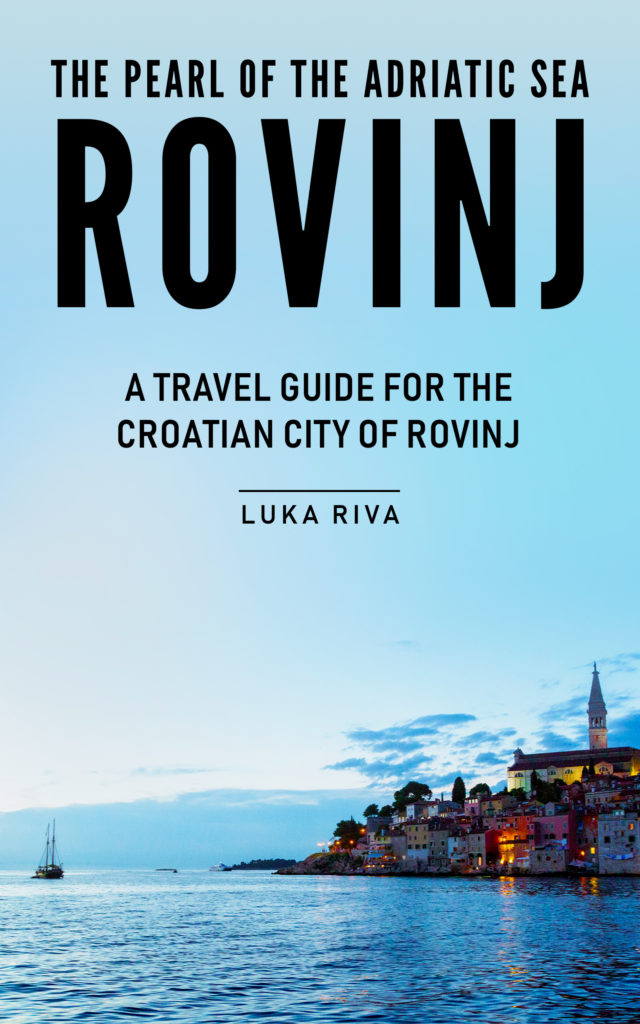
Here, in her own words, Annie shares her inspiration and process in writing The Pearl of the Adriatic Sea, Rovinj: A Travel Guide for the Croatian City of Rovinj.
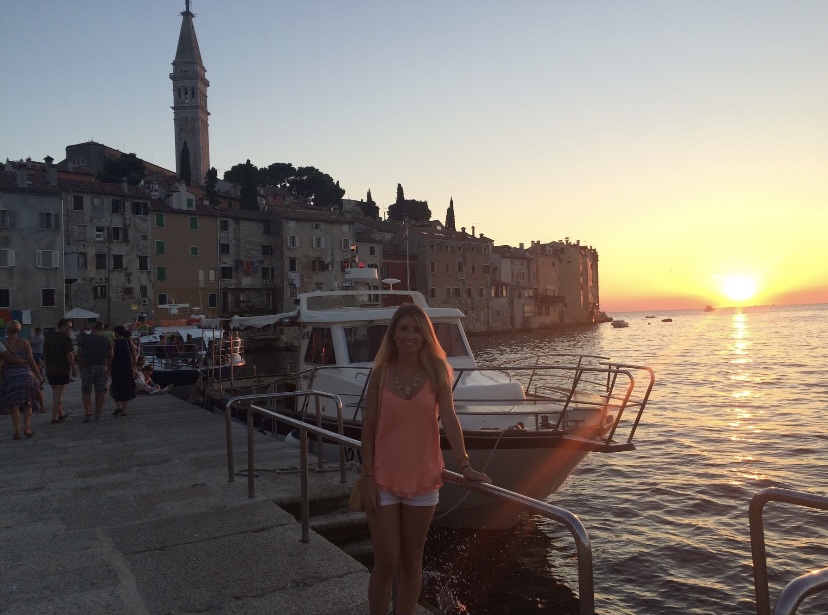
I was born in Brooklyn, New York and later moved to Long Island with my family. Both my parents were born in the beautiful Istrian region of Croatia. Growing up we visited Istria almost every summer, visiting our very large family. While spending our summers in Croatia we were exposed and able to witness the amazing culture and beauty that Istria had to offer. Spending our summers in Croatia was a huge part of our life growing up and continues to play a significant role in our life today. During our trips, most of our time was dedicated to family as well as traveling around the many beautiful cities of Istria, especially Rovinj. I remember as a child visiting my father’s family that lived in the old town of Rovinj and how amazed I was with the old town environment. The cobblestone streets and the attached houses all seemed like a cozy atmosphere to live in.
When I think of my summer trips to Croatia, the city of Rovinj has always stood out to me. My father’s village is not too far from Rovinj, which allowed us to spend many days exploring the old town and its surroundings. It is not hard for me to say that Rovinj is by far the best city I have ever been to. There is just so much culture and beauty mixed together that it was not difficult for me to decide to write a travel guide for Rovinj. This was the first book I have ever written and thought to make it about something I would actually enjoy and appreciate writing about. In a way, I used this book as a learning process. It not only taught me the progression of writing a book but also allowed me to become more self-assured and to believe in my overall writing.
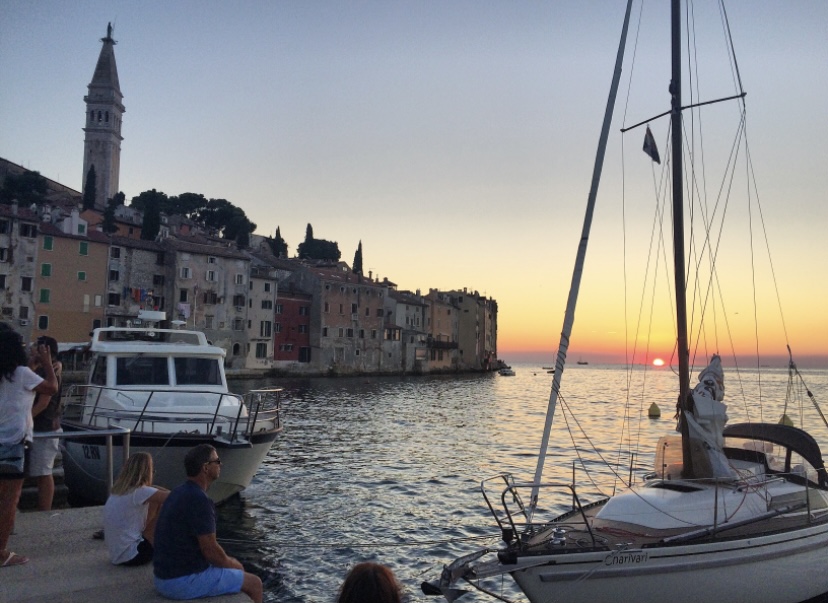
To be honest, I was a bit shy and nervous about even writing this travel guide. I never thought of myself as a strong writer or thought that I would even publish this book. Perhaps that is why I decided to use a pen name, “Luka Riva.” I think in a way I used this pen name to hide behind the book because of the insecurities I had with my writing in the past. Now, while writing this blog, a part of me wishes I would have just used my own name. I am now more confident with all the hard work that I have put into this book and am proud of my accomplishment. If I am ever to write another travel guide or any other book, I will without a doubt use my name.
I had two motives in using the name “Luka Riva” as my pen name. One being that Luka is the name of my nephew and thought what better name to use than his. The second was I wanted something that really stood out to me when I thought of Rovinj. For me, Rovinj’s riva or waterfront promenade is the first thing that comes to mind when I think of the city of Rovinj. I thought the two combined would make a perfect pen name.
I started writing this book during quarantine back in March 2020. It definitely kept me busy and let my mind get creative during such a difficult time. The overall book took me about 5-months to write and proofread. Every day I would only write a few paragraphs and then would go searching through my phone camera roll to find the picture I needed based on the topic I was discussing. The most difficult part of writing this travel guide was the overall formatting. Since this was my first book, I struggled with being able to format my book properly and lining up with the format guidelines on Amazon. It was important for me to start with an outline before I started writing my book. As I started writing, I kept thinking of new topics and aspects of Rovinj to include in my book. Having an outline really directed me in order to stay focused and not get side tracked.
While doing research I was able to get the full history of the city of Rovinj. This was probably my favorite part of the whole process. I was so intrigued to learn about how Rovinj came to be what it is today. While writing this guide, I felt it was necessary to include a substantial amount of history so that the readers could get the background story. I believe that any history obtained from visiting a new place really allows you to appreciate it that much more. I was most fascinated with discovering the history of the church of Saint Euphemia, in the old town of Rovinj. The story behind the name of the church itself really stuck out to me and I found it to be incredible. As the story goes, a young boy had a vision of a girl named “Euphemia” who had told him he would be able to carry up her tomb on his own along the curving streets of the old town, to the church at the very top of the hill. The people of Rovinj were shocked by the occurrence of the boy truly bringing the tomb to the top, that they later proclaimed it to be a miracle which then led to the renaming of the church to Saint Euphemia.
This travel guide for Rovinj would be helpful to all travelers, especially Tasteful Croatian Journeys’ sophisticated luxury travelers. One tip that I would give to travelers going to Rovinj would be to eat at one of the many authentic restaurants located in and around the old town. Since Rovinj is a seafront town, you are guaranteed the freshest seafood caught from the Adriatic Sea that very day. I highly recommend travelers to visit restaurants such as Monte and La Perla, which both use the freshest ingredients for their menus. Guests at these restaurants are ensured an amazing meal.
About our guest blogger, Annie Bozac…
As a Croatian American, Annie treasures her time in Croatia with family and friends. She enjoys exploring new Croatian cities and loves visiting the villages her parents are from which she considers her second home. As a first-time author, she hopes to write more travel guides and books in the future.
The Pearl of the Adriatic Sea, Rovinj: A Travel Guide for the Croatian City of Rovinj can be ordered worldwide on Amazon in paperback format and Kindle ebook format.
You can also find it in our Croatia Marketplace under our Special Recommendations.
The Life and Art of Ivan Meštrović
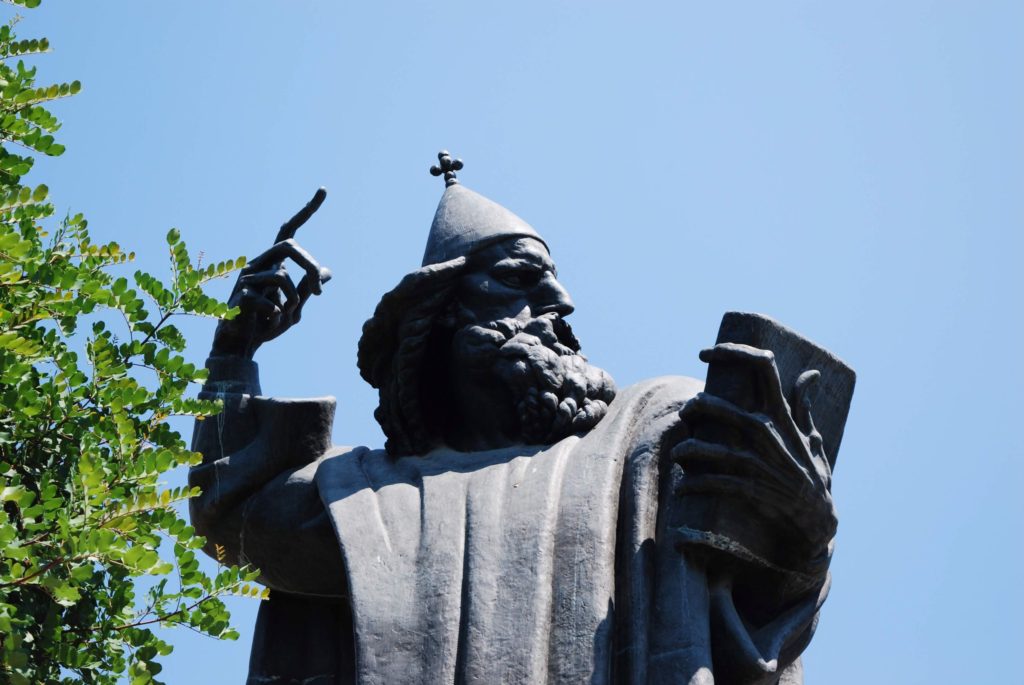
Those who have visited Croatia are sure to be familiar with the life and work of renowned artist, Ivan Meštrović, whose impressive works are found throughout the country. To many Americans, however, the name Meštrović might still be unfamiliar. A contemporary of artists such as Rodin and Klimt, Meštrović gained notoriety in Europe for his sculpture, writings, and politics before moving to the United States. To provide a more complete view of Meštrović, his life, and his work, Tasteful Croatian Journeys Luxury Travel Designer, Tia Lovisa Moreira, had the pleasure of interviewing Art Historian Vesna Bulić of the Ivan Meštrović Gallery in Split. We are pleased to share Vesna’s insights below.
“My art is expressed in hard wood and stone, but that which is in art is not in wood or stone, it is outside time and space. Art is a song and a prayer at the same time.” – Ivan Meštrović
Tia: Vesna, thank you so much for taking the time to teach us about Ivan Meštrović To start, perhaps you could tell us a little bit about yourself, your background, and how you came to begin working at the Meštrović Gallery in Split? Have you always been a fan of the works of Ivan Meštrović?
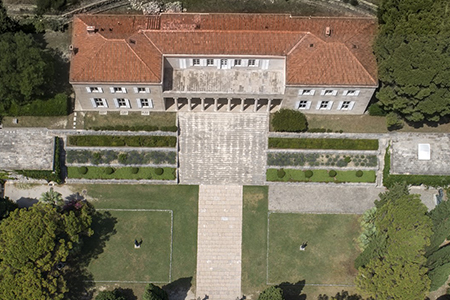
Vesna: Thank you for inviting me to talk about Meštrović and the Ivan Meštrović Museums. He is one of the most famous Croatians so most of the people in Croatia and surroundings are rather familiar with who he was, elements of his biography and his works. Cities like Zagreb, Split and Dubrovnik are full of his masterpieces so sooner or later you get in front one of these landmarks and famous sculptures. For me, an Art historian and a guide from Split – the city of such an importance for Meštrović – the moment of discovering Meštrović goes very back in past, back to my childhood walks around the city. More detailed studies of his oeuvre came during my university years in Zagreb when Meštrović became one of the most important themes of our 19th and 20th century art classes. Finally, becoming the Head of Marketing and PR at the Ivan Meštrović Museums meant an amazing opportunity to work surrounded by his sculptures in his former villa in Split, and together with my colleagues, to engage all my creative aspirations in order to provide the best promotion of Meštrović’s valuable heritage. Meštrović’s legacy is very impressive and well-known, the Museums are one of the biggest museum institutions in Croatia, his works are very present in our public spaces, so I have been both astonished and impressed by everything I have discovered and a huge fan, of course.
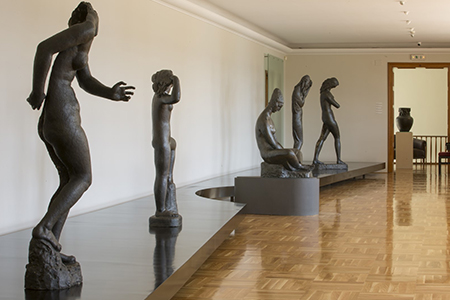

Tia: For travelers who are not familiar with Ivan Meštrović, can you tell us a little bit about him and his artwork? What were some of his influences?
Vesna: Ivan Meštrović (1883, Vrpolje, Croatia – 1962, South Bend, Indiana, USA) is one of the greatest Croatian sculptors. He also expressed himself as a painter, architect and writer. He originated from a small Dalmatian hinterland village of Otavice where he found his early inspiration in the folk epics and the Bible. In 1900 Meštrović went to Vienna where the new artistic style, Secession, was just raising. There he got acquainted with the art of Rodin and created under his strong impressionist influence. While in Paris, in 1908 he turned towards monumental and heroic style representing themes from Slavic history. After the first World War, Meštrović did female sculptures radiating life and optimism, and very often showing them holding an instrument. During the second and third decade of the 20th century he studied the theme of male and female bodies, as well as religious themes. His style turned from heroic and impressionist to highly classical. During the 4th decade he made a whole series of characters with strong symbolical meaning such as Job, Persephone, Atlantis, Prometheus … bringing out the theme of undeserved suffering imposed on an individual character.
His sculpture is dominantly figurative and found its form in different materials such as plaster, stone, marble, wood and bronze. Ivan Meštrović gained international reputation and influenced generations of sculptors. He is present in museums and galleries all around the world as well as in many public spaces, where his public monuments even today astonish with their greatness.
Tia: In your opinion, what makes Meštrović’s work so important?
Vesna: Significant universal themes or private intimate topics turned into masterly designed sculptures, find its ways into the personal world of the beholder. Early Secession style pieces, works from the neoclassical phase or the expressionism of the later works, universally talk to the deepest human emotions. Artfully shaped, meaningful and anchored in tradition and legacy, bearing a message, this art goes far beyond larpurlartism (“art for art’s sake”) and talks to the deepest human spheres. When you connect it with very impressive personality – hard-working and persistent, incredibly productive, artistically, socially and politically engaged – the imposing legacy leaves even deeper imprint.
When I have an opportunity to present his life and work, the reactions are amazing because there were not too many individuals who, despite all of the challenges they encountered in life, managed to hold in front of them their vision of success that their talent and love for what they are doing, was going to bring them. Meštrović knew that his belief and personal strengths was not going to lead him astray. Meštrović lived his art, believed that the only way to be an artist is to continuously work which he did – even on the final day of his life, he went to his studio.
He was very socially sensitive and connected to his family. He helped not only to his family, but also did a lot for the village he came from. Later he donated many public monuments and finally all his private properties. Involvement in political events of the time was also due to his belief that he as a public figure could and should make a difference.
The strong connection between his works and certain events of the time, regardless of these events being public of private, is possibly the most important element of his work, because it is in this connection that the universal message rests. These universal messages are the treasures hidden in art and the reason why masterpieces survive decades and still provoke the same sensations and impressions.
The most valuable is an opportunity to see the original artwork and visit the place because the places and the objects have a memory of their own, and are capable of sending these universal, at the same time, private messages of the artist to the world.
His works also show incredible artistic talent and skill for shaping in marble, plaster, bronze and wood, very often compared to the skills of Rodin or Michelangelo. Auguste Rodine himself said that Meštrović was surely the biggest phenomena among sculptors.
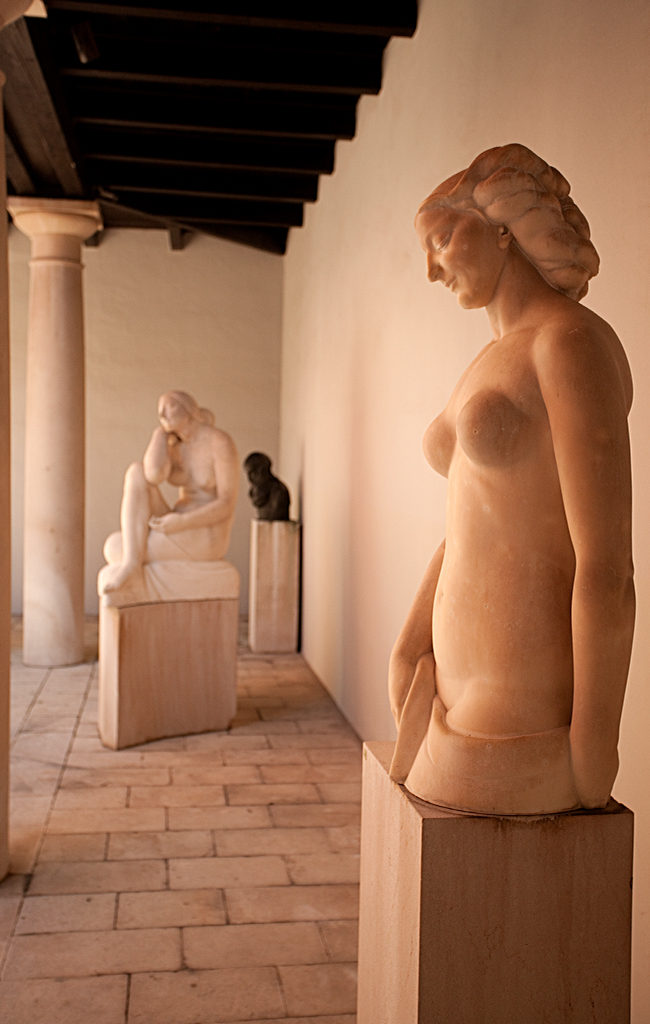
Tia: Meštrović led a really fascinating life, can you tell us a little bit about that?
Vesna: The circumstances of his upbringing in a traditional, patriarchal society and his early inwardness with motifs from the folk epics and the Bible formed a huge well of inspiration that accompanied him throughout his life. After the discovery of his talent by the people in Otavice, soon he was sent to Split to a stonemason’s workshop. In 1901 he departed for the Academy of Fine Arts in Vienna and that event marked the beginning of a brilliant artistic career. The artists he admired the most were Michelangelo and Rodin. After the academy years, he lived and worked in many European cultural centers – Rome, Paris, London, Geneva and Cannes. The period between the two wars, marked with significant private and professional events, Meštrović spent in Croatia. After World War II he emigrated to the USA where he worked as a professor of sculpture at Syracuse University in New York and Notre Dame university in South Bend, Indiana. In 1952 he donated to Croatian people 132 artworks and four properties – his family house and studio in Zagreb, the religious complex of Crikvine – Kaštilac and the villa which are both in Split, and his family mausoleum – the Church of the Most Holy Redeemer near Otavice. These locations today make up the Ivan Meštrović Museums. Ivan Meštrović died on January 16, 1962, in South Bend. He is buried in the family mausoleum near Otavice.
Ivan Meštrović is the first Croatian artist to have exhibited during his lifetime at the Victoria and Albert Museum in London (1915) and in the Metropolitan Museum of Art in New York (1947). President Dwight Eisenhower personally handed Meštrović his US passport when he was granted American citizenship in 1954. He also became a member of the American Academy of Arts and Letters in 1960.
He was married two times and had four children.
Tia: I was excited to learn that Meštrović was a professor of sculpture at my alma mater, Syracuse University. I did a little research and found out that he had a studio in a refurbished barn, which his students referred to as the “Bauhaus,” on Marshall Street. As a former student, I find that quite funny to think about, as these days Marshall Street is mostly comprised of bars and fast food. It’s wonderful to imagine it as a center for creativity instead. I also learned that he has a number of sculptures on campus, which I must have walked past every day without knowing much about him. Are there any other places around the United States where our travelers might have, unknowingly, seen Meštrović’s work on display?
Vesna: Meštrović left his mark in the USA, as a professor at universities but also with his public monuments and pieces in the collections. His works can be found:
- at the Notre Dame University in South Bend – around the campus, in the basilica, in the city
- Snite Museum of Art at the University of Notre Dame, South Bend
- Louisiana Arts and Science Museum in Baton Rouge has a large collection of his sculpture and drawings
- public sculptures of “Indians” (“The Bowman” and “The Spearman”) in Chicago
- Art Institute of Chicago
- “St Jerome” in Washington DC
- sculpture on the cathedral in Washington DC
- “Man and Freedom” – formerly outside the Mayo building, now in the Landow Atrium of the Gonda Building, Rochester
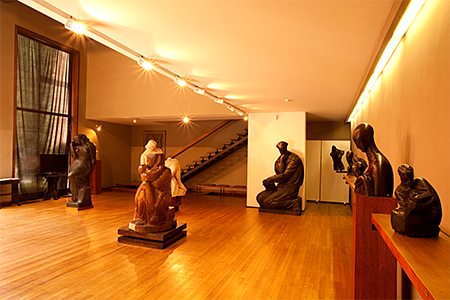
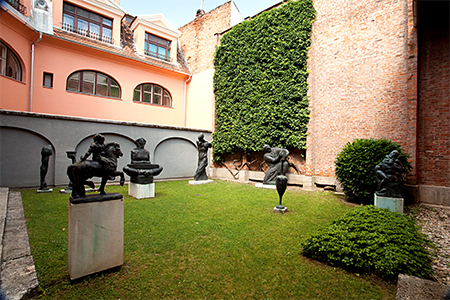
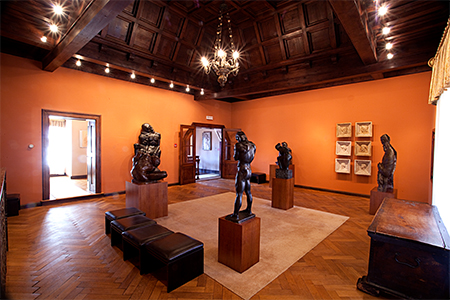
Tia: And of course, there are also the galleries and museums dedicated to the works of Ivan Meštrović throughout Croatia, which you mentioned earlier. Can you tell us a little bit more about these?
Vesna: With his Deed of Donation to the Croatian People of 1952, he donated numerous masterpieces, impressive architecture and refined spaces managed by the Ivan Meštrović Museums. The constituents of the Museums are located in four locations: his home and studio in Zagreb (The Meštrović Atelier), the family villa (The Meštrović Gallery) and renovated Renaissance castello (The Meštrović’s Crikvine – Kaštilac) in Split, and in Otavice (The Church of the Most Holy Redeemer), whence his family originated. In these spaces, visitors have the opportunity to enjoy hundreds of his works.
In 1991, the Croatian Parliament adopted the Ivan Meštrović Foundation Act and thus united the locations from the Deed of Donation into a unique organization with its administrative center in Zagreb. With the amendment of the act in 2007, the Ivan Meštrović Foundation was renamed into the Ivan Meštrović Museums, and the administrative center moved to Split.
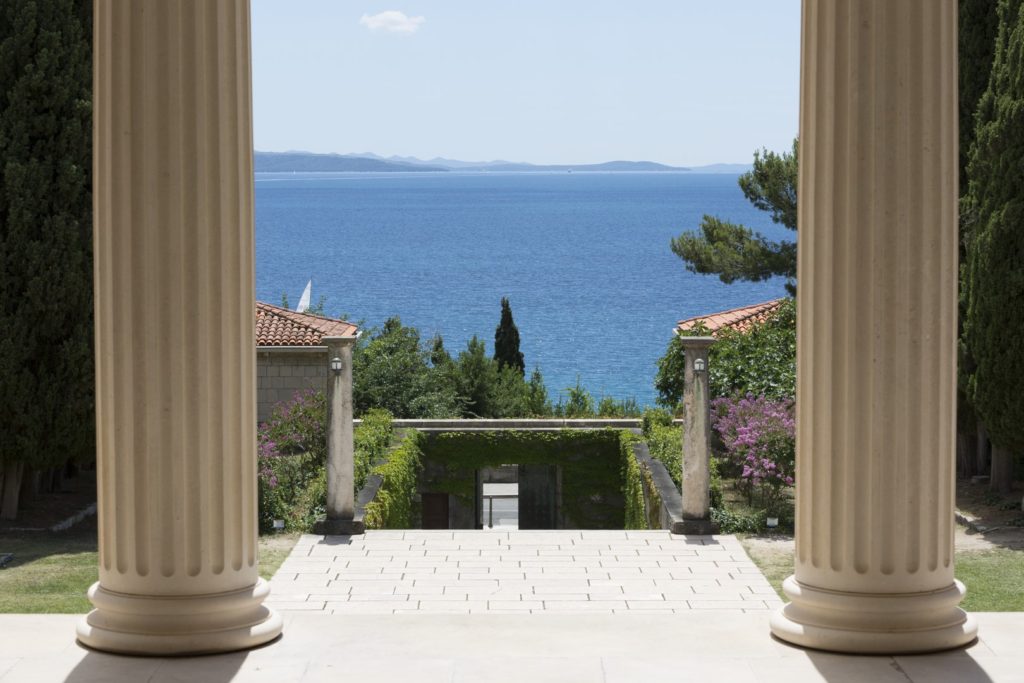
Tia: And as we already know, you are based in Split, at the beautiful Meštrović Gallery overlooking the sea. What do you recommend for visitors to your gallery? What is the best way to experience the works?
Vesna: The best way to get to know Meštrović is to immerse yourself in the environment that was once used by the artist himself. Meštrović created these spaces for himself and his family which means that even these refined spaces talk a lot about his personality and private life. The best way to visit the Gallery and other locations is with our guide who will tell you not only the artist’s biography and iconography of each artwork, but also the little stories and secrets known to people who discovered them only after spending so much time here. For instance, I was lucky enough to meet the lady who was Meštrović’s housekeeper and lived in one little apartment until the end of her life, even after the house was turned into the museum. She shared many stories of the family life with us. These first-hand stories are very valuable jewels that made me feel closer to the artist.
After the tour of the house, a visitor can rest in the beautiful Mediterranean garden, before proceeding to the Meštrović’s Crikvine – Kaštilac, nearby church with the cloister above the sea, a former 16th century fortified property that Meštrović turned into a place of prayer and contemplation.
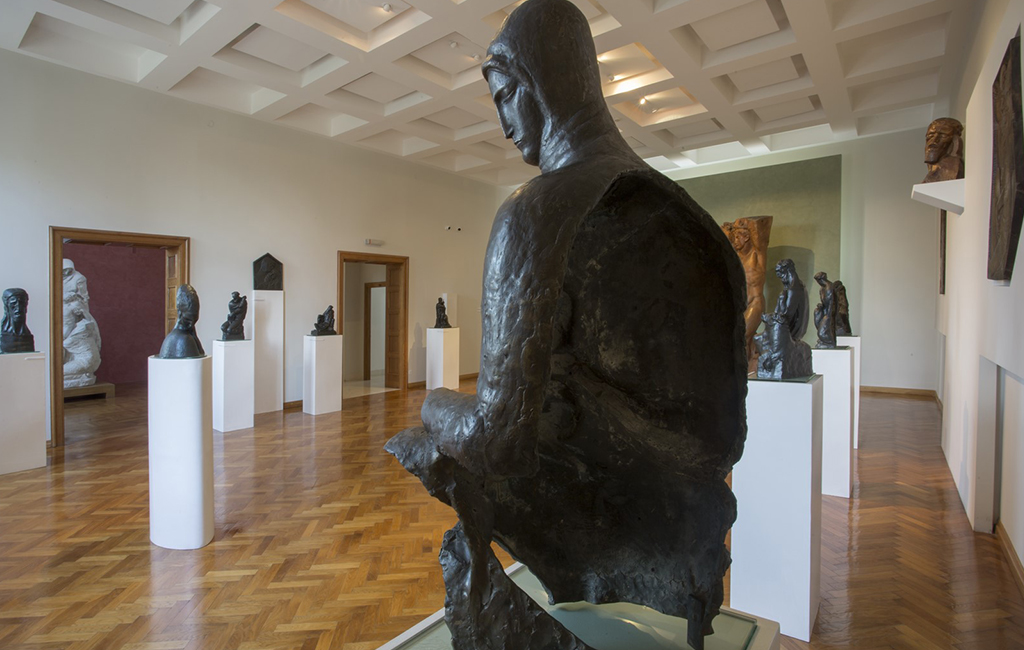
Tia: In addition to the Meštrović Gallery, what other experiences do you recommend in Split for art lovers?
Vesna: The museums and galleries in Split can offer a lot to art lovers. Depending on their taste and preference, there are so many things to see from archaeology to contemporary art: The Museum of Fine Arts, The Split City Museum, The Emanuel Vidović Gallery…
However, Split is a city developed from a Roman emperor’s palace built in late 3rd/early 4th century AD, with the legacy of an even older settlement that existed before the palace. The beginnings of the port of Split are going back to the time when neighboring Salona was an Illyrian settlement – the first written mentioning of Salona comes from the 2nd century BC. This incredible heritage invites you to visit some very impressive exhibits at the Archeological Museum in Split, which is also the oldest museum of south-eastern Europe, last year it celebrated 200 year anniversary.