Sailing Dalmatia: Our Concierge’s Adventure on the Adriatic
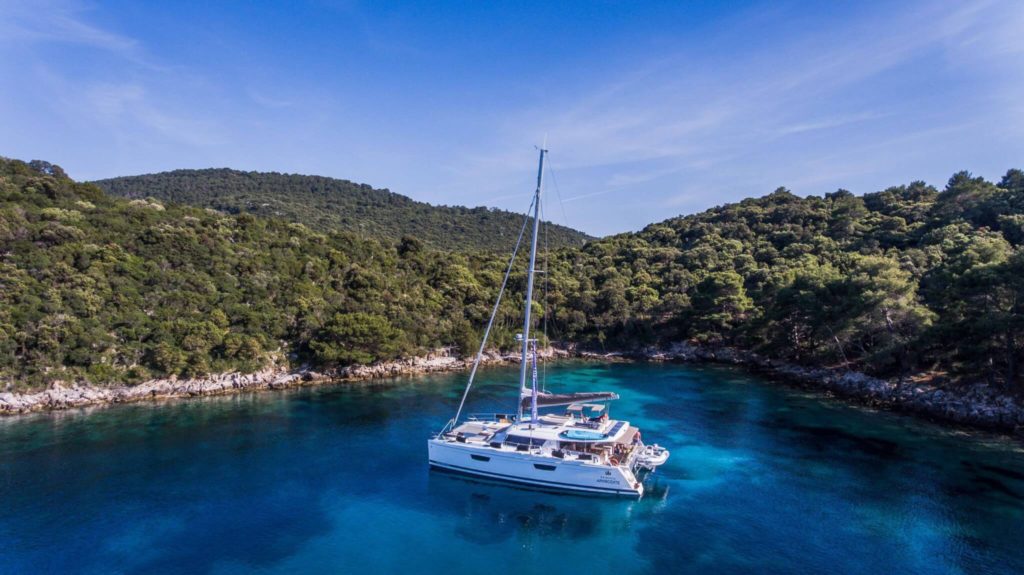
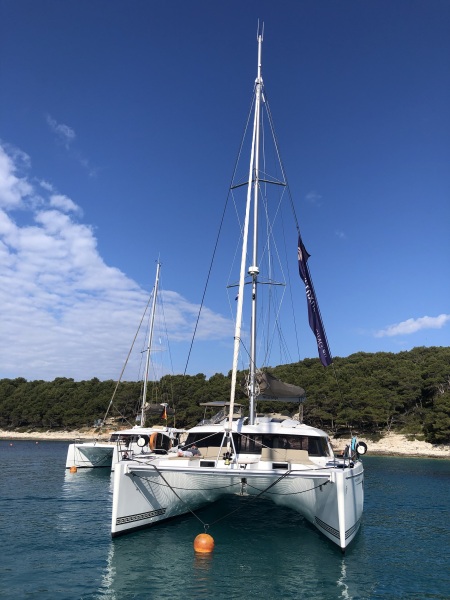
The Catamaran Princess Aphrodite
My name is Mirela Benic, the Tasteful Croatian Journeys Concierge. I am your personal concierge and Guardian Angel when you are traveling in the care of Tasteful Croatian Journeys in Croatia, Slovenia and the surrounding regions.
When our friend and partner Vladimir Oravec, the owner of two luxurious yachts, invited our founder, Wanda S. Radetti, to travel with the S/Y Queen Axiera and the catamaran Princess Aphrodite, Wanda selected me to participate in her stead.
Firsthand knowledge and experience is an important element of our work, and therefore Tasteful Croatian Journeys personally tests, inspects, and approves an experience before recommending it to our travelers.
I am happy to share my sailing adventure with you all, and hope that it will inspire you too to explore the emerald and turquoise waters of the Adriatic.
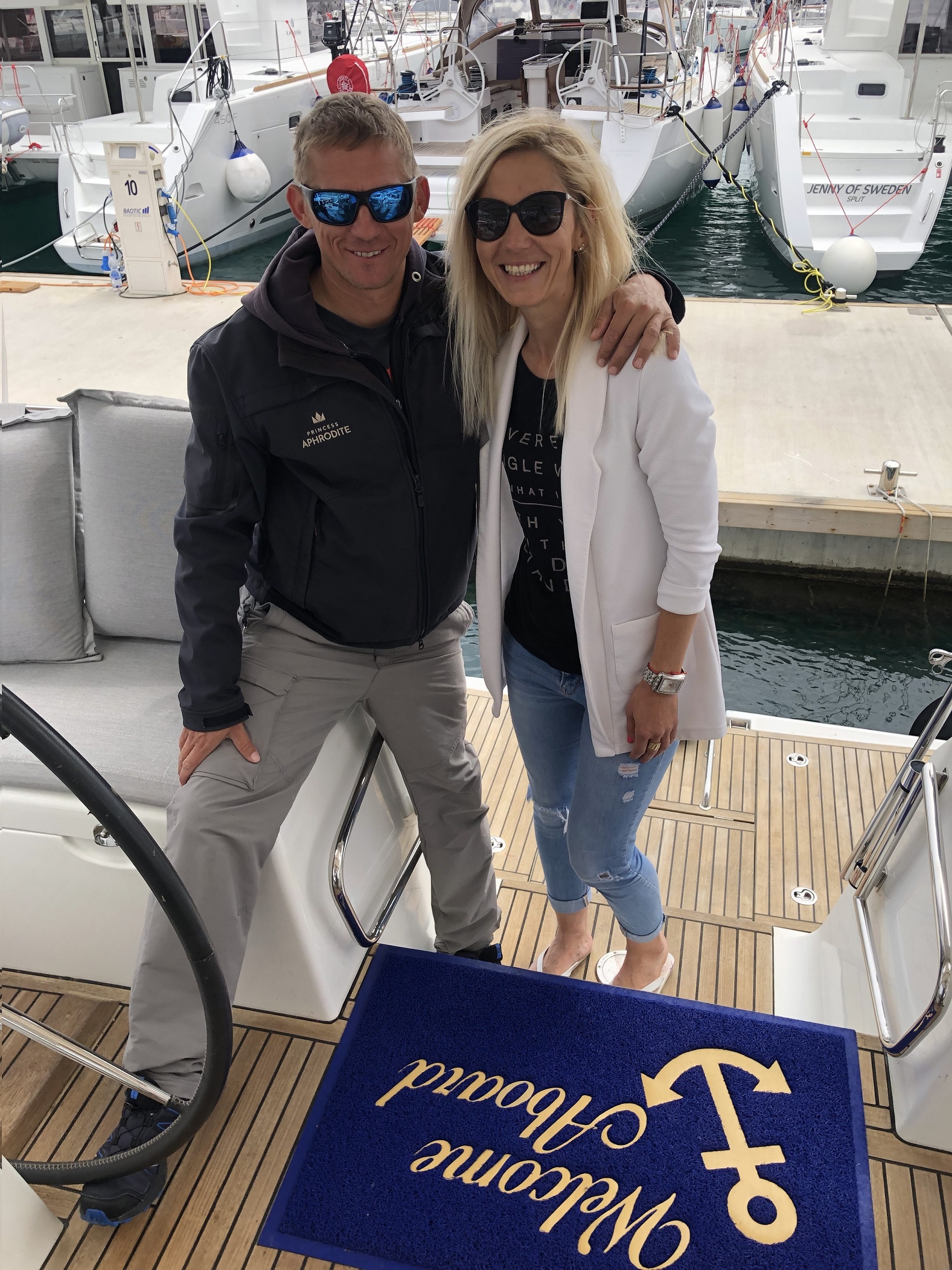
With Damir Vrbanac, skipper on Princess Aphrodite
In late May, just before the official start of the “sailing season,” I made the trip south from my home in Rijeka to the charming Dalmatian town of Trogir. There, on a balmy Saturday afternoon, I was welcomed on board by Vladimir, the owner, Captain Damir of Catamaran Princess Aphrodite and Captain Jasmin of S/Y Queen Axiera.
I quickly felt so comfortable and welcomed by the crew and other guests, that by the end of the trip I had made new friends.
We did a one-week, round trip itinerary, beginning and ending at the ships’ home port, Marina Baotic in Trogir. Located just 30 miles north from the vibrant city of Split, and only 10 minutes from the Split international airport, Trogir is a charming historical town and a popular home base for yachts. It serves as the starting point for many Dalmatian yacht charters.
I would be sleeping on the Queen Axiera, but as the boats were traveling in tandem, I had the opportunity to explore and experience both yachts – the comfort and space of the catamaran, and the thrill of raising sails on the monohull.
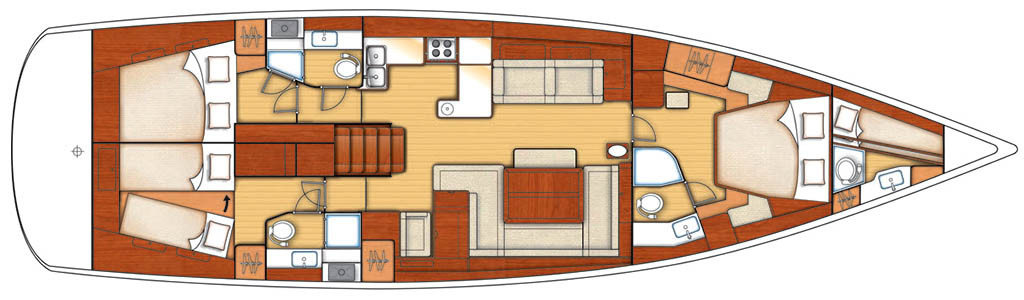
Sailing Yacht Queen Axiera Floorplan
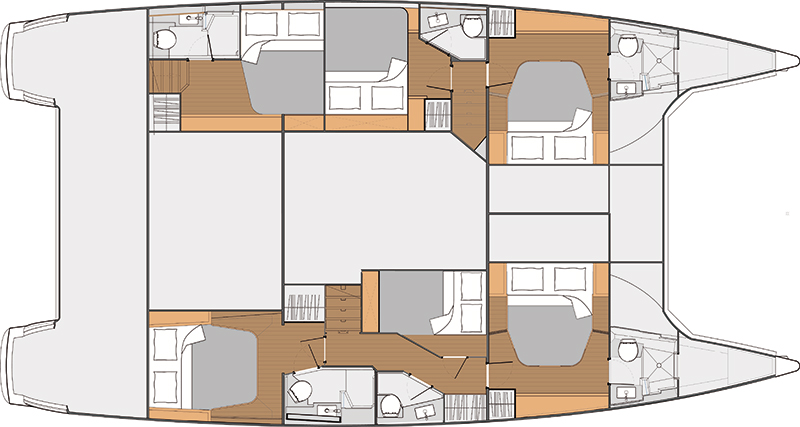
Catamaran Princess Aphrodite Floorplan
Upon embarkation, I unpacked my things in my cabin. Cozy, yet functional, my room contained a bed, a small storage area, and an ensuite bathroom. The windows opened to allow a salty breeze and let in the warm sunlight. Mine was one of three guest cabins on the Queen Axiera. Outside my room, there was a modern and elegant salon. It was immediately clear that both yachts are regularly refitted and carefully maintained.
The catamaran Princess Aphrodite had six guest cabins, a bit more spacious than those on the monohull Queen Axiera. Multiple lounge areas indoors and outdoors, made it an ideal place for our large group to gather and relax.
Before raising anchor, the captains offered instructions about safety and security, guided us on the proper use of the equipment on board and usual yachting protocol.
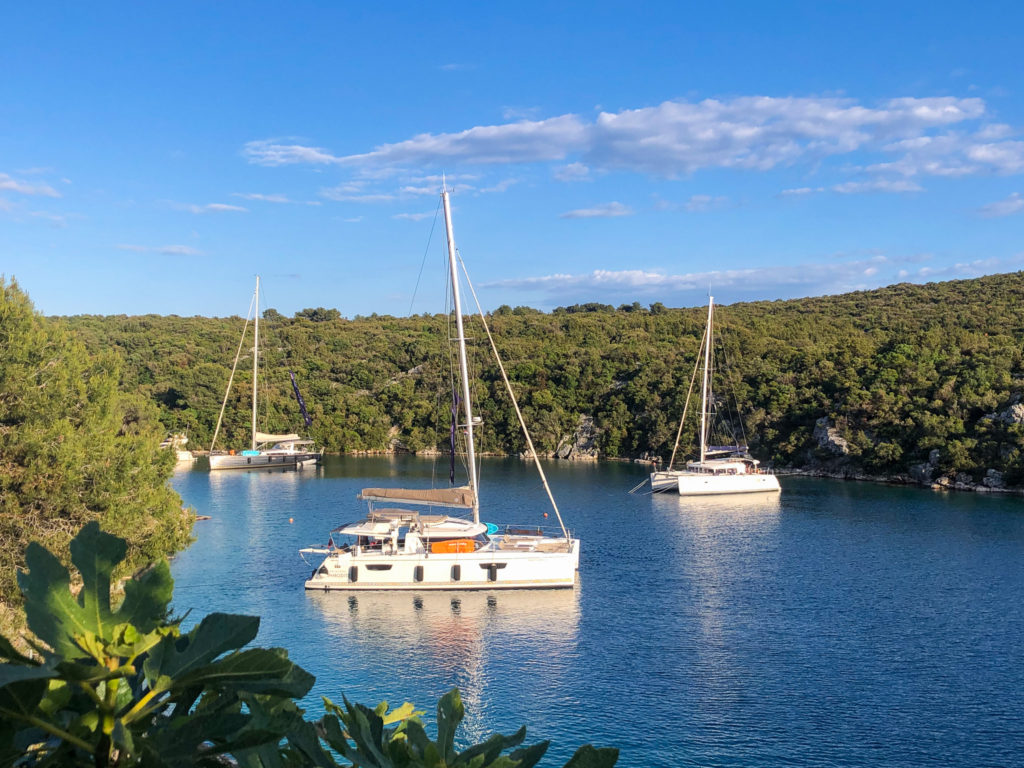
Sesula bay, Island of Solta
From Trogir we sailed south toward the island of Šolta. The closest island to Split, Šolta is surprisingly not heavily touristed, and therefore provides a wonderful opportunity for visitors to experience local life. It is known as one of the greenest islands in Dalmatia and has a long history in olive oil and local honey production. On the west coast of the island of Šolta, we anchored in the protected Bay of Šešula, perfect for just relaxing on the boat, swimming, snorkeling, fishing early in the morning, and watching colorful sunsets.
At lunch time we moored in front of Šišmiš Restaurant. As the Tasteful Croatian Journeys Concierge, part of my job is staying informed about the country’s best dining. I love following chefs and staying up to date on trends… but as a Croatian, I also truly appreciate the simple, fresh, and well-prepared foods that are typically found in our seaside konobas. The best meal you can get is the freshly caught fish from local fisherman.
At Šišmiš we enjoyed a delicious lunch of steak, prawns, tuna, and other local delicacies, all with a spectacular view of the bay. We were personally welcomed by the owner of the restaurant and his friendly and well-trained staff. Dalmatian hospitality at its finest!
Following lunch, we enjoyed an afternoon siesta on board the yachts. The perfect way to unwind and relax – it helps to induce a state of peaceful “being” rather than “doing”.
We spent that night in the serene bay under a blanket of stars.
The next morning, I woke to the aroma of espresso and a savory breakfast. We disembarked the yachts for a short walk along the unspoiled beaches and crystal-clear sea, with air perfumed by pinewood. Our stroll brought us to the town of Maslinica in the Maslinica Bay, the only settlement and a port on the west side of the island, where we relaxed on the Riva with the locals sipping coffee and making new friends.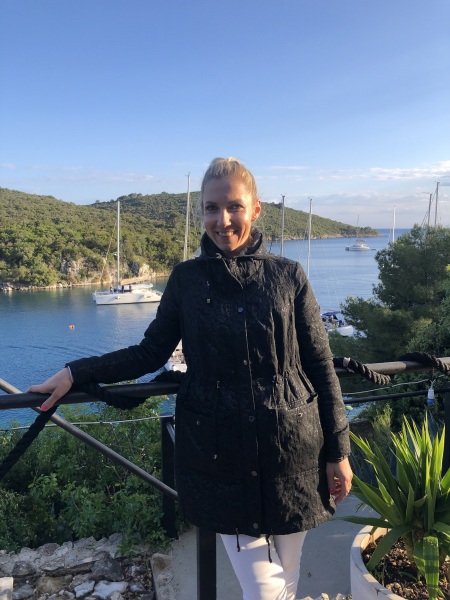
Next, we walked to what is today the Martinis Marchi Heritage Hotel, one of the most luxurious hotels in Croatia. It was developed with the approval of the Serenissima, Republic of Venice, by the Marchi family in 1708.
In the afternoon, we set sail to the island of Vis, the furthest most island from the mainland of Croatia. The winds were perfect! The Queen Axiera glided, sails full, working in perfect harmony with the elements as my hair blew wildly in the wind. I loved the rush of adrenaline and feeling of adventure – something that only a monohull can provide. It was a wonderful contrast to the relaxation and steady comfort of the two hulled Princess Aphrodite.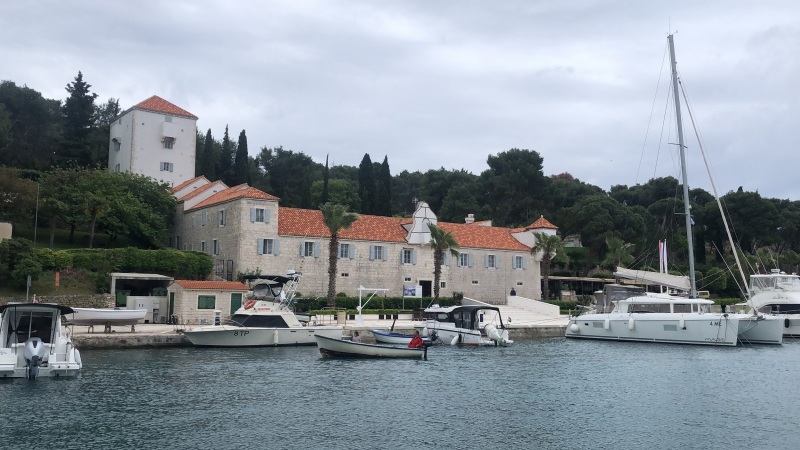
After some time, we arrived at our destination. Vis spent much of its recent history serving as a Yugoslav military base, cut off from foreign visitors from the 1950s right up until 1989. This isolation preserved the island from development and drove much of the population to move elsewhere in search of work, leaving it underpopulated for many years. Recently, the lack of development has attracted travelers seeking simplicity, undisturbed nature, local flavors, peace, and quiet.
Vis gained international attention when the film “Mamma Mia, Here We Go Again,” was filmed on the island. However, despite increased interest, the island retains its rustic charm.
Our first stop on the Island was Konoba Magic, a family owned restaurant located in the hillside surrounded by a vineyard. The owners, Biserka and her husband, welcomed us with homemade liqueurs. We enjoyed an appetizer of fish carpaccio and salted marinated anchovies, accompanied by a glass of the local Vugova blond wine.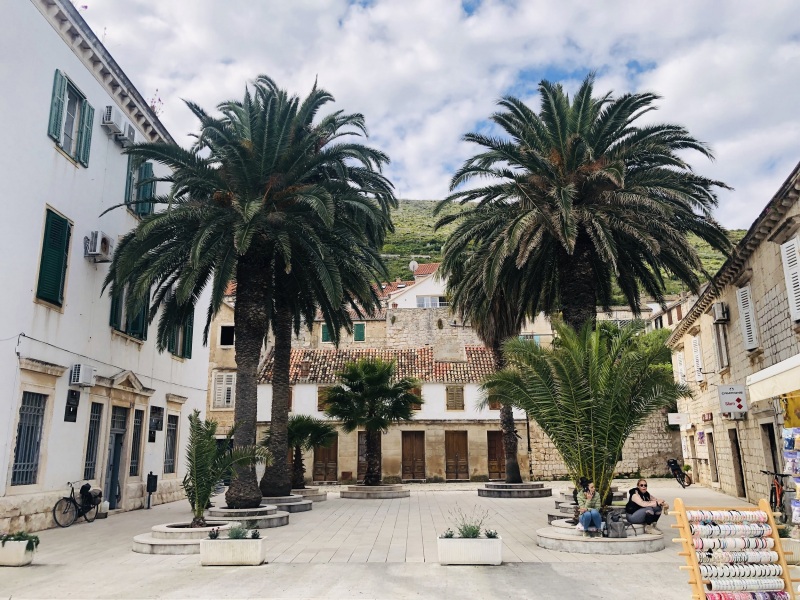
Our main course would be traditional “Peka,” a dish that can be prepared with any type of meat or fish, and potatoes, vegetables, herbs, spices, and a bit of wine. The ingredients are slow cooked for hours under an iron “bell” (dome). For this reason, it must be ordered in advance. On that day we enjoyed perfect peka, prepared with octopus, veal, and monkfish surrounded by local potatoes and vegetables.
To finish our meal, the homemade cheesecake prepared for us by Biserka herself, was perfection.
That evening, after our filling lunch, we decided to relax and enjoy a light dinner on board the yacht. We spent the night moored with a beautiful view of Vis town.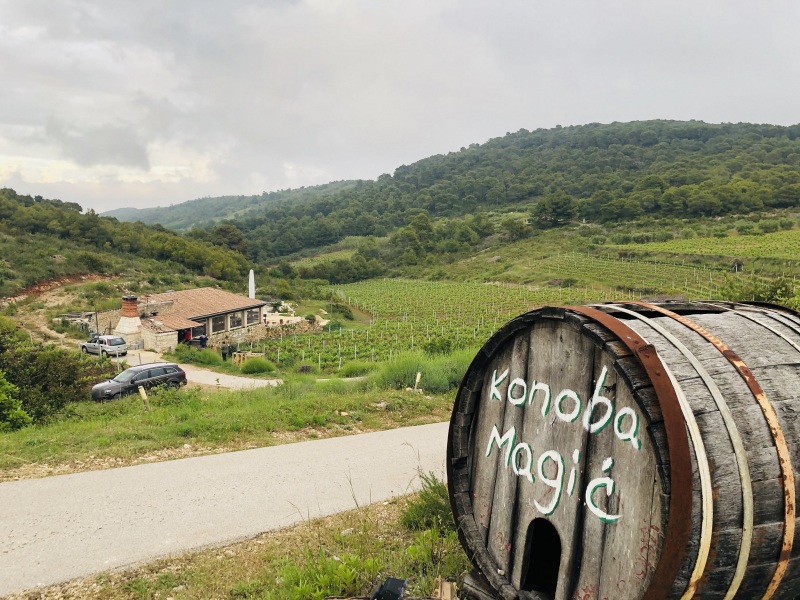
The next morning, our captain arranged to have a local driver take us to the small fisherman’s village of Komiža on the other side of the island. The drive offered spectacular views of the open sea, especially during the descent toward the village. Located at the foot of mount Hum, on the sunniest part of Vis, Komiža is a typical Mediterranean town with narrow cobbled streets which are protected from the winds. It is known as being one of the warmest destinations in Croatia during winter. Walking through the town we enjoyed the scent of lemons growing in nearby gardens.
Komiža is also known for its excellent seafood, especially lobsters. The best places to enjoy fresh lobsters are Konoba Jastozera, set on a deck over the water, or just next door at Konoba Bako on their beautiful terrace. Mamma Mia fans might also recognize Konoba Jastozera as the filming location of Bill and Harry’s lunch during which Harry (and his chair) end up in the water.
Later that day, we returned to the yachts and departed Vis for the Pakleni islands. This small archipelago is located just off of the island of Hvar, and is home to one of the most beautiful bays in Croatia, Palmižana on the island of St. Klement. Enchanted by the turquoise waters of the bay, we decided to spend our afternoon relaxing at the cabanas of the famous “Laganini Lounge Bar”. We enjoyed the relaxing vibe and wonderful cocktails surrounded by beautiful natural scenery.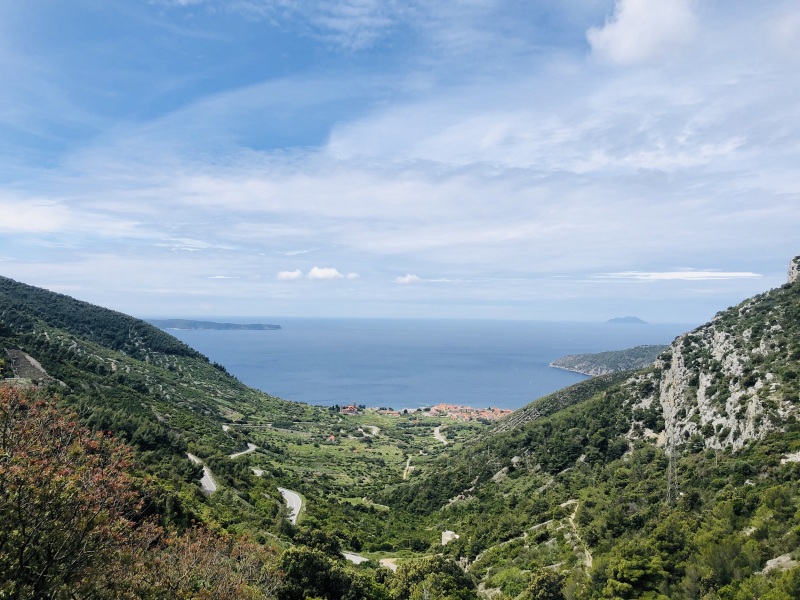
Later, a short walk through the forest brought us to our dinner destination, Meneghello Restaurant, where we ended our day with a wonderful seafood dinner. The restaurant is a part of the Meneghello Art Resort, hidden within lush gardens of rosemary, sage, lavender, basil, mint, cactus, pines, and palms, planted by Eugen Meneghello over 100 years ago. The restaurant is still run by the Meneghello family. Throughout the property, you will find artwork exhibited from the family’s collection which has been acquired throughout the years.
Still early in the season, the bay was not crowded, and so we decided to stay there overnight on buoy.
The next morning, we awoke again to the sun shining, reflecting in the turquoise waters of Palmižana bay. We enjoyed our fresh coffee on deck and decided to spend the afternoon enjoying the sea. Everyone onboard agreed that this was a day which should be spent enjoying the serene waters of the Adriatic, so we sailed to an empty bay nearby. Here it was only us. That is one of the truly wonderful and unique things about sailing – you can always find a bit of the sea just for yourself.
Although the water was still chilly, we could not resist jumping into the water and trying the water toys offered by the catamaran Aphrodite. I grabbed my bikini and a stand-up paddle board and hit the water.
When it was finally time to say goodbye to the Pakleni, we set sail back to Šolta island, this time anchoring in the stunning Tatinja bay. We arrived in time for a late lunch at Lonely Paradise. Aptly named, the restaurant is located on a cliff surrounded by beautiful lush gardens of palm trees, flowers and Mediterranean herbs. The appetizers were delicious – homemade cheese, prosciutto, marinated fish and tuna pate – with peka as well as other fish meals for our main course. We couldn’t resist enjoying the moment after lunch sitting on the restaurant’s terrace overlooking the bay and enjoying the sunset. Departing Solta the next morning, we set sail back to our base marina in Trogir, full of emotions, new experiences and new friendships.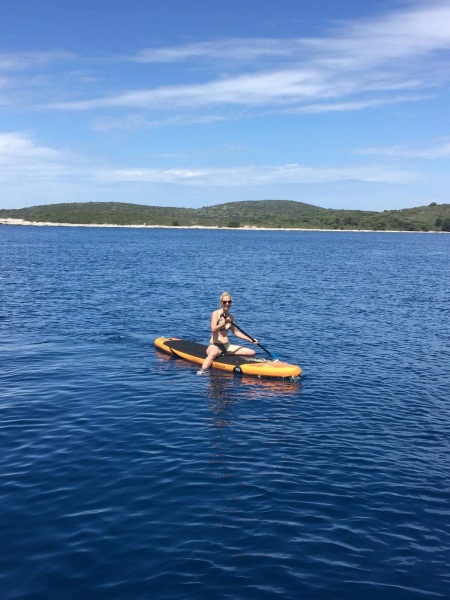
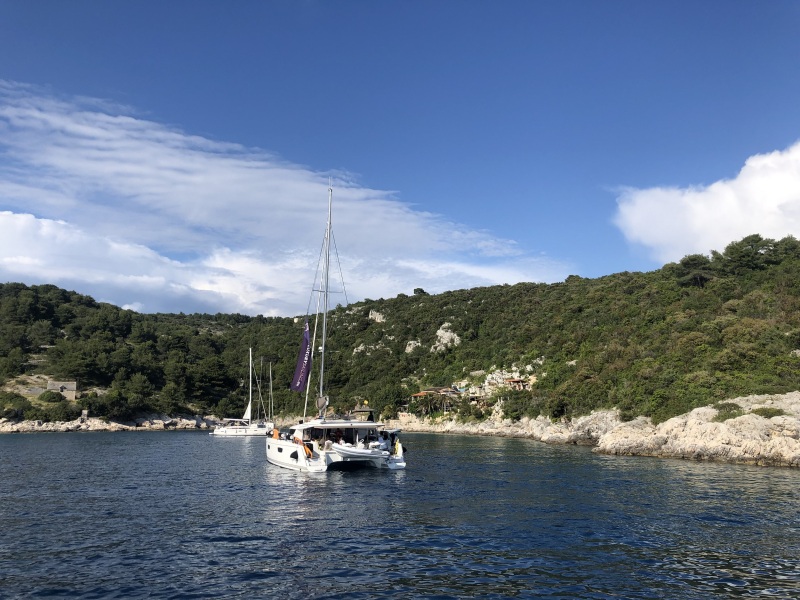
The week of sailing was unforgettable. To immerse myself into a sea of culture, history, spectacular coastlines, and stunning nature… to discover my perfect Croatian island… to cruise on the finest handpicked yachts in Croatia, with the best crew of skippers, hostesses and chefs… was a once in a lifetime experience I will forever treasure.
I look forward to using this experience, working with Wanda, and my colleagues to create the perfect, tailor made experience for our travelers.
Contact us to learn more about private yacht charters.
The History of Quarantine in Dubrovnik: An Interview with our Local Guide
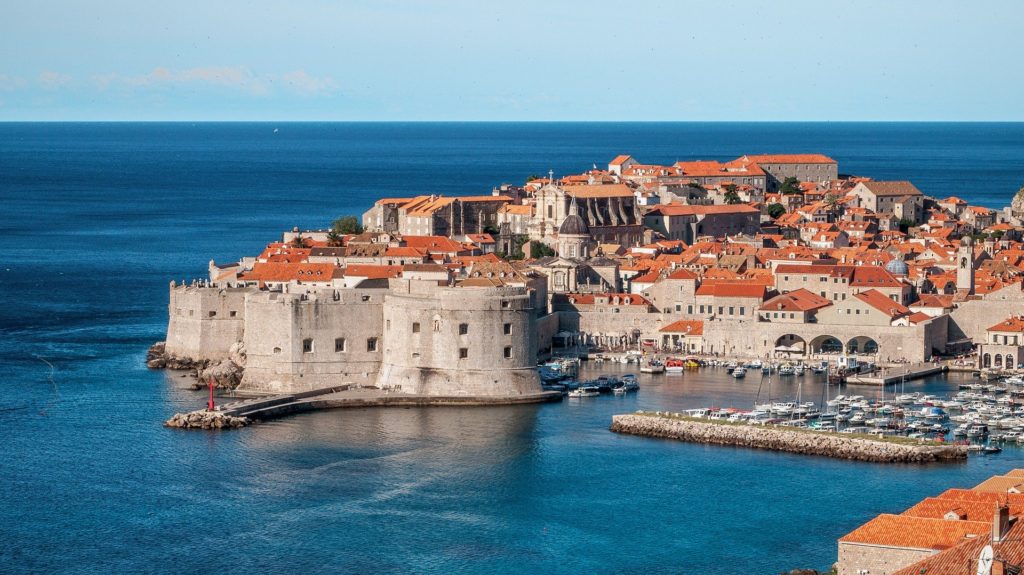
The city of Dubrovnik
As millions of people across the globe brace for another week of self-isolation in response to the COVID-19 pandemic, Tasteful Croatian Journeys delves into Dubrovnik’s fascinating history as one of the first places in the world to institute a mandatory quarantine in 1377. Here to help us is our trusted guide and Dubrovnik local, Marina Missoni Barišić, discovering the history of quarantine in Dubrovnik.

Tasteful Croatian Journeys’ local Dubrovnik guide, Marina Missoni Barišić
TCJ: Marina, thank you so much for taking the time to speak with us and share your knowledge. Maybe you could start by telling our readers a little bit about yourself, where you’re from, and how long you’ve been working with Tasteful Croatian Journeys.
Marina: I was born and grew up in Dubrovnik. After high school I went to study to Zagreb where I graduated Italian and Spanish language and literature at the Faculty of Humanities and Social Sciences, University of Zagreb. I started working as a tourist guide during my last years of college, in 2002, and, sincerely, I never thought that would be my main profession. Somehow, I fell in love with guiding…probably, because it’s the perfect combination of two things I love most – languages and history. With Tasteful Croatian Journeys I’ve worked successfully for over a decade and I like very much the personal approach to the clients. I appreciate also the clients’ interest for my homeland and their respect for Croatian culture and traditions.
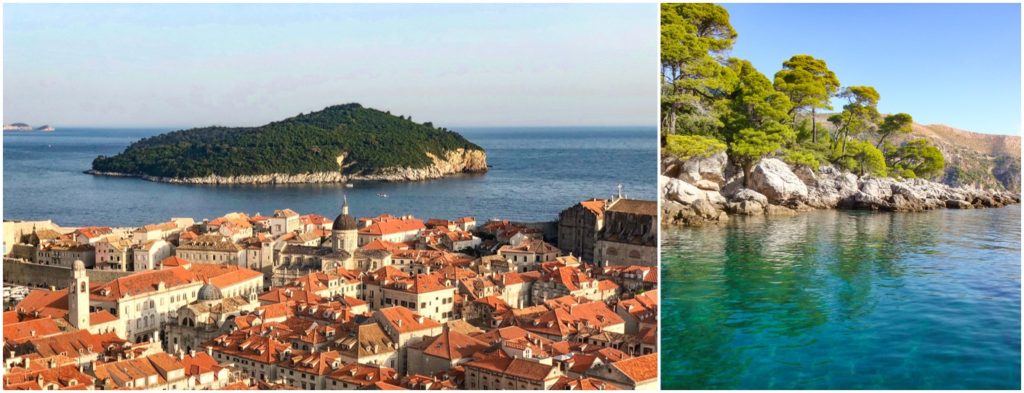
The Island of Lokrum, once used to quarantine arriving merchants
TCJ: It seems that regardless of where people live at the moment, we are all having a single shared experience due to the COVID-19 pandemic. Here in the United States a word we hear often on the news when talking about the pandemic is “unprecedented,” but when we look back at history, we know that is not the case in Dubrovnik, as it was one of the first places to ever institute a mandatory quarantine. Can you tell us a little more about that? When and why did Dubrovnik require a quarantine? What were they protecting against?
Marina: Since the Middle Ages, Dubrovnik developed the trading activities by sea, but also with the hinterlands and in the 14th century it was already a very successful business town. During the medieval period it often faced leprosy and other contagious diseases and because of that there were special areas outside the city, leprosariums, where the people with leprosy were isolated and several legal provisions in the Dubrovnik Statute regulated the society’s relation towards the lepers. In the mid 14th century the Great Plague, known as the Black Death, spread all over Europe and, unfortunately, Dubrovnik was not left out; the plague took many lives. In spite of it, life and trading activity went on, so in 1377 the Dubrovnik government issued the regulation that “every ship arriving from a pestilential area, with its crew, passengers and goods, needed to stop in the nearby island of Mrkan and Cavtat on the mainland for thirty days before coming into the town. After a while, the period was prolonged to forty days (ital. quaranta – forty) and that originated the word quarantine. Later was decided that the ships should stop in the islands of Bobara, Supetar and also Mljet.
The conceptual originality of this decision was the attempt of prevention of the contagious disease and not isolating already infected people. This slowed the circulation of people and the goods traffic, but it didn’t stop the economy completely.

A view of the lazaretto near Dubrovnik’s eastern gate (Ploče), and a view inside the lazaretto.
TCJ: Did the city have special facilities that were used for quarantining visitors? How did that work exactly?
Marina: In the beginning, the people stayed in provisional huts or in already existing buildings (such as the Benedictine monastery on Mljet). The huts could be easily burnt down as a measure of disinfection, but also because the Dubrovnik government didn’t want solid buildings in the places that an enemy could use for its base. During the 15th and the 16th century there were many epidemics of plague and that led to the construction of new lazzarettos for the isolation of the infected (in the western part of town called Danče, on Lokum island) and, finally, after considerable hesitation, it was decided that a new, big lazaretto should be built close to the eastern town’s gate, in Ploče area.
TCJ: How did Dubrovnik’s contemporaries handle the threat of infectious diseases? Was Dubrovnik’s position any different? How?
Marina: For what I’ve read, Venice, Genova and other merchant city states also introduced the decisions about isolating the infected in determined areas and about stopping the ships arriving from the suspicious regions; as in Dubrovnik, also in Venice there was a special sanitary commission composed of noblemen who controlled the hygienic conditions in the town, registered the deaths, took care of the clothes and objects remained after the deceased etc. In the 15th century Venice founded the first lazzaretto, that is, a place with a public hospital determined to isolate and take care of the infected.
Dubrovnik’s position was somehow different. By the end of the 15th century the Ottomans conquered the today’s Bosnia and Herzegovina which meant that just few miles away from the town there was the border with the Ottoman Empire. Dubrovnik had established good diplomatic relations with the Turks even before and continued with a successful trade activity all through the Ottoman territory. Unfortunately, the plague often spread to Dubrovnik territory from there and that is why the whole area next to the eastern town’s gate, Ploče, was used as a quarantine. Before the construction of the big lazaretto there were smaller buildings used for quarantine or even private houses where the merchants, or Dubrovnik diplomats who were coming back from their missions in the Ottoman Empire, needed to stay during their quarantine period. In 1647 was finished the big complex of Lazareti (lazarettos) containing ten buildings and five inner courtyards for the accommodation of the quarantined passengers and the warehouses where the goods were deposed and ventilated. Lazareti were used as a quarantine for the ships and for the caravans. The duration period of the quarantine was determined by the sanitary commission according to where the passengers were coming from and the evaluation of the risk of a disease in that moment. It could vary from 7, 8 to 40 days. Lazareti were used as a quarantine, more or less intensively, until 1870-ies.
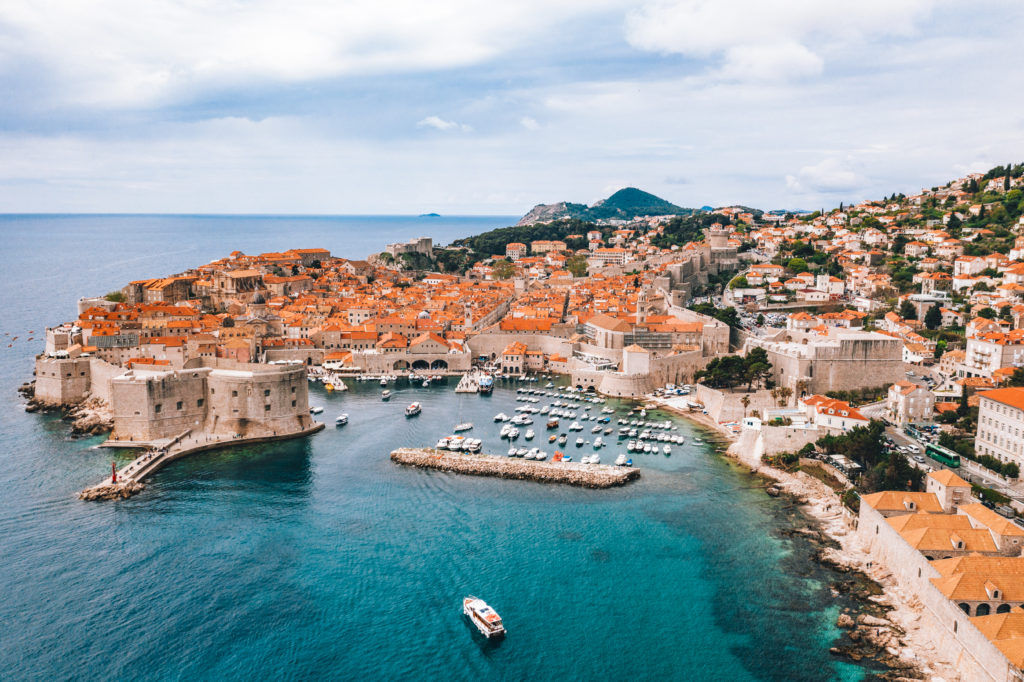
A view of Dubrovnik with the eastern gate (Ploče) lazaretto visible on the right.
TCJ: Do the Lazarettos still exist today? Can visitors see them?
Marina: Yes, they still exist. Whenever I start a walking tour from a hotel situated in the eastern part of town, we always walk through the Lazareti plateau so the guests get an idea about what the complex was and that’s a perfect introduction to the tour.
After the last restoration, the Lazareti complex was reopened in July 2019 and it is again used as a place for different exhibitions, art workshops, ballet and folklore rehearsals and performances, concerts etc.
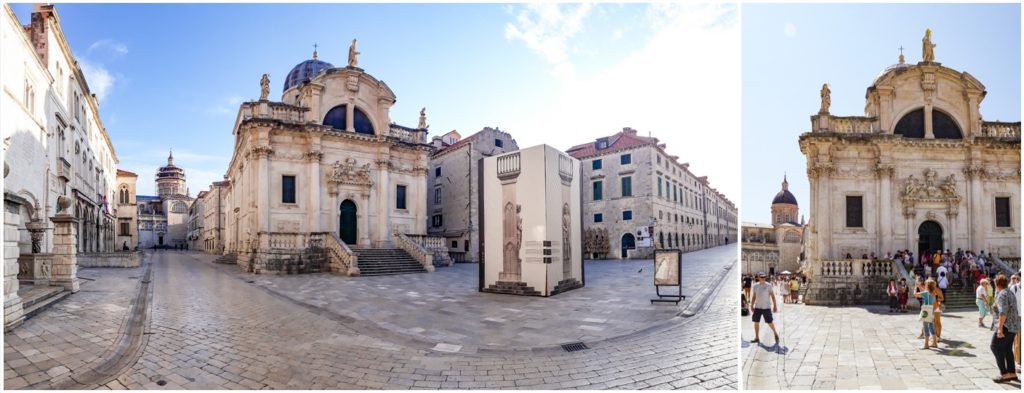
On the left: St. Blaise’s Church in Dubrovnik during the COVID-19 pandemic. On the right: St. Blaise’s Church on a warm September day.
TCJ: How is Dubrovnik handling the present-day pandemic? What sort of measures has the government instituted to protect its citizens? Tell us a little about your day to day life right now.
Marina: The government started to introduce the preventive measures by the middle of March when the number of infected grew and when our epidemiologists evaluated it was the moment to reduce social contacts. The measures were introduced gradually – closure of schools and kindergartens, cancellation of all public events and activities, closure of museums and galleries, then restaurants, bars, shops besides supermarkets and pharmacies that work reduced hours. The children have a virtual school, they get their materials through different programs on tablets, by e-mail etc. Only the people employed in the hospitals, police and other public services work, the others are advised to stay at home. Most of the people are disciplined and respect the recommended measures. It seems that our government instituted those measures in the right moment, but it is still too early to say anything on how and when it is going to end.
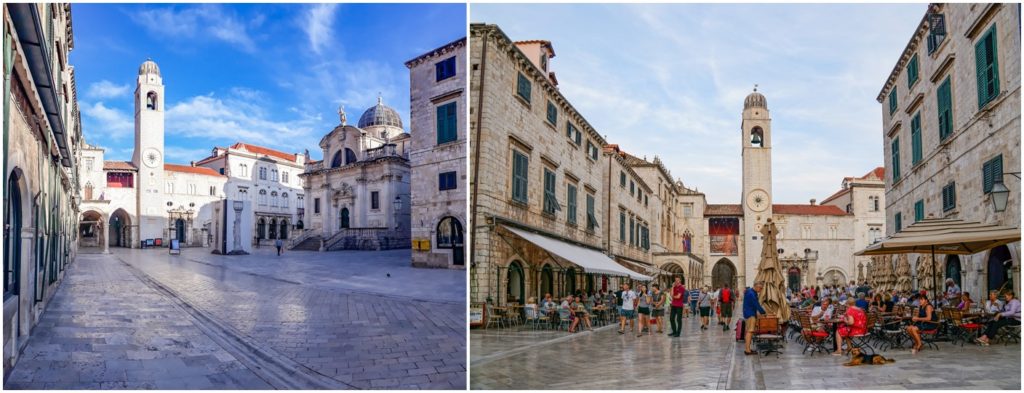
On the left: the streets of Dubrovnik during the COVID-19 pandemic. On the right: Dubrovnik on a warm September day.
TCJ: We know that tourism is a huge part of your country’s economy. Obviously, the pandemic has had a huge impact on this. How have you seen your community come together during this time of crisis to deal with this challenge?
Marina: This crisis already has and definitely will have huge economic consequences, especially because in this moment it is impossible to plan anything and many people depend on it. The government released temporary financial measures to help enterprisers, especially those with employees, but it is all temporary. As far as the everyday life, there are organizations like the Civil Protection that trained volunteers who help the elderly and the people in need in their everyday needs like groceries, medications etc. Each neighborhood has a group of volunteers that walk around and warn the people if they notice that the recommended measures are not being respected in some way.

On the left: Rector’s Palace in Dubrovnik during the COVID-19 pandemic. On the right: Rector’s Palace on a warm September day.
TCJ: Our team is anxious to return to Croatia and see all of our friends and colleagues there. Like us, we are sure that many other people have a new found appreciation for the freedom of travel. Why should Croatia be at the top of their lists once travel restrictions have eased and the virus is no longer a concern?
Marina: The good thing about Croatia is that it can offer history, natural beauties and relaxation with short distances. The guests can do the walking tour in the morning, and already in the afternoon enjoy relaxing at the beach with a view to the historical sites. I am especially happy when the guests say that they have already been to Croatia and decided to come again, some even several times. We will do our best to keep the quality of our services so that the visitors feel comfortable in our country and that they keep it in a wonderful memory once they come home.
TCJ: Thank you Marina, we of course agree that Croatia has so much to offer curious travelers! Thank you for taking the time to speak with us and tell our readers more about Dubrovnik’s fascinating history.
Tasteful Croatian Journeys creates custom luxury itineraries, individually crafted and exquisitely managed by award-winning specialist, Wanda S. Radetti, and her team of trusted travel designers. Our travelers enjoy upscale amenities, chauffeured transport, and curated cultural experiences, enhanced by real-time personalized concierge support. Contact us to plan your Croatian trip of a lifetime!
Select photos by Marina Missoni Barišić and the Tasteful Croatian Journeys team.
A First Timer’s Guide to Plitvice Lakes National Park
Croatia’s oldest and largest national park, Plitvice Lakes has long been renowned for its pristine natural beauty… but there is more to discover here than meets the eye. Beyond the terraced lakes and tumbling cascades lie a region home to fascinating history, rich traditions, and warm, friendly people. Here, Tasteful Croatian Journeys shares our guide for guests visiting Plitvice Lakes National Park for the first time. From practical information to choosing the right trail, this guide covers everything you need to know.
About Plitvice Lakes
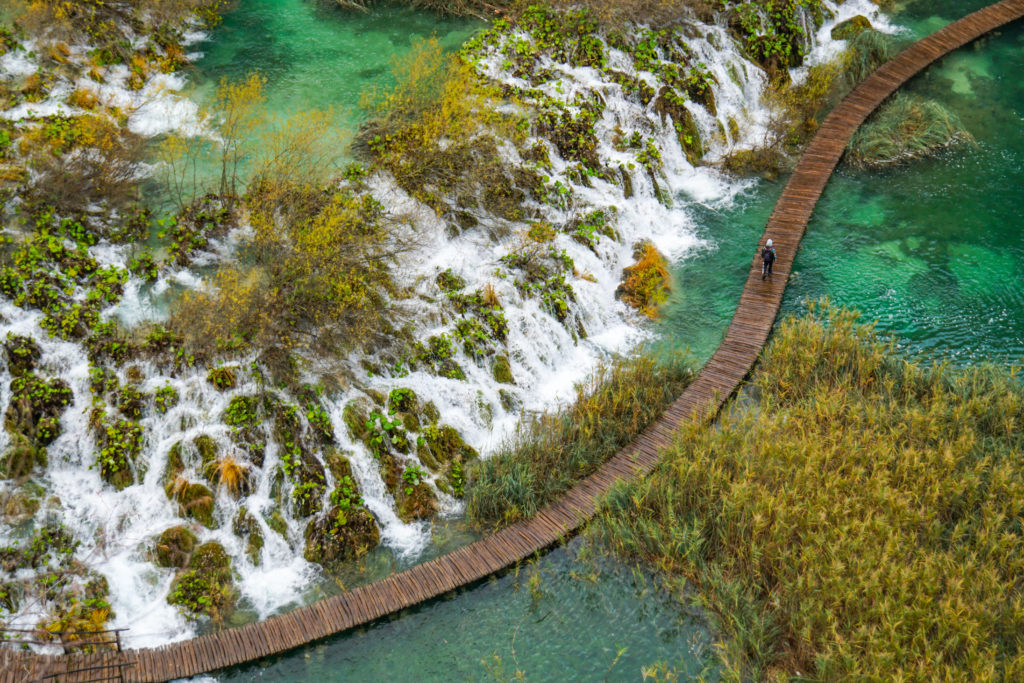
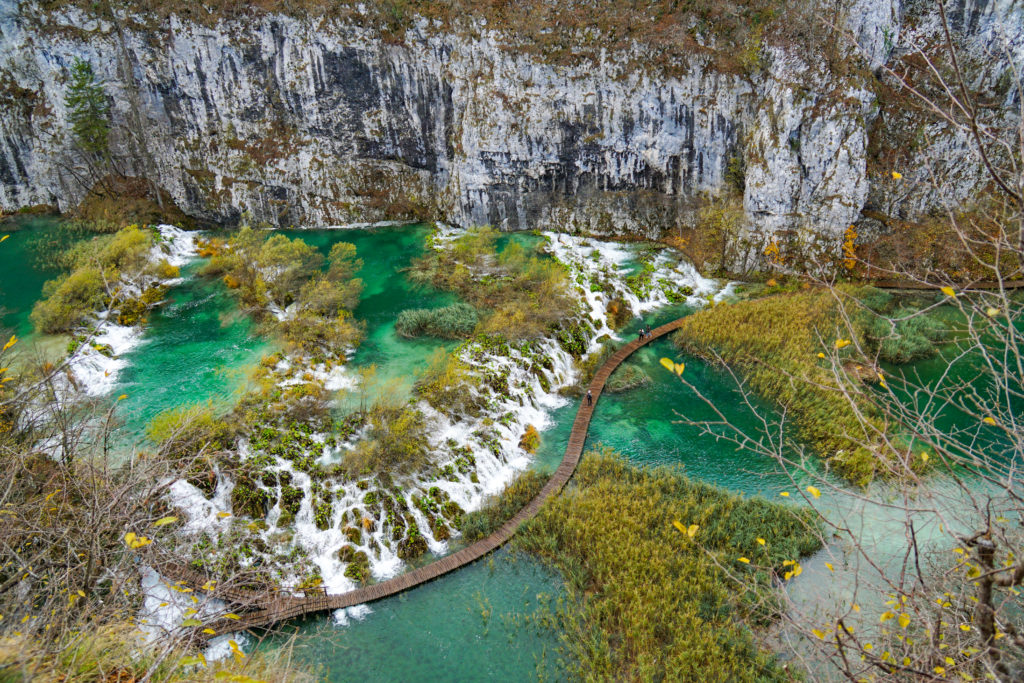
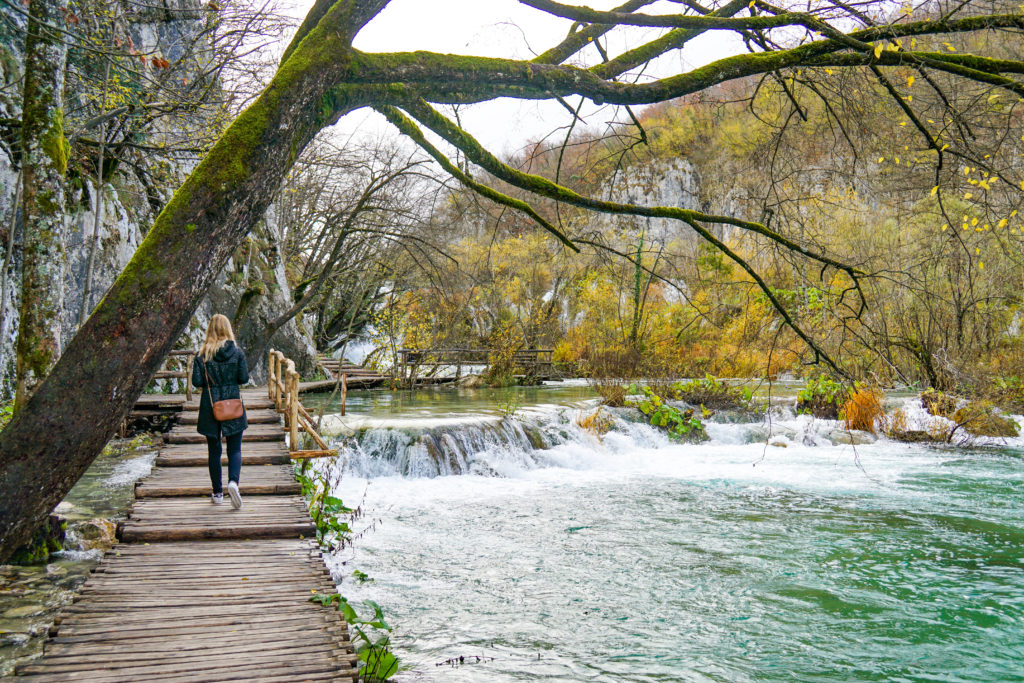
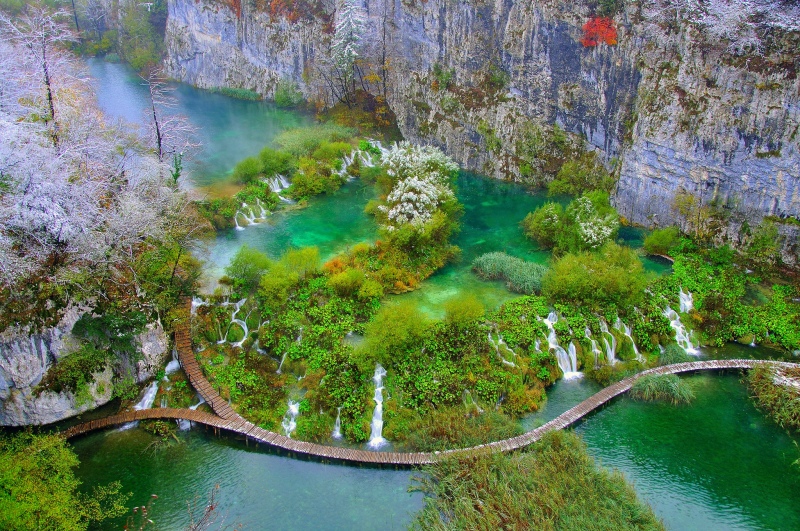
Plitvice Lakes National Park consists of 16 crystalline lakes, emerald-blue in color and connected by a series of more than 90 cascades and waterfalls.
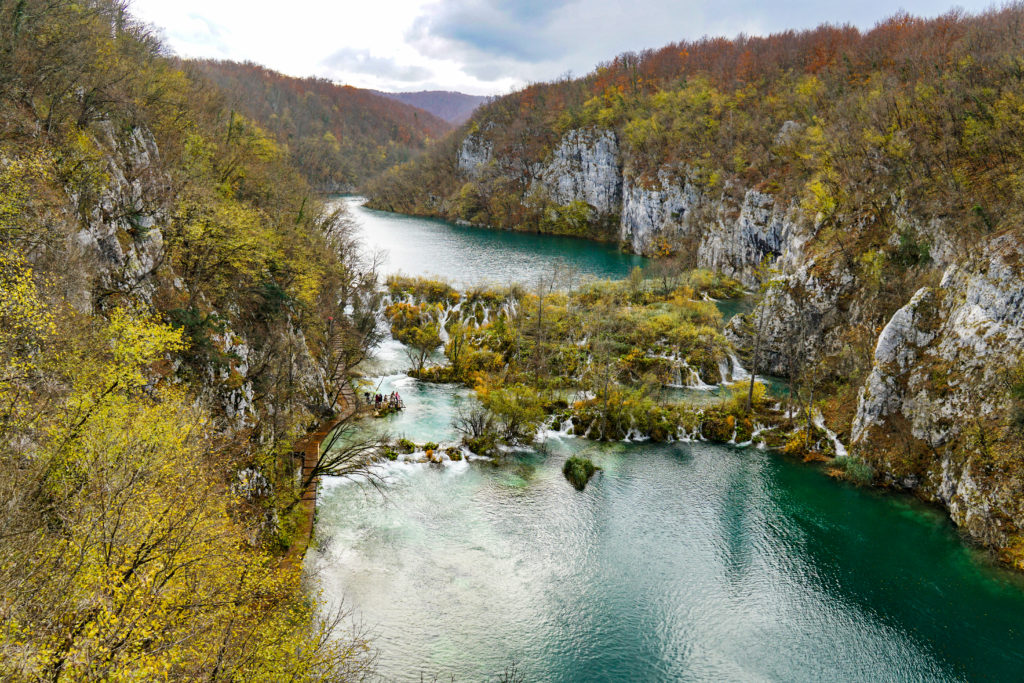
The park has been divided into two sections, the Upper Lakes and the Lower Lakes, based on their geological features. The twelve Upper Lakes were formed on impermeable dolomite rock. The names of the lakes are Prošćansko Jezero, Ciginovac, Okrugljak, Batinovac, Veliko Jezero, Malo Jezero, Vir, Galovac, Milino Jezero, Gradinsko Jezero, Burgeti, and Kozjak. The four Lower Lakes were formed in permeable limestone and cut deep into a canyon amid dramatic cliffs. They are Milanovac, Gavanovac, Kaluđerovac and Novakovića Brod.
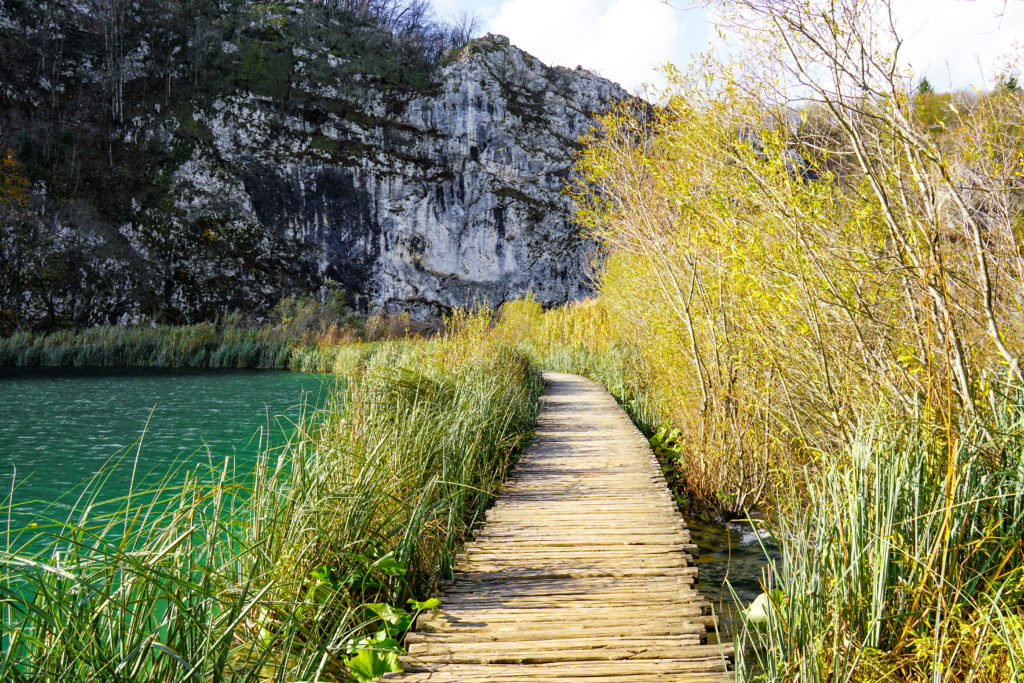
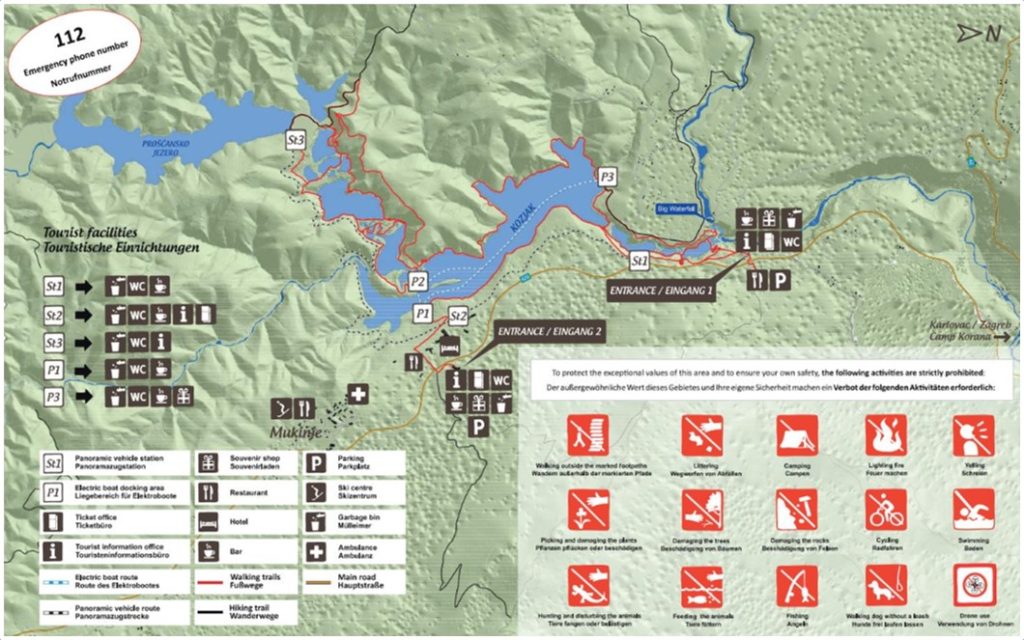
A series of wooden footbridges and pathways snake over the lakes and around their shores providing gentle trails for visitors to wander, explore, and take in the breathtaking views. Portions of the park are also connected by electric boats and a “panoramic train” (this is not actually a train as it does not run on a track – rather, it is a very long bus).
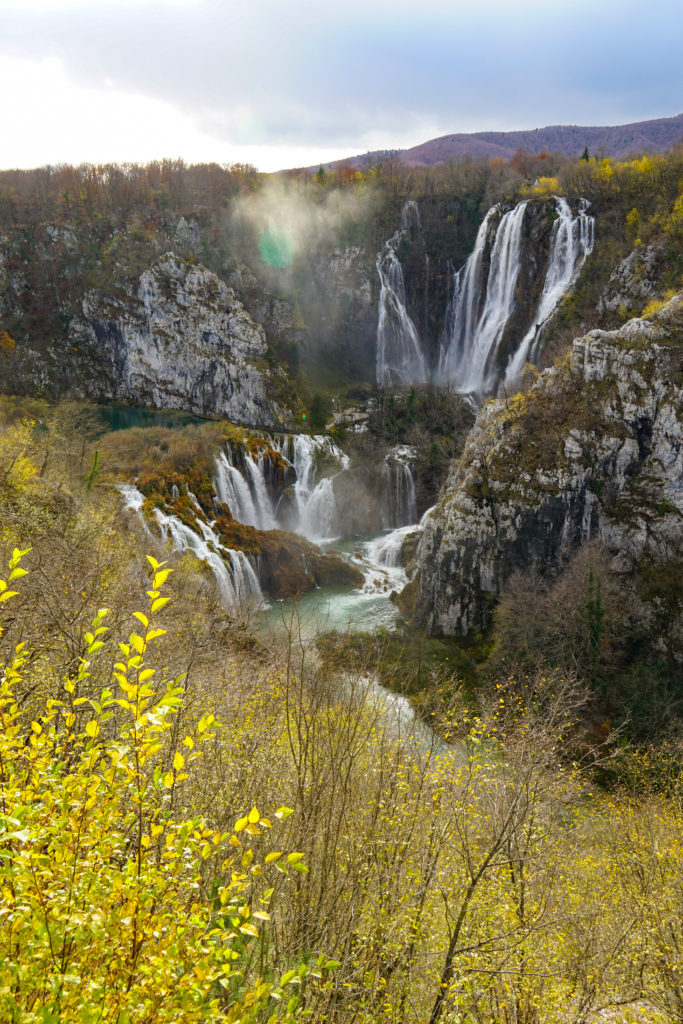
Highlights within the park include Veliki Slap, also known as the Great Waterfall. At 78 m high, it is the tallest waterfall not only the park, but in all of Croatia. From certain viewpoints, the Sastavci waterfalls appear to be an extension of this, creating a dramatic scene from which the Korana River springs up and flows north toward the town of Karlovac. Numerous viewpoints throughout the park provide stunning views. The eastern ridge of the canyon which overlooks the Lower Lakes provides particularly beautiful views which will surely be familiar to those who have seen images of the park in magazines or on postcards.
The History of Plitvice Lakes National Park
In the sixteenth century, the area now known as Plitvice Lakes National Park was home to the Croatian Military Frontier which acted as a borderland of Hapsburg Austria to the Ottoman Empire. Perhaps it was fear of the Turks that inspired some to refer to these lands as “the devil’s gardens,” or perhaps it was simply the deep awe with which people regarded the dense woods surrounding the lakes. Legends were formed about this isolated and unexplored territory, telling stories of fairies, giants and other mystical creatures. Over the next few hundred years, the area saw many changes in rule with even Napoleon briefly presiding over the region. Marked by frequent turmoil, it remained largely unpopulated throughout that time.
The late 1800s marks the beginning of tourism in the region, with hotels erected for visiting Austrian royalty. In fact, some of the hiking trails developed during that time still exist today. Flash forward to 1949, and Plitvice Lakes National Park was officially opened, receiving UNESCO World Heritage status in 1979. Tourism was booming in the 1980s, and the national park was one of then Yugoslavia’s most popular attractions. However, on Easter Sunday in March 1991, things took a tragic turn when Plitvice Lakes became the site of the first armed confrontation of the Croatian War of Independence. The rising tensions between Serbs and Croats led to shots fired which resulted in two deaths, twenty wounded, and four hundred tourists evacuated. The park was held by Serb rebels and hotels and other facilities used as barracks until August 1995 when the Croatian Army retook the region.
Today, admiring the beauty of the lakes and their glittering falls, it is hard to imagine the blood that once spilled on this soil, or the landmines which littered the forest.
Choosing the Right Trail
Plitvice Lakes National Park provides seven recommended routes exploring both the Upper and Lower Lakes. The park refers to these routes as “programs,” each with its own circuit identified by markers throughout the park. Each program has a corresponding letter and is color coded based on starting point. Visitors entering the park at Entrance 1 can choose between four routes, marked in green. The four routes beginning at Entrance 2 are marked in orange. Info panels at the park’s entrances also display the routes, and maps are available at info points.
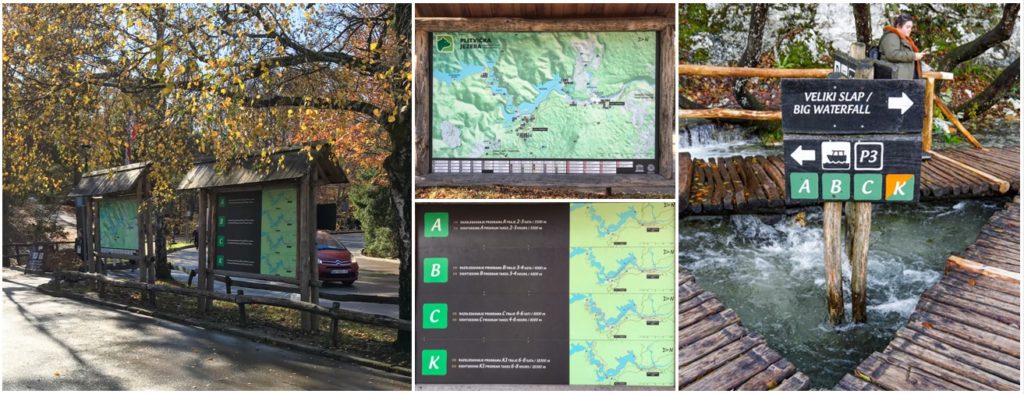
The routes vary in distance and therefore in the length of time needed to complete them. The shortest route takes roughly 2 hours and covers many of the park’s highlights. The longest route can take up to 8 hours and tours both the upper and lower lakes. All seven of the park’s programs can be found on their website.
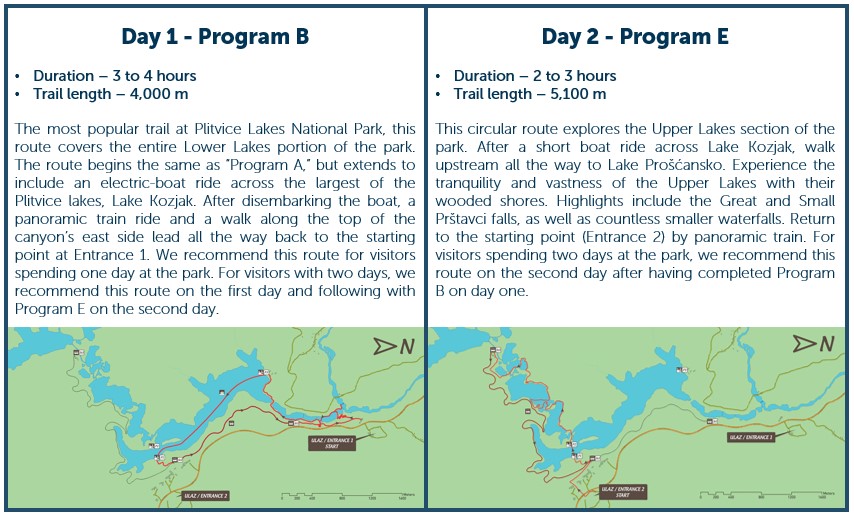
For visitors with only one day at Plitvice Lakes National Park, we recommend “Program B” starting at Entrance 1. This route covers the Lower Lakes and provides a great overview of what the park has to offer. It will satisfy travelers who are looking to experience the park’s main attractions, see stunning scenery, take beautiful photos, and connect with nature. Many of Plitvice’s most recognizable vistas will be seen on this route. If staying a second day, we recommend following up with “Program E” to cover the Upper Lakes beginning at Entrance 2. The combination of those two programs will cover the entire lakes area of the park.
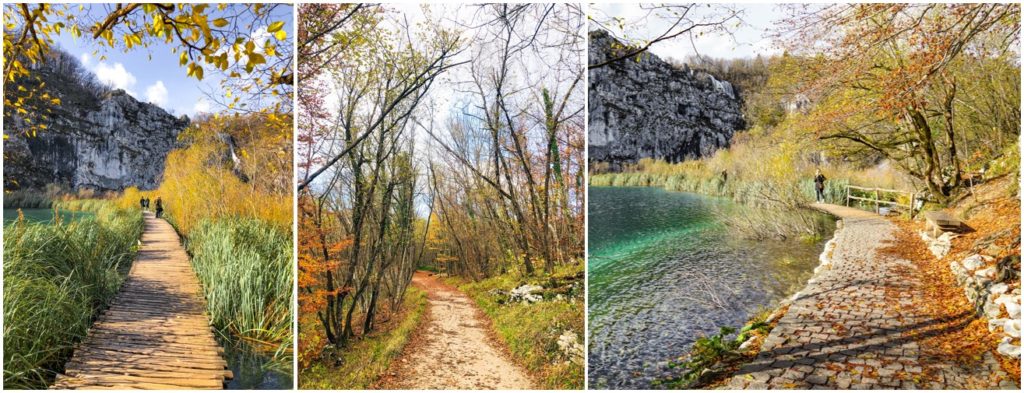
The walking trails in the park are well maintained and safe. The vast majority of the paths are flat, though in some areas you may find stairs or an incline. In general, however, the trails are not challenging and appropriate for a variety of ages and fitness levels. Wooden trails snake over the lakes while dirt paths or stone walkways connect other areas. Be sure to exercise caution when on uneven surfaces. Mist from the waterfalls can also cause some areas to be slippery.
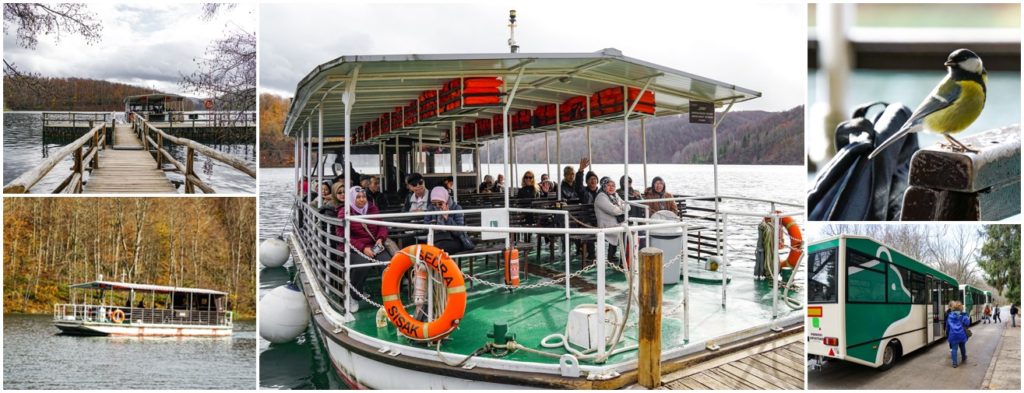
Some of the programs involve an electric boat or panoramic train ride in addition to the walking trails. These provide a relaxing and scenic way to cover more ground at the park. Your entrance ticket should be kept on you at all times and grants access to both the boat and train. Schedules vary with season, so be sure to check the timetable at one of the info points.
Plitvice Beyond the Lakes
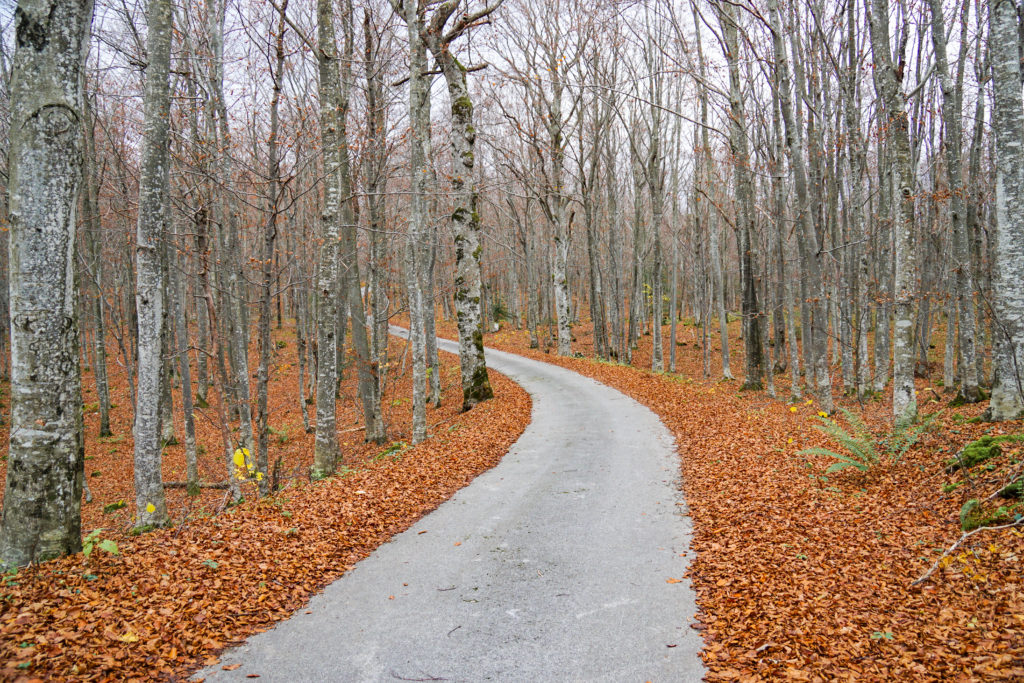
Plitvice Lakes National Park encompasses an area of just under 300 square kilometers with the lakes themselves comprising just 1% of this expanse. The remainder of the park is made up of a wooded forest of beech, fir and pine trees which is home to deer, bears, wolves, wildcats and rare bird species – a paradise for nature lovers and curious travelers alike.
In addition to the walking routes which circle the Lower and Upper Lakes, hiking trails provide the opportunity to explore the wooded areas and surrounding mountains. Beyond the park, this region is a wonderful place to enjoy activities such as river kayaking, cycling, horseback riding, ziplining, and more. Our Tasteful Croatian Journeys Concierge, Mirela, is happy to make these arrangements for our travelers. Roughly 30 minutes north of Plitvice Lakes National Park is the small town of Rastoke. Popular among tourists for its cascading waterfalls, this village provides a nice opportunity to stop and stretch one’s legs when making the drive to Plitvice Lakes National Park from Zagreb.
Practical Information
Tickets – Tickets to Plitvice Lakes National Park must be purchased a minimum of 2 days before entering the park. Tickets can be purchased for a single day, or multiple days, and must include an entrance time and gate for your first point of entry. There are two entrances to the park. If you choose to do a multi-day ticket, entrance on your first day must be at the time and entrance specified on the ticket. On all subsequent visits you may enter through any of the park’s entrances. You will be able to enter the park 30 minutes before, or up to 1 hour after the time specified on your ticket. Tickets can be purchased on the Plitvice Lakes National Park website.
Facilities – Info points, trail maps, luggage storage, ATMs, currency exchange, restrooms, souvenir shops, and restaurants can all be found at both Entrance 1 and Entrance 2 of the park. Several government run National Park hotels are also located at Entrance 2 of the park.
Within the park there are several restaurants and cafés serving simple fast food such as grilled meats, sandwiches, or pastries and hot or cold drinks. They are located at the P3 Electric Boat stop and the St1, St2 and St3 panoramic train stops. Restrooms can also be found at those locations. Just outside the park several restaurants with more expansive menus can be found. More on those and the hotels below.
Guides – A guide is not required to tour Plitvice Lakes National Park and the well-marked routes make the park easy to navigate on one’s own. However, for those seeking deeper insight to the park’s ecology and history, we highly recommend a private guided tour. Not only will a local guide share their valuable knowledge about the national park, but also about the region, its culture, and its unique traditions.
What to Wear – When touring the park, it is important to wear the appropriate clothing and footwear. Sneakers, hiking boots, or comfortable walking shoes are recommended with a non-slip sole that is suitable for a variety of surfaces such as wood, stone and dirt. Do not wear flip-flops! Mist from the waterfalls or rain showers can also cause wet conditions for which a waterproof jacket is advisable. In the summer, lightweight clothing as well as a hat, sunglasses, and sunblock are recommended. In cooler temperatures, plan on long pants and heavier clothing. Be sure to bring a bottle of water as it is important to stay hydrated.
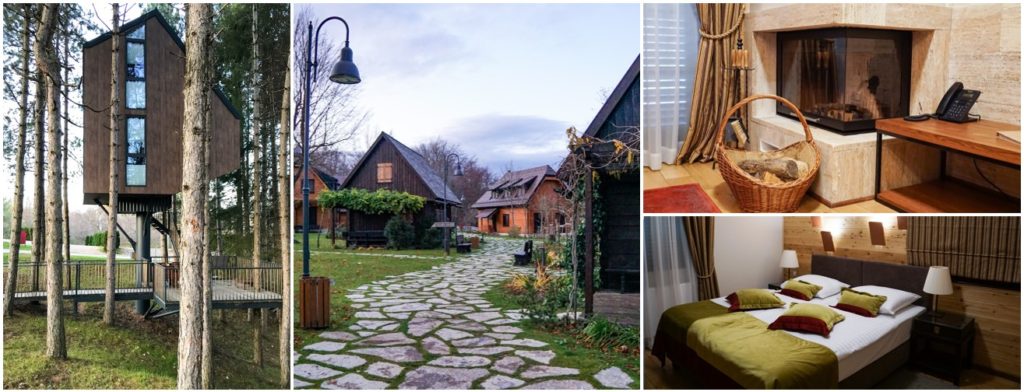
Where to Stay – There are a number of government run hotels located at Entrance 2 of the park. These include Hotel Jezero, Hotel Plitvice, and Hotel Bellevue. They all provide simple but clean and affordable accommodation with an ideal location exploring the lakes. For something more unique, consider one of the following.
- Plitvice Holiday Resort – This complex offers a little bit of everything, from bungalows and lake houses to tipi camps and RV parking – but the real gem are the treehouses which house up to 4 people in elevated apartments set among pines just across from a small manmade lake.
- Fenomen Plitvice Resort – The most luxurious of Plitvice Lakes accommodation, the Fenomen is a 4-star property located within the boundaries of the national park, a short walk from the peak of the highest waterfall. The property is made up of beautifully designed wood cabins which retain the traditional style of the region while offering travelers a comfortable and stylish abode. One-bedroom suites feature fireplaces, with a basket a wood ready for you to create your cozy indoor respite from the wilderness.
- Hotel Degenija – This 4-star family-run property exudes warmth and hospitality from the moment you enter. Rooms are tasteful, clean and comfortable, but the real draw is the lovely outdoor swimming pool set on a hill with a view of the surrounding mountains. Hotel Degenija also features two restaurants, detailed further below.
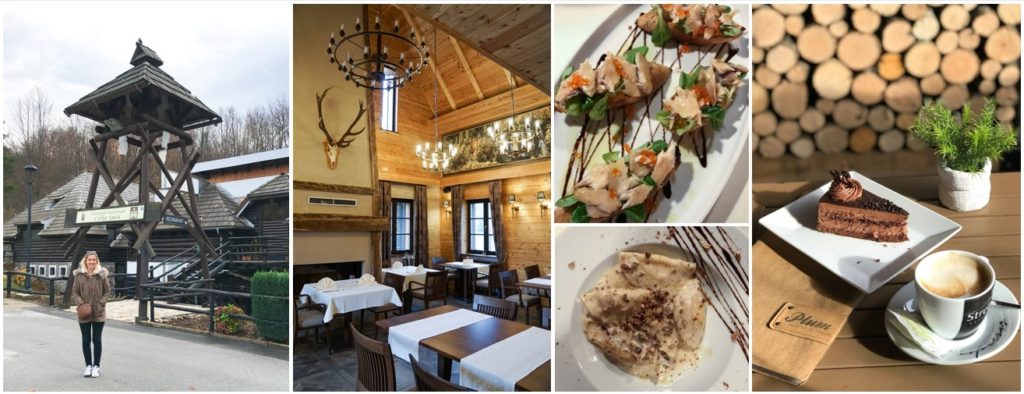
Where to Eat – The cuisine of Croatia’s rugged and mountainous interior reflects the rich variety of natural ingredients available to the region. Here you will find a great number of restaurants offering rural, traditional meals, which focus on wild game, freshwater fish, and an array of hearty vegetables. National Restaurant Lička Kuća, located just outside Entrance 1 of Plitvice Lakes National Park, is an homage to the region and its cuisine. The enormous restaurant is decorated in the traditional style with artifacts from the region on display for visitors. In the center of the restaurant, an open hearth displays lamb roasting on a spit and “peka” (a hearty meat and vegetable dish) cooking under an iron dome. The restaurant makes use of regional recipes and locally sourced products. Farther afield, Hotel Degenija has two restaurants which have become popular dining spots for both locals and in-the-know travelers alike. The first is the recently renovated Restaurant Degenija which is well known for its quality cuisine, ranging from traditional meat dishes to grilled local trout to freshly made pizzas. The second is Bistro & Caffe Plum, a stylish café which offers international cuisine and impressive cocktails in a modern space with an inviting terrace. Finally, if seeking something a bit upscale, try Restoran Kozjak at the Fenomen Plitvice Resort. The interior resembles a modern hunting lodge with rustic wood ceilings and antlers as décor. The menu features traditional meals with a sophisticated touch, such as smoked trout bruschetta or ravioli stuffed with honey and traditional basa cheese from the Lika region.
Opening times – Opening hours vary seasonally, and it is important to note that the certain trails and/or areas of the park are not open during the winter season. For more information about current conditions when you visit, please consult the Plitvice Lakes National Park website.
Spring opening hours are effective from the last Sunday in March to May 31st
Park opens at 8:00am
Last entry at 5:00pm
Park closes at 7:00pm
Summer opening hours are effective from June 1st to August 20th
Park opens at 7:00am
Last entry at 6:00pm
Park closes at 8:00pm
Early Autumn opening hours are effective from August 21st to September 30th
Park opens at 7:00am
Last entry at 5:00pm
Park closes at 7:00pm
Late Autumn opening hours are effective from October 1st until the last Saturday in October
Park opens at 8:00am
Last entry at 4:00pm
Park closes at 6:00pm
Winter opening hours are effective from the last Sunday in October until the last Saturday in March
Park opens at 8:00am.
Last entry at 2:00pm.
Park closes at 4:oopm
Location – Plitvice Lakes National Park is located in Croatia’s Adriatic hinterland, roughly 2 hours south of the capital city of Zagreb, and about 1.5 hours north of the historic port city of Zadar. It is an easy day trip from either location and also makes a wonderful overnight stop for travelers en route to Dalmatia from areas such as Istria or Zagreb. Tasteful Croatian Journeys can make arrangements for your visit via private transfer in a luxury vehicle with a professional, English-speaking local driver.

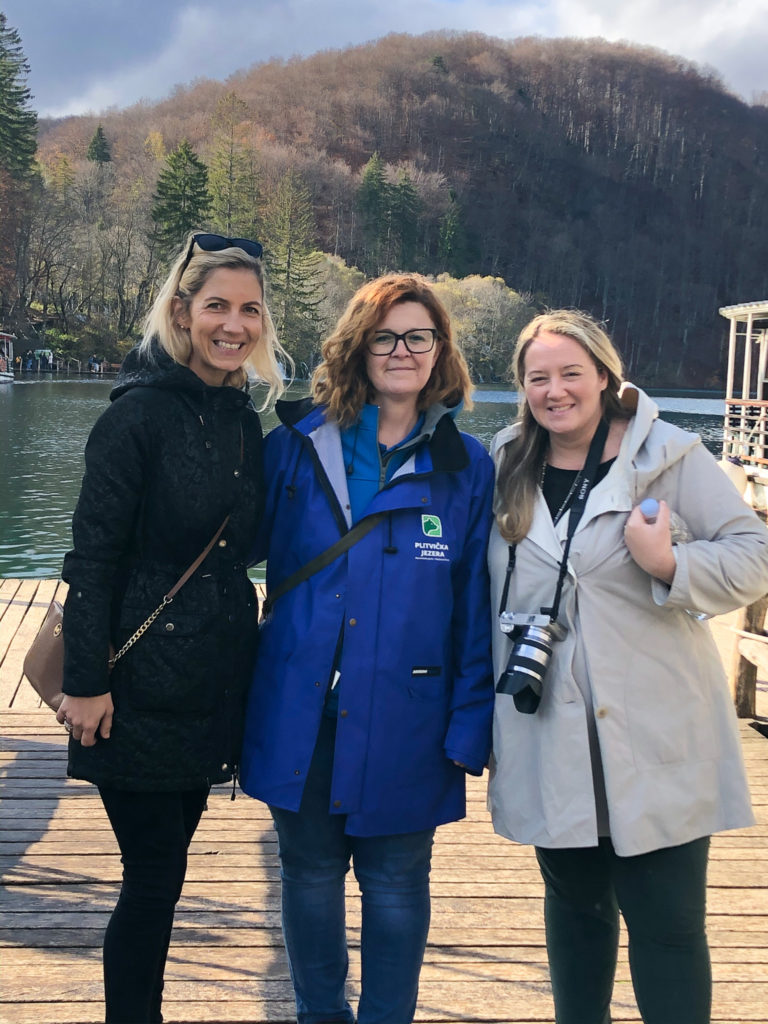
Note: Site inspections are an important element of our work. Before recommending a hotel, restaurant, activity or location to our travelers, we first personally explore, experience, test, taste, and finally, if worthy, approve the experience. Only then do we invite our travelers to join in the experience. Recently, our Luxury Travel Designer Tia Lovisa Moreira, and Tasteful Croatian Journeys Concierge, Mirela Benic, traveled through northern Croatia conducting site inspections. All photos used above were taken by Tia and Mirela on their recent trip in November 2019. To see more images of Plitvice Lakes National Park, we invite you to view the gallery of below which has been provided directly by the National Park.
 About the Author: