Time-Saving New Ways To Travel From The U.S. To Croatia
May 12, 2021
Delta and United recently announced plans for non-stop service from the New York area to Dubrovnik, a UNESCO World Heritage site, and, as a filming location for Game of Thrones, a magnet for hundreds of thousands of fans of the show in recent years.
Wanda Radetti, founder and president of Tasteful Croatian Journeys, which specializes in custom itineraries to the country (Condé Nast Traveler has listed her as the World Top Destination Specialist for Croatia since 2006)…

Croatia’s 5 Most Beautiful Beaches
If you are craving a little vitamin sea, look no further than sunny Croatia! With over 1,000 miles of pristine coastline and more than 1,200 islands sprinkled throughout the Adriatic, this enchanting country has plenty to offer in the way of stunning natural beaches. From white sand lagoons on far-flung islands, to hidden pebble coves framed by towering cliffs, Croatia has a beach for every taste. Tasteful Croatian Journey’s team of luxury travel designers and destination specialists have scoured the country to find its very best beaches. We have searched far and wide to compose this list of idyllic escapes that aren’t just beautiful, they’re bucket list worthy! Each one is different and completely unique – an example of the astonishing variety to be found in Croatia – but what they all have in common is their jaw-dropping scenery and magnetic allure.
Get your cameras ready and prepare to be the envy of Instagram, because here are the 5 most breathtakingly beautiful beaches in Croatia…
5. Sakarun Beach
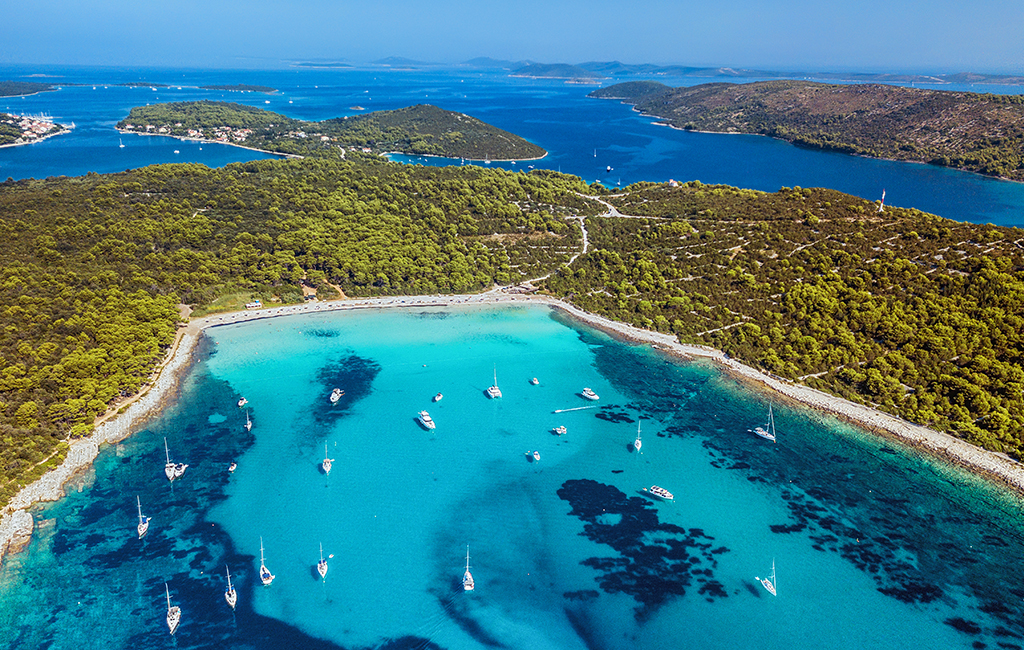
White sand and shallow waters on Dugi Otok Island
The rugged southern coast of Dugi Otok Island, home to the Telašćica Nature Park and gateway to the Kornati Islands, recently graced the cover of the April 2021 issue of Conde Nast Traveler, inviting readers to “Sail Away to Croatia” and bringing recognition to a little-known island still largely off the radar of most American travelers.
Nicknamed, “Long Island,” Dugi Otok is a slender stretch of land marked by great geographical diversity and contrast. In the south, you’ll find the magazine cover cliffs and raw, untamed nature. In the north, quiet coves and tranquil beaches, the most famous of which is Sakarun Beach. Known for its beautiful white sand (a rarity among Croatia’s mostly pebble beaches) and pristine turquoise waters, the half-mile long Sakarun Beach gives off some seriously Caribbean vibes. The beach is made up partially of smooth white stones, which make way for fine white pebbles, and finally pure white sand closer to the water’s edge. The sea floor is completely sandy, lending to the incredible turquoise hue of the water. The shallow bay faces south, inviting visitors to wade and bathe in the crystal-clear waters while enjoying unspoiled views of the open sea and the uninhabited western coast of the island. Some distance out, past a rope divider, sailboats and motor yachts drop anchor as happy passengers splash off their bows. Several small beach bars cater to visitors, offering refreshments and light meals as well as sun loungers and umbrellas for rent. Cradling the bay is a thick pine forest, giving the illusion of complete seclusion from the outside world. In reality, the nearest villages are no more than a bike ride away, with Božava, the largest, offering a miniature train to transport visitors back and forth from the beach. Parking is also available for those who choose to drive, however we recommend visiting by private yacht excursion from Zadar instead, as ferry connections can often be complicated and time consuming.
Sakarun Beach Overview
Also known as: Saharun Beach
Location: Dugi Otok Island
Nearest villages: Veli Rat, Verunić, Soline, and Božava
Nearest major city: Zadar (mainland)
Beach type: small pebbles and sand
Chairs & Umbrellas available for rent: yes
Facilities available: restroom, several beach bars offering refreshments, snacks, and light meals
Best way to visit: private yacht or speedboat – arrive in style and without the inconvenience of adhering to a ferry schedule!
4. Pasjača Beach
A hidden gem on Konavle’s coast
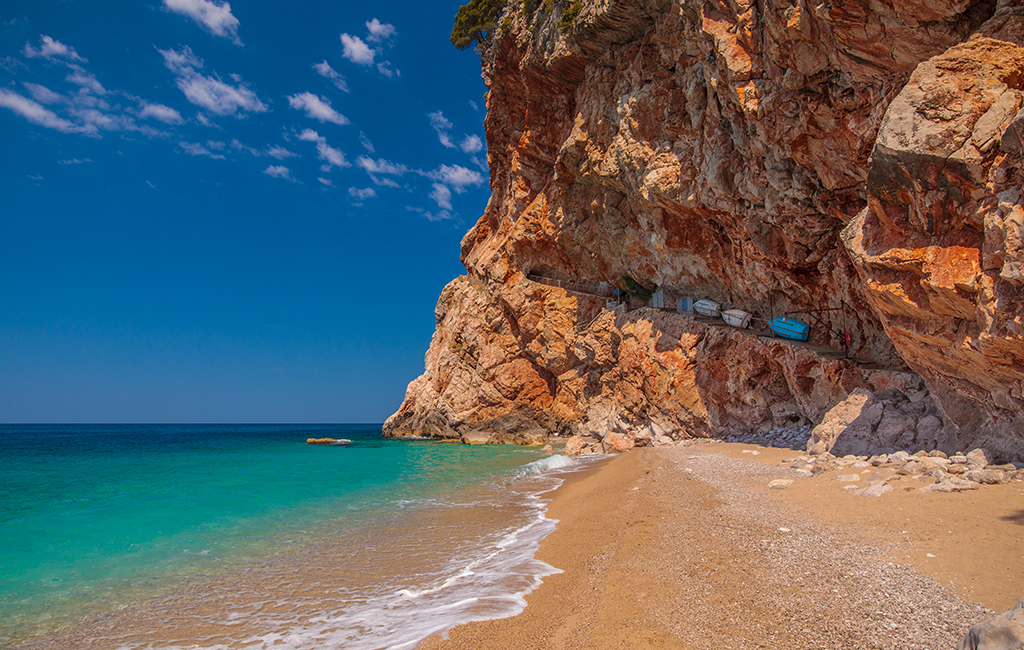
A trip to Pasjača Beach is not for the faint of heart! This picture-perfect beach can only be reached by a concrete foot path which hugs a sheer cliffside and descends more than 800 feet to the shore below. Precarious at times, the path winds downward, passing through a narrow tunnel carved into the rocks before ending in a combination of steps and stones… but however daunting this may seem, don’t be put off. Those who make the difficult trek will be rewarded, first by the spectacular viewpoints along the path, and next by the cool clear water lapping the shore.
Located in the municipality of Konavle, roughly 20 miles south of Dubrovnik, Pasjača Beach was formed through the marriage of man and nature. In 1955, a tunnel was built from an inland stream leading to the sea. The intention was to prevent the frequent flooding of nearby fields. The rocks that were excavated during the tunnel’s construction were discarded on the shore. Over time, the sea worked its magic, pounding the rocks into fine sand and creating this one-of-a-kind beach.
Although small in size, Pasjača Beach is impossibly picturesque, with a narrow strip of sand the only separation between imposing cliffs and translucent sea. Massive rocks in the water invite swimmers to sunbathe atop them and take in the rugged beauty which surrounds. Difficult to access, and with no facilities or amenities of any kind, Pasjača Beach attracts adventurers seeking an off-the-beaten-path oasis for relaxation and quiet. However, having been named the “Most Beautiful Beach in Europe” by Brussels-based tourism organization European Best Destinations in both 2019 and 2020, this once unknown beach may soon find increased crowds, so be sure to visit as soon as possible!
Pasjača Beach Overview
Location: Konavle Region
Nearest villages: Popovići
Nearest major cities: Cavtat, Dubrovnik
Beach type: sand, rocks, and gravel
Chairs & Umbrellas available for rent: no
Facilities available: none
Best way to visit: private car and driver – there’s no need to rent a car in Dubrovnik, as the city’s main sights are within the pedestrianized Old Town. Instead, hire a chauffeur for the day and stop at the beach for a few hours before exploring the surrounding region of Konavle.
3. Podrače Beach
Proof that Paradise Still Exists on the Makarska Riviera
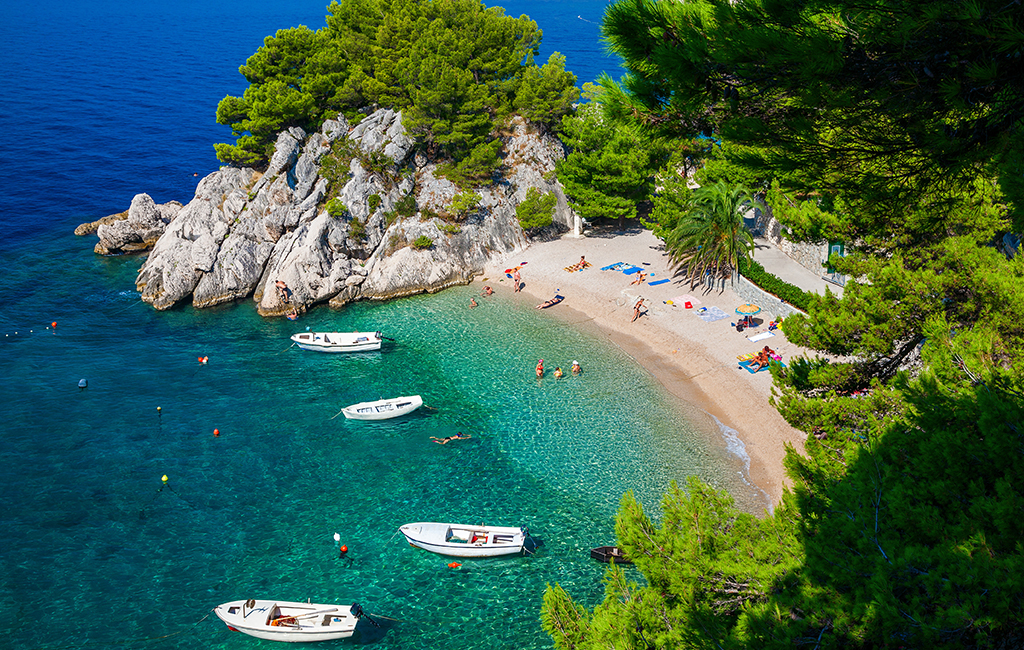
Postcard perfect Podrače Beach is one of the most photographed beaches in all of Croatia, and it’s not hard to see why! Mesmerizingly beautiful, the small pebble cove looks out upon shimmering jewel-toned water. Pine trees and tamarisks provide natural shade, protecting beach goers from the sweltering summer sun. In the distance, the Dinaric Alps prove a dramatic backdrop, sandwiched between the intense blue of sea and sky. Podrače Beach’s most notable feature is the large rock which forms a border at one side. The rock’s peak was once used to harvest salt by locals, who would evaporate seawater in its shallow pools. These days, it is simply an object of beauty to be admired, and sometimes, climbed.
This little slice of heaven can be found in the town of Brela, a seaside resort at the northern end of the ever-popular Makarska Riviera. Located between Omiš and the Neretva Delta (or more generally, between Split and Dubrovnik), the Makarska Riviera is a 38 mile stretch of coast home to several of Croatia’s most beautiful beaches and serving as a summer playground to sun and fun seeking tourists. Brela itself lays claim to roughly 4 miles of the riviera’s coast, boasting a lovely seaside walking path that links its chain of white pebble beaches. Within a short and pleasant walk from Podrače Beach, visitors will find the famous Kamen Brela (Brela Stone), a small rock island just off the shore, and the town’s main beach, Punta Rata. Also, along the promenade, an array of cafés, bars, and restaurants offer plenty of options for hungry beach goers to refresh and refuel. The entire area is wonderfully picturesque and a worthy excursion for travelers in need of a proper beach vacation.
Podrače Beach Overview
Often confused with: Punta Rata Beach (7 minute walk from Podrače Beach)
Location: Brela, Makarska Riviera
Nearest villages: Brela
Nearest major cities: Split
Beach type: pebbles and gravel
Chairs & Umbrellas available for rent: yes
Facilities available: showers, plenty of dining options within a short walk. No restroom on site.
Best way to visit: private car and driver – with no parking lot nearby, we recommend arranging chauffeured transfers to and from the beach. Even better, have your driver drop you off at the start of the seafront promenade and “beach hop” through the day, with pick up at your ending point.
2. Stiniva Beach
Towering Cliffs Hide an Unspoiled Cove on the Island of Vis
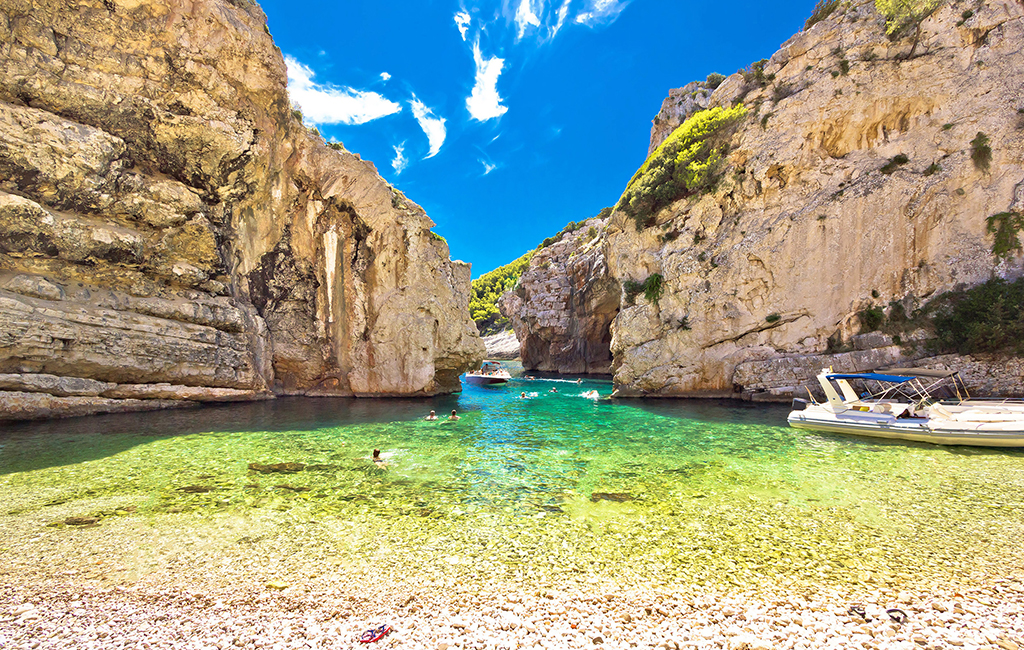
Located on the jagged southern shore of Croatia’s most remote island, Stiniva Beach is a place of striking natural beauty. From the sea, it is almost completely hidden by formidable cliffs which shield the alluring cove from passing boats. However, once through the narrow gate formed by the limestone bluffs, the inlet opens to reveal a stunning pebble beach surrounded by rocky wilderness. Shimmering blue-green water and dramatic views make this one of Croatia’s most instagrammable beaches, though the remote location and general inaccessibility mean that only the most intrepid travelers venture there. Most visit by boat, undeterred by the fact that half of the beach is always in the shade, a consequence of the steep limestone walls which encircle the cove. In the shaded area, a small tavern caters to thirsty beach goers who revel in the beauty that surrounds them.
This beautiful, isolated beach is just one of many charms to be found on the island of Vis. Seemingly untouched by time, Vis is brimming with rustic charm, from the quaint fishing villages along its shores to the quiet hamlets sprinkled throughout its interior. Vineyards and citrus orchards cover the hilly island, the scent of wild rosemary perfuming its air. Until 1989, Vis was completely shut off from the outside world, serving first as a hideout for Tito and his partisans and later as a Yugoslav military base. Even after opening to outsiders, the island still retains a calm difficult to find elsewhere, no doubt due in part to its remote location roughly 30 miles off the Croatian mainland.
Movie buffs may recognize Vis from Mama Mia! Here We Go Again, where it starred as the fictional Greek island of Kalokairi. Many of the island’s main attractions are highlighted in the film, including seafood restaurant Konoba Jastožera, famous for its fresh lobster. However, despite the increased attention garnered from the movie, Vis remains largely undisturbed; a haven for travelers seeking simplicity and authenticity.
Stiniva Beach Overview
Location: Vis Island
Nearest villages: Marine Zemlje
Nearest towns: Vis Town, Komiža
Beach type: Stones, pebbles, and gravel
Chairs & Umbrellas available for rent: no
Facilities available: one small tavern offering meals and refreshments
Best way to visit: private yacht or speedboat – unless you’re interested in a treacherous 20 minute foot path which literally follows a goat track, the sea is the only way to access this stunning hidden inlet.
1. Zlatni Rat Beach
A natural phenomenon on the Island of Brač
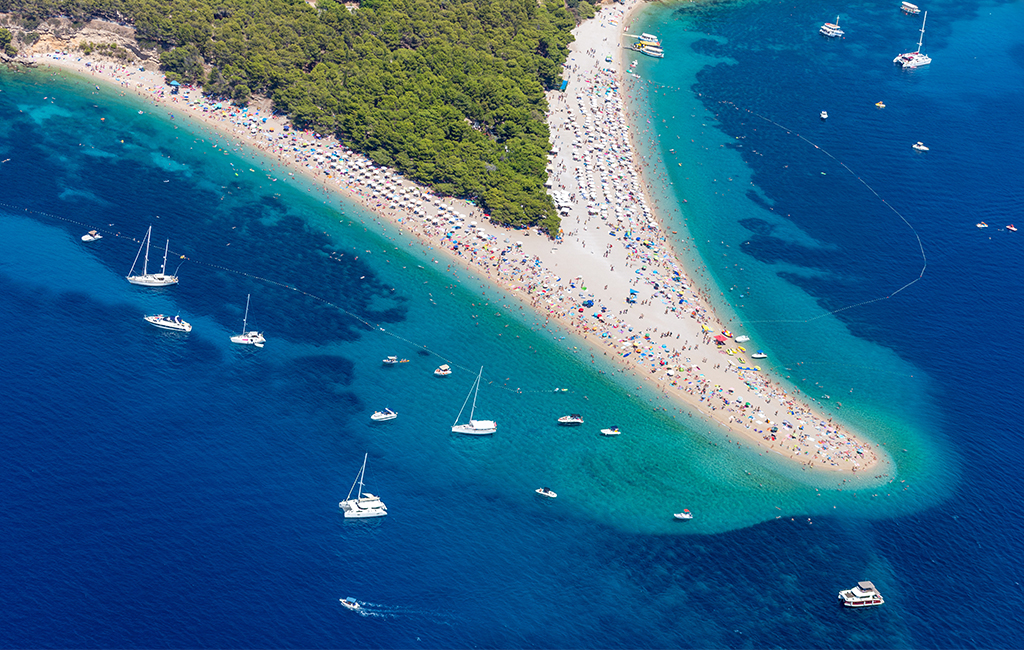
There may be no more unique beach in the world than Brač island’s spectacular Zlatni Rat. Extending into the sea like a lizard’s tongue, this geomorphological wonder has become one of the most recognizable icons of Croatia’s natural scenery and a must-visit location for sun-seeking travelers. Stretching more than 1,500 feet into the shimmering aquamarine waters of the Adriatic, this smooth pebble beach is in a constant state of change. The exact length and shape of the landform changes subtly with variations in the tide, current, and wind, making its shores every bit as alive as the people who visit them.
Zlatni Rat is also called the Golden Cape or Golden Horn. The moniker is thought to have been derived not from the color of its sunlit pebbles, but rather for the abundance of fish to be found in its waters; the main source of income, or “gold,” for local people. Here, on the southern coast of Brač, fishing has been an integral part of the local economy since the middle ages. Bol, the town closest to Zlatni Rat, was once the second most developed fishing settlement on the island. Today, it’s a buzzing summer hotspot, attracting crowds who wish to explore the surrounding area. A long promenade shaded by trees and elevated for stunning for views connects Bol to Zlatni Rat, however those that prefer to skip the 20-minute walk can also arrive at the beach via tourist train or taxi boat.
As Croatia’s most famous beach, Zlatni Rat benefits from well-established infrastructure. Sun loungers and umbrellas are available for rent. In addition, the center of the peninsula is pleasantly wooded, offering a shady retreat from the sun. Visitors are sure to be impressed by the array of activities on offer, from the massive aquapark floating offshore to parasailing excursions offering spectacular views. A strong “Maestral” wind that blows in the afternoon makes Zlatni Rat a favorite spot for windsurfing and kitesurfing, but mornings are calmer and perfect for families. All in all, this picturesque beach offers a little something for everyone. There is even a small nudist section of the beach, discreetly shielded by trees.
Zlatni Rat Beach Overview
Also known as: Golden Cape or Golden Horn
Location: Brač Island
Nearest villages: Bol
Nearest major cities: Split (mainland)
Beach type: small pebbles
Chairs & Umbrellas available for rent: yes
Facilities available: restrooms, showers, restaurants, playground, watersports… you name it, Zlatni Rat has it!
Best way to visit: private helicopter transfer – Zlatni rat’s unique shape is best viewed from above, so what better way to arrive to the island of Brač than by private helicopter transfer? Enjoy a scenic tour from bird’s eye view before heading off to enjoy the rest of your day at the beach.
 About the Author:
Luxury Travel Designer and Destination Specialist, Tia Lovisa Moreira, Joined the Tasteful Croatian Journeys Team after nearly a decade spent living abroad in Munich, Germany. Having traveled to more than 40 countries across 4 continents, she brings with her a wealth of first-hand travel experience and a deep love of European peoples and cultures. Learn more about Tia here.
The Best Luxury Villas in Croatia
Privacy, comfort, elegance, and sheer beauty await in a Croatian home away from home. Our collection of the best luxury villas in Croatia has been carefully curated and assembled to meet the needs of our travelers. Each property we offer has been tested and approved, meeting our requirements, and representing the best of the best of Luxury Villas in Croatia!
Here we highlight 6 stunning villas, each with unique features across a variety of locations in Croatia. From a dramatic architectural gem on the Island of Korcula, to a traditional Istrian estate set amidst luxuriant vineyards, to a modern sea view residence sure to entertain your inner child with endless opportunities for fun, these properties serve as an ideal setting for groups of friends, families, or those seeking generous space to enjoy.
Although unique in their style and offerings, what the villas all share is an abundance of privacy and comfort, and the personal amenities that are a part of every Tasteful Croatian Journeys tailor-made holiday.
Tasteful Croatian Journeys invites you to be in one of the most stunning places in the world, in a style of relaxed elegance and luxury. Enjoy a perfectly private, one-of-a-kind experience set amidst unparalleled natural beauty, warm crystal blue waters or dramatic hillside vistas.
Your ideal villa awaits…
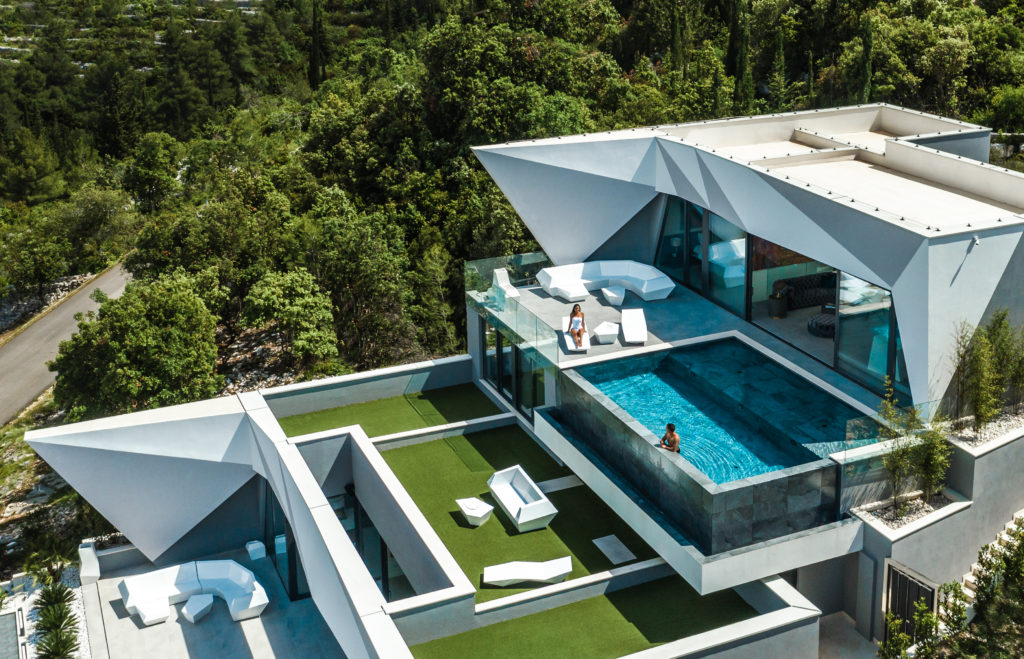
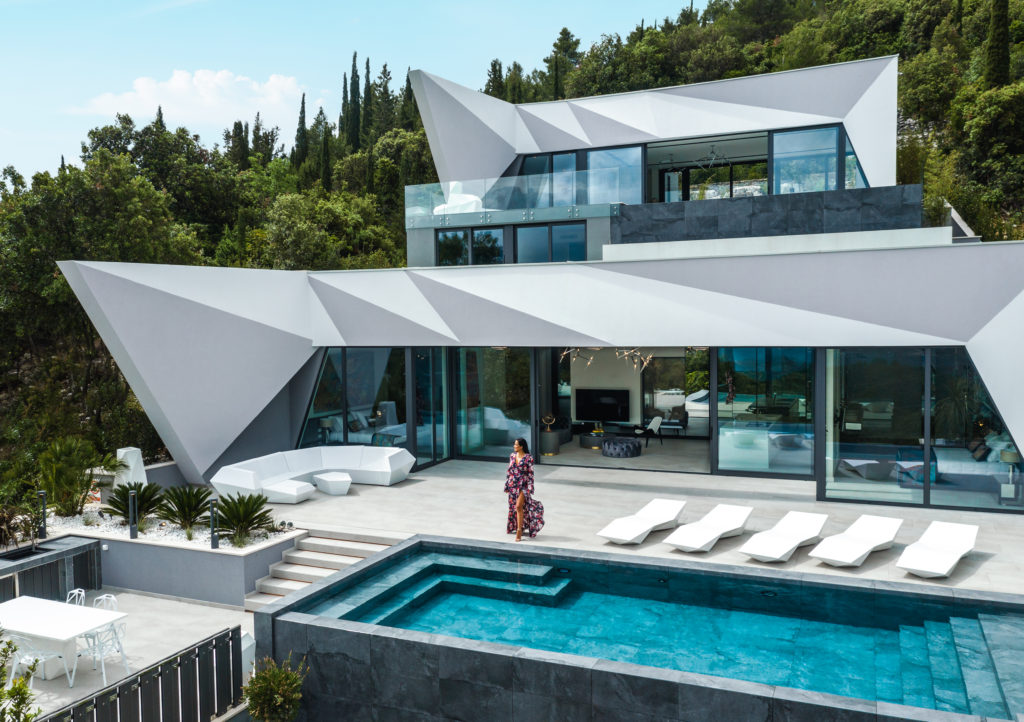
Luxury Villa Diamond, Korcula Island – the best luxury villas in Croatia, collection by Tasteful Croatian Journeys

Why we love it:
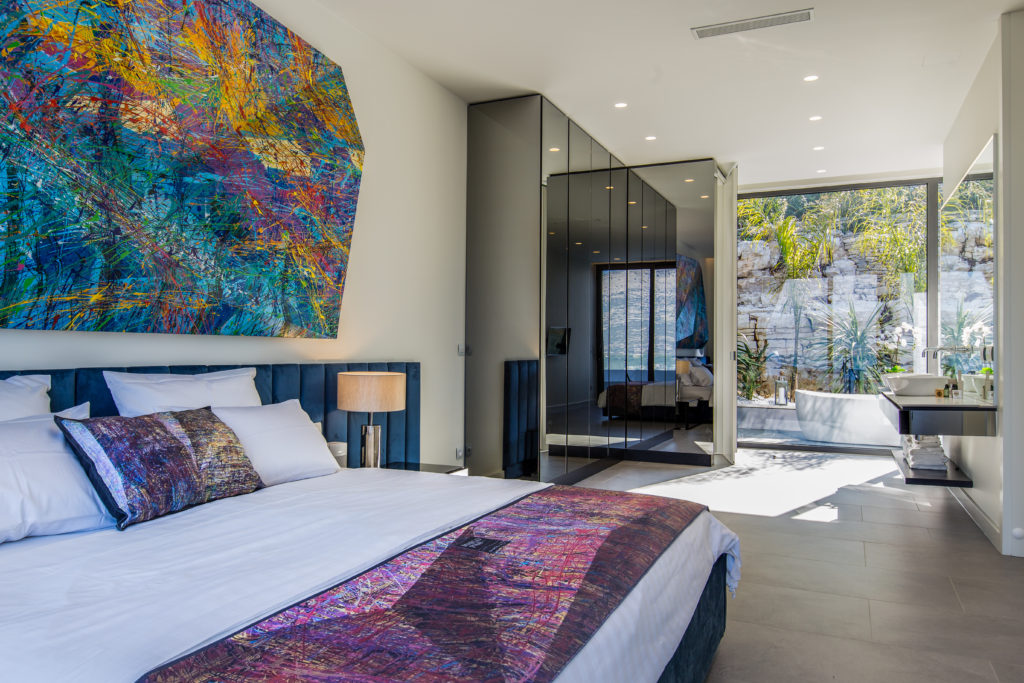
- Unique modern, contemporary design
- Spectacular location overlooking Zrnovo bay on Korcula Island
- Outdoor spaces featuring two lounge areas with infinity pools
Special features:
Stylish interior design with high end furnishings and details, two infinity swimming pools with sea views, multiple terraces and decks on two levels, two fully equipped kitchens with high end appliances, large BBQ terrace, and wine cellar
Bedrooms: 5 Sleeps: 10
Find out more details about the Villa Diamond here
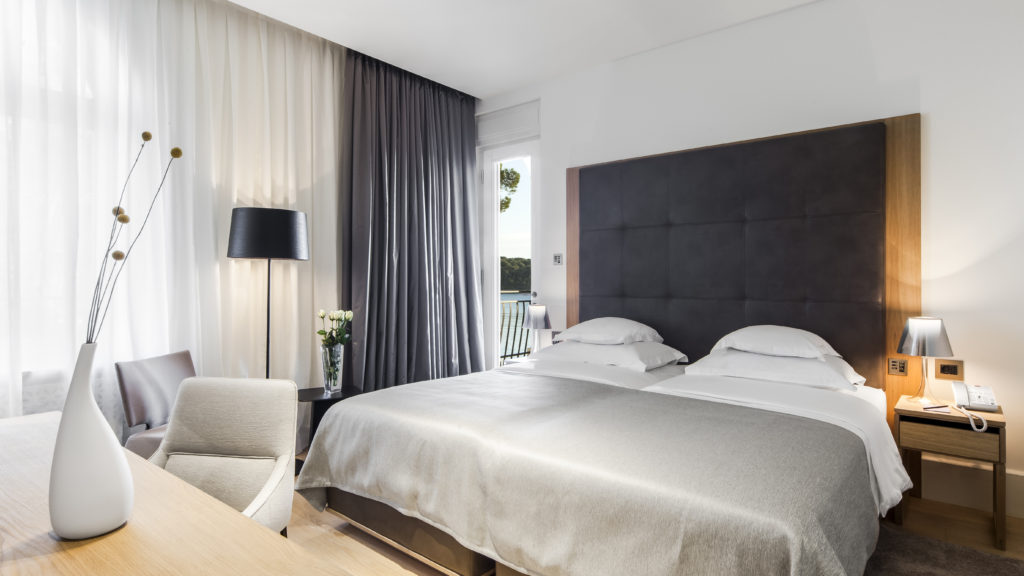
Luxury Villa Hortensia, Mali Lošinj Island – the best luxury villas in Croatia, collection by Tasteful Croatian Journeys


Why we love it:
- Unique architecture and history
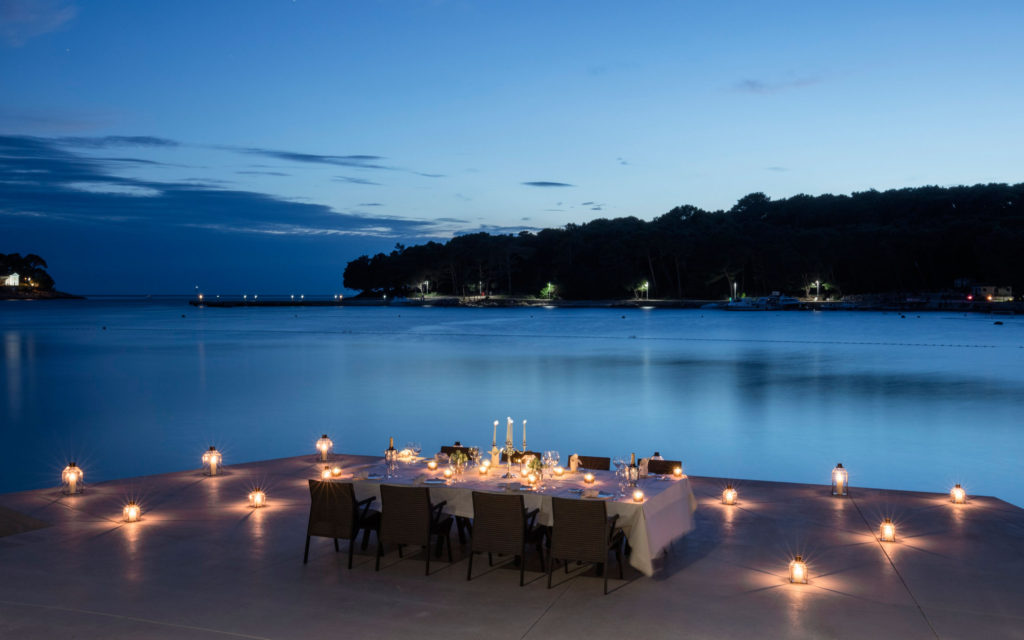
- Beachfront location in secluded Cikat bay on the island of Mali Lošinj
- Personalized service by staff including private butler and chef that makes guests’ stays most pleasant and unforgettable
- Private chef and sommelier provide a true Gourmet experience, preparing dishes in front of guests’ eyes composed of local, fresh ingredients and offering tastings of some of the 400 labels of fine wines from their shop. For a complete cooking experience indulge in a private cooking class led by the chef.
Special features:
Member of Small Luxury Hotels – Private Residences, 24/7 private butler and in-house chef, Private Wellness & Beauty area with Finnish saunas and Kneipp fitness, spacious outdoor terrace and fragrant garden with lounge areas and heated swimming pool, private beach located directly in front of the villa.
Bedrooms/suites: 10 Sleeps: 20
Find out more details about the Villa Hortensia here
Luxury Villa Alta Vista, Icici, Opatija Riviera – the best luxury villas in Croatia, collection by Tasteful Croatian Journeys


Why we love it:
- Breathtaking views of the Kvarner Bay
- Stunning Rooftop Terrace for romantic and relaxing moments with sunset cocktails or a glass of wine
- Private Mini Golf course and game room provide hours of fun for gatherings with friends and family
Special features:
Entertainment & Leisure: Private Mini Golf Course under the Villa with 9 holes on a 500 sq.m. plot, game room with billiard table, air hockey, roulette and other games; outdoor TV projector with automated screen, jacuzzi hot tube; Finish sauna, heated infinity pool with salted water, outdoor lounge, private lawn area, extensive pool deck, sunset roof deck terrace perfect for cocktails, enclosed private gym, free bicycles in the Villa
Bedrooms: 4 Sleeps: 8+2
Find out more details about the Villa Alta Vista here
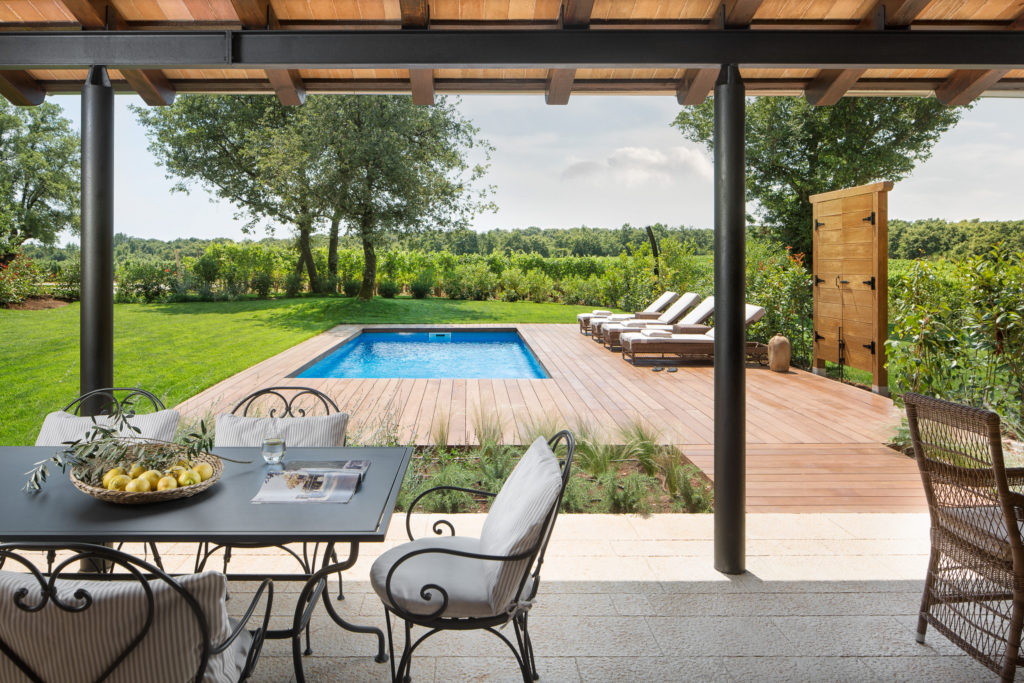
Luxury Villa Meneghetti, Istria – the best luxury villas in Croatia, collection by Tasteful Croatian Journeys


Why we love it:
- Perfect location at the Meneghetti Wine Hotel & Winery in the idyllic Istrian Countryside, surrounded by beautiful nature, olive trees and vineyards
- Meneghetti Restaurant located on property offering a gourmet culinary experience with highly personalized service, and premium, world-renowned and award-winning wines and olive oils
- Nearby Meneghetti Beach invites relaxing afternoons at the beach bar and memorable moments of swimming in the Adriatic Sea
- Complimentary Yoga lessons provided by professional Yoga instructor
Special features:
The property is unique in that it features multiple villas of various sizes which can be booked in different combinations allowing great flexibility. The villas each feature a private outdoor terrace with dining area, private garden with pool overlooking the vineyards, fully equipped kitchenette and indoor open space dining and living rooms.
The estate features an Energy Clinic Spa center with relaxing massages, nurturing body treatments, anti-stress sauna, fitness area, indoor pool, and two outdoor pools with sundecks. .
Bedrooms: 1 & 2 bedroom residences which can be combined Sleeps: 3 or 5 depending on size
Find out more details about the Villa Meneghetti here
Luxury Villas Soul Sisters, Korcula Island – the best luxury villas in Croatia, collection by Tasteful Croatian Journeys
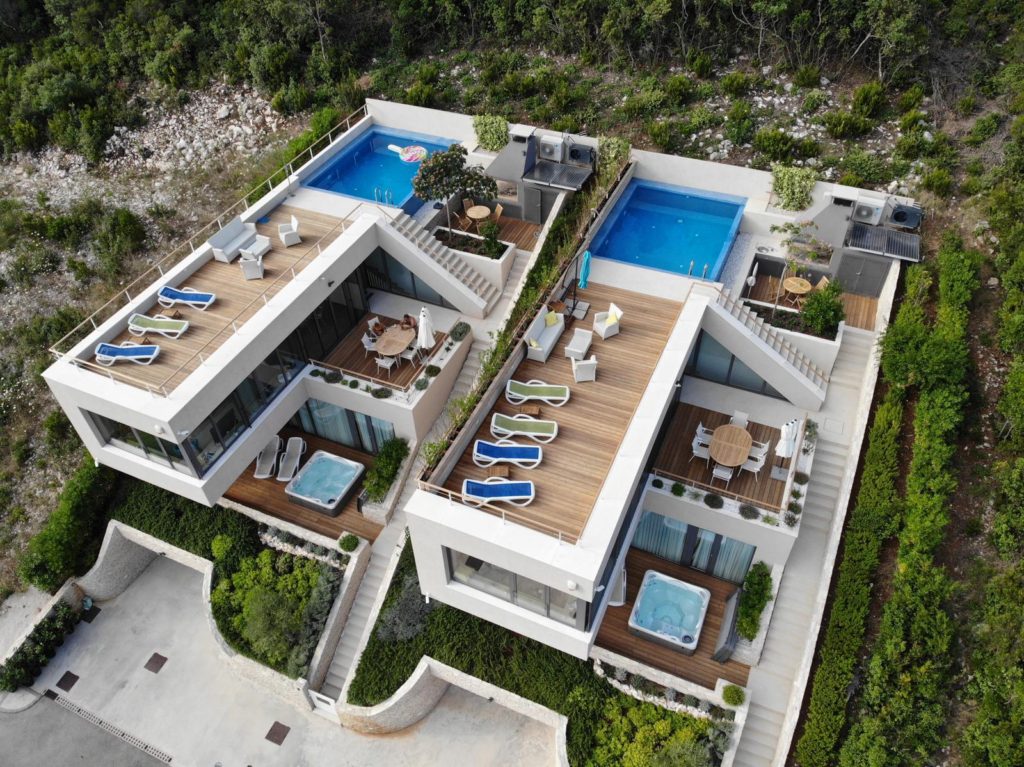


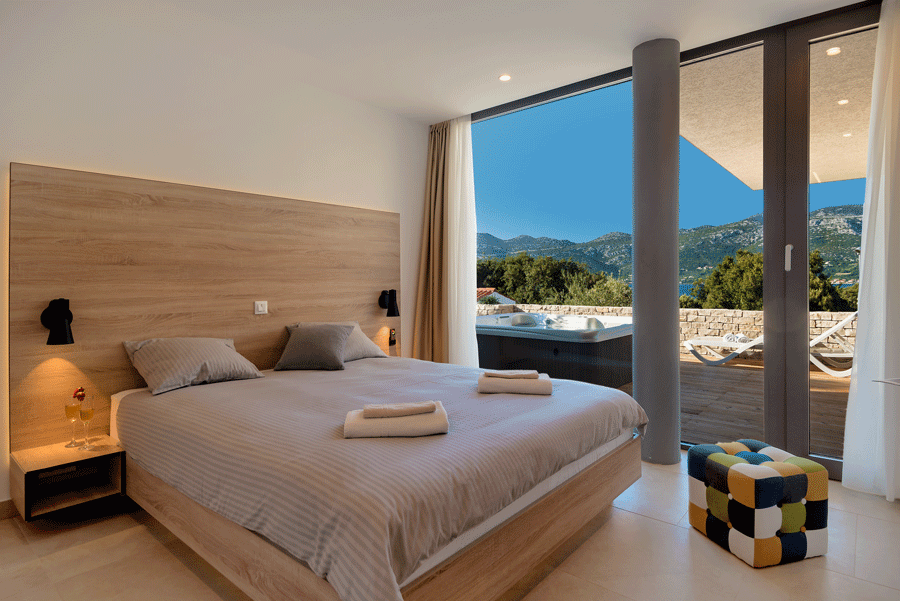
Why we love it:
- Twin Villas offer an opportunity for families or friends to travel together while still retaining their own space.
- Amazingly appealing and modern visual and functional solutions completely in line with its stunning location, creating a unique ambiance set for unforgettable experiences
- Breathtaking views, Mediterranean atmosphere, and plenty of daylight with an accent on the utility of the outdoor relaxing spaces
- Personalized service by the manager and the staff
Special Features:
These twin villas function separately or together. Each features a spacious living room and well equipped kitchen, infinity salt water heated swimming pool, spacious sundeck with its lounge area, BBQ terrace, quiet and contemporary designed bedrooms with direct access to spacious terrace and sea view.
Bedrooms: 3 per villa Sleeps: 6 per villa
Find out more details about the Villas Soul Sisters here
Luxury Seafront Palazzo, Rovinj, Istria – the best luxury villas in Croatia, collection by Tasteful Croatian Journeys
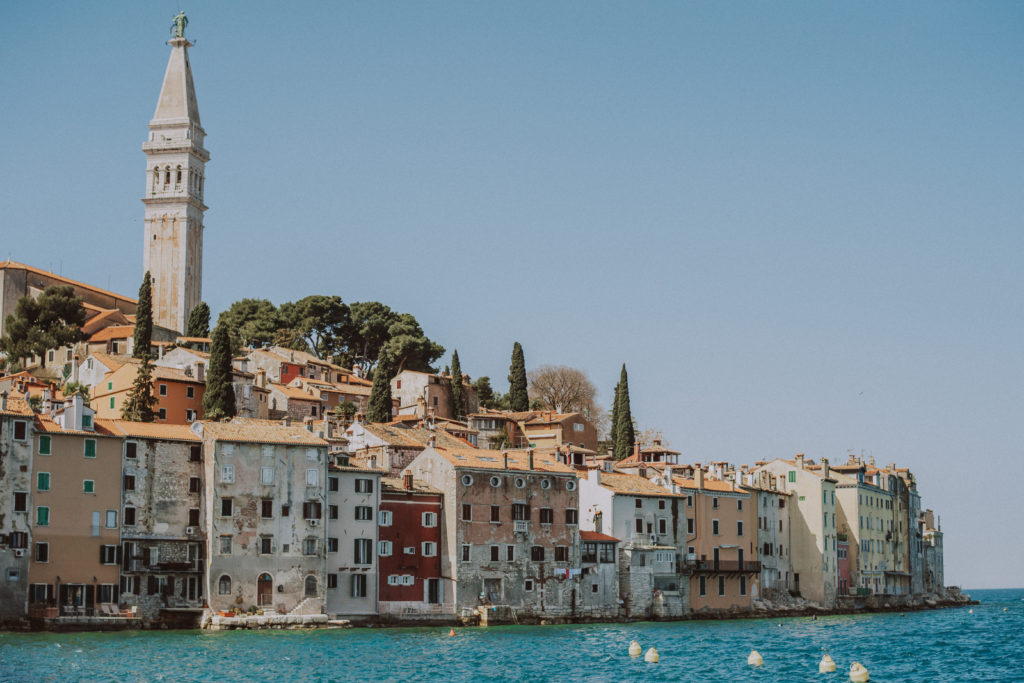


Why we love it:
- Location in the center of the charming, picturesque town of Rovinj in Istria, only steps away exploring the streets of Rovinj, restaurants, bars, galleries and shops, yet in a secluded quiet street for enjoyable peaceful evenings
- Personalized service by the villa owner and staff
- Private access to the sea with seafront terrace
Special features:
Seafront terrace with private sea access, fully equipped kitchen, luxury amenities and toiletries, concierge service, private chef on request, parking available near the property
Bedrooms: 3 Sleeps: 6
Find out here more details about the Seafront Palazzo
Learn more about villas rental in Croatia and view our collection of the best luxury villas in Croatia here.
The Top 5 Reasons Your Next Trip Should Be To Istria
Croatia is best known for its multitude of islands and pristine national parks which draw visitors to its south, but don’t let the allure of sunny Dalmatia distract you from discovering the hidden gem that is Istria. This heart shaped peninsula in Croatia’s northwest boasts a verdant interior made up of truffle-rich forests, fertile valleys, olive groves, vineyards, and rolling hills, crested by hilltop settlements and stone-built villages. Its rocky, indented coastline is dotted with colorful fishing villages and ancient port towns.
With so much to discover, there are countless reasons Istria should be your next vacation destination, but we’ve narrowed it down to the top five.
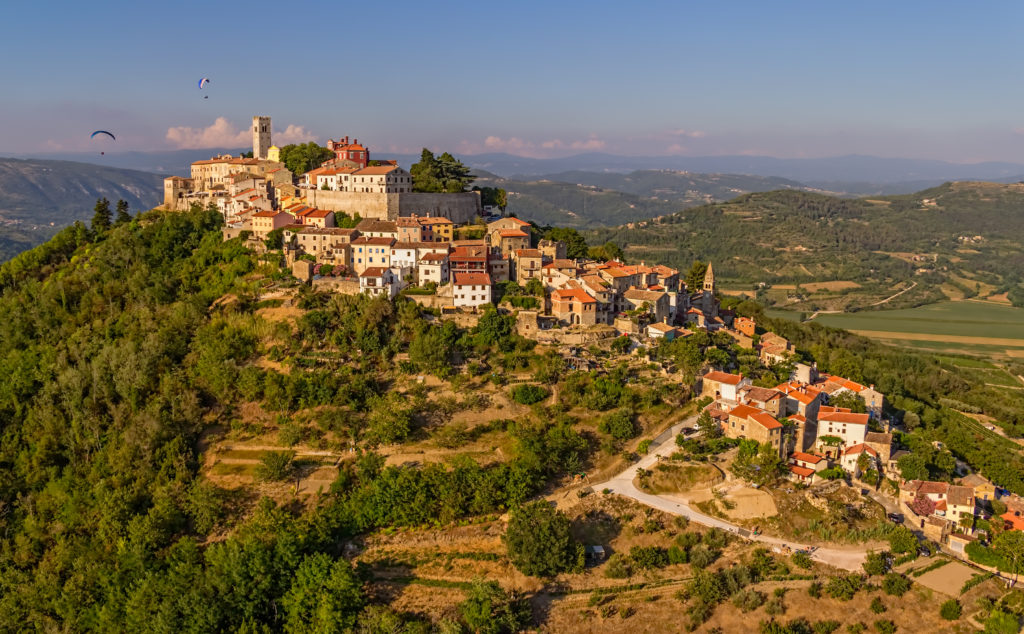
1) Charming Hilltop Towns
Istria’s inland is an area of exceptional beauty, a rural landscape of undulating hills, perched atop which you will find charming medieval villages. One of the most popular hilltop towns, and also the most picturesque, is Motovun, the birthplace of racecar driver Mario Andretti. The historic town center boasts a 13th century bell tower and municipal palace, cobbled streets, and shops selling local products. For a small fee you can walk the walls which surround the city and enjoy breathtaking views of the surrounding countryside.
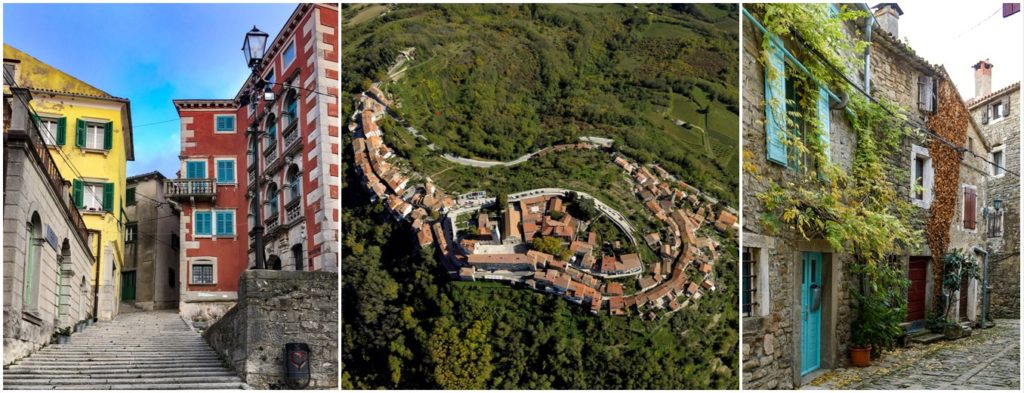
Just ten miles away you’ll find Grožnjan. Once all but deserted, artists and musicians began to flock to the town in 1965 after encouragement by the Yugoslav government. The formerly abandoned houses are now homes to more than 20 art galleries displaying the works of local painters, potters and sculptors. Additionally, it is home to a summer music school for young musicians, which often holds recitals and concerts in the town’s square. Farther south, overlooking the seaside town of Rabac, is Labin. Once a coal-mining town, the historic center of Labin displays colorful houses, a mixture of Gothic, Renaissance, and Baroque architecture as well as a number of Venetian palaces and churches. One such palace, the baroque 18th-century Battiala-Lazzarini Palace, now houses the Labin Public Museum, which outlines the area’s history from ancient times to present, including a realistic recreation of a coal mine. Those who climb Labin’s winding streets to the fortress atop the town will be treated to panoramic views of the sea, the resort towns below, and the rocky island of Cres.
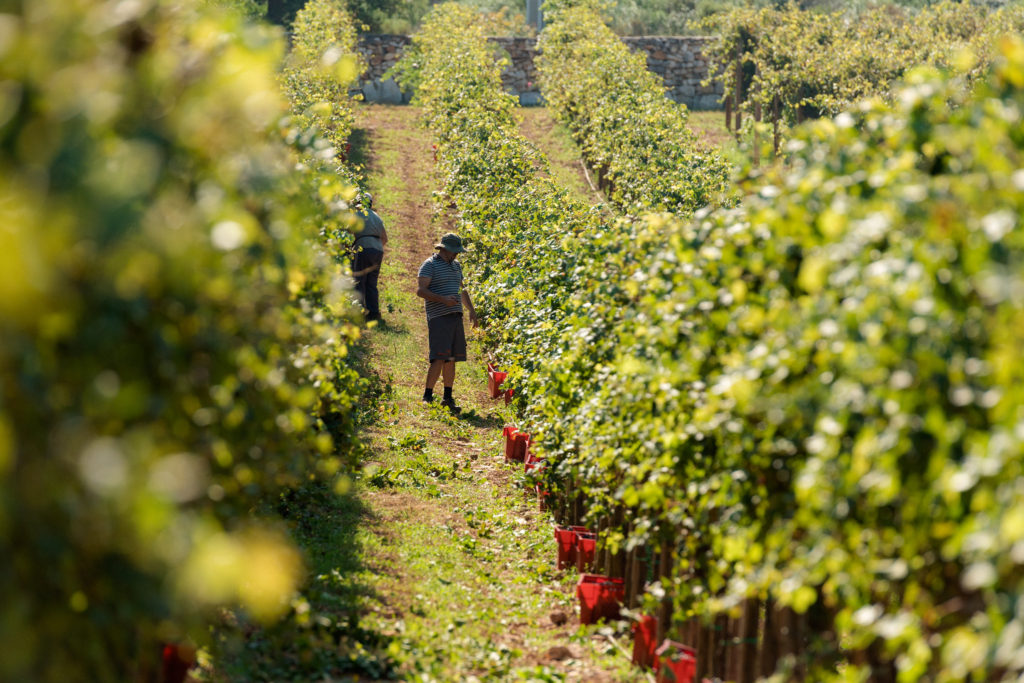
2) Gastronomy: Truffles, Wine & Olive Oil
It’s no surprise that Croatia’s first Michelin starred restaurant, Monte, finds its home in Istria. The soil composition and microclimate make the region ideal for producing both wine and olive oil. The verdant forest located in the valley of the Mirna River is a prime location for truffle hunting. And to top it all off, the proximity to the sea – specifically the clean, clear waters of the Kvarner Gulf, famed for its delicate scampi – provides succulent fresh seafood. With direct access to so many local delicacies, it’s the ideal location for talented young chefs to make a name for themselves. In addition to fine dining, there is no shortage of rustic taverns and family run farms serving traditional cuisine. Truly, Istria is a foodie’s paradise.
When traveling the region, one should be sure to make time to revel in all of its gastronomic offerings.
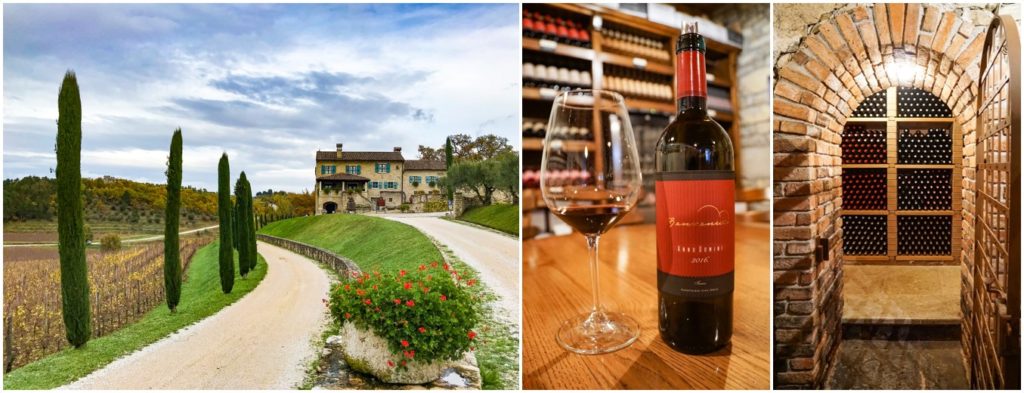
Taste the region’s mainlocal grape varieties, white Malvazija Istriana and ruby red Teran, at one of the many charming wineries. Near the town of Momjan, Kabola, a certified organic wine producer owned by the Markežić family, has been making wines since 1891. They offer a variety of tasting options at their beautiful stone farmhouse set among their vineyards. Meanwhile, nestled in the narrow cobblestone streets of the village of Kaldir, the Benvenuti family offers tours and tastings of their facilities as well. Their grapes are grown in several specific “micro-locations” chosen to give their wines specific mineral characteristics.
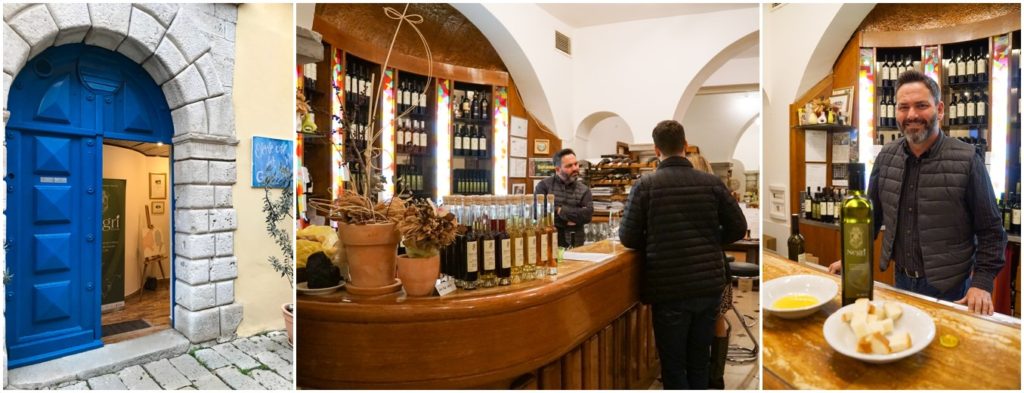
Olives have been cultivated in Istria since Roman times, but it is only in recent years that the region has gained worldwide recognition for its olive oil. In truth, Croatia as a whole is often overlooked as an olive oil producing country due to the relatively small quantities produced there. But what Croatia lacks in quantity, it makes up for in quality, with Istria having been named the ‘Best Olive Oil Region’ by the Flos Olei olive oil guide for nine consecutive years. Among the top Croatian olive oil producers is Negri, family run by William and Anessa Negri. The Negri family has been producing olive oil since the Venetians controlled the region and offer tastings in their historic palace which now serves as a “Gastro-Art Gallery.” Here you can sample Negri olive oils, wines, and liqueurs while learning about production, surrounded by the artworks of Anessa.

Truffle laden dishes can be found in restaurants all across Istria, but for the full experience consider joining a truffle hunt. Miro Tartufi is comprised of husband and wife team Miro and Mirjana Kotiga. From their home in Motovun, they lead daily expeditions into the nearby forest with their carefully trained dogs, Bella and Lila. The experience begins with a welcome drink and introduction by Mirjana, followed by a guided walk through the forest with Miro. Bella and Lila run ahead, playing and sniffing until suddenly one starts to dig. This is Miro’s cue to gently unearth the valuable tuber, and reward his faithful dogs. Once back from the hunt, enjoy a sampling of gourmet truffle products, such as oils, spreads, cheeses, and sausage, while Mirjana demonstrates and serves a classic Istrian dish – scrambled eggs with freshly shaved truffle. For dessert, chocolate cake topped with truffle honey and more freshly shaved truffle offers the perfect finishing touch.
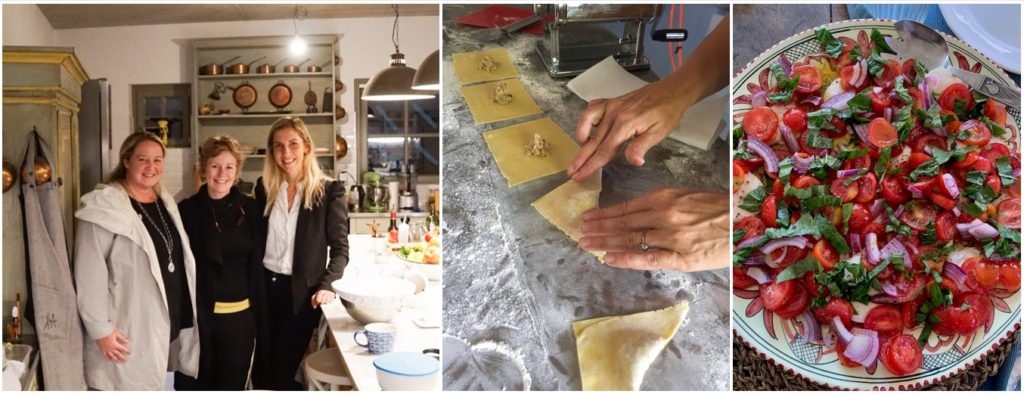
For those seeking a fully immersive introduction to Istrian cuisine, celebrity chef and cookbook author, Ana Ugarković, offers cooking experiences out of her home in the small village of Mrgani. Depending on the season, the day includes a walk through the nearby fields to forage for wild asparagus or other edible plants to incorporate into the day’s menu. After preparation of a family style three course meal, enjoy a grappa in the courtyard or by the fireplace.
3) Ancient Roman Ruins
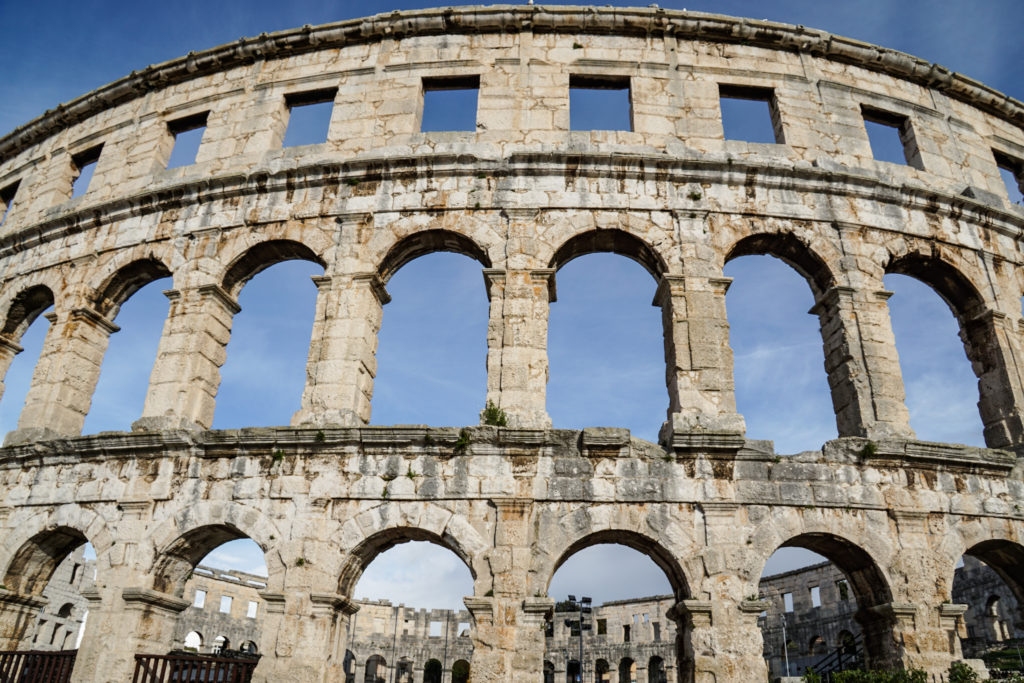
The echo of Ancient Rome can be heard throughout Croatia, though it is perhaps loudest in Split, home to Diocletian’s Palace, and in Pula, where the Arena of Pula stands triumphantly in the center of the city.
It is the sixth largest Roman arena in the world, and one of the best preserved. The amphitheater was built in the 1st century AD during the reign of Emperor Vespasian when Pula was the regional center of Roman rule. Once the site of gladiator fights, and later, in the Middle Ages, home to knights’ tournaments and fairs, these days, the arena is used for many different events such as the Pula Film Festival, concerts, opera, ballet, and sports competitions. Besides the Arena, Pula is home to numerous monuments of Roman architecture. A short stroll away, the Temple of Augustus stands in what was once the city’s Forum. Bombed during the Second World War and completely destroyed, it was painstakingly rebuilt in the years that followed. It now houses a collection of ancient stone and bronze sculptures. Another popular attraction is the Triumphal Arch of the Sergii, also known as the Golden Gate, which was erected by the powerful Roman Sergii family in memory of three deceased family members who held important positions in the city. The arch was named Porta Aurea or the Golden Gate because of its richly ornated arch. Historical attractions aside, Pula is a busy port city which offers an interesting look at the everyday lives of Istrians.
4) Seaside Vistas
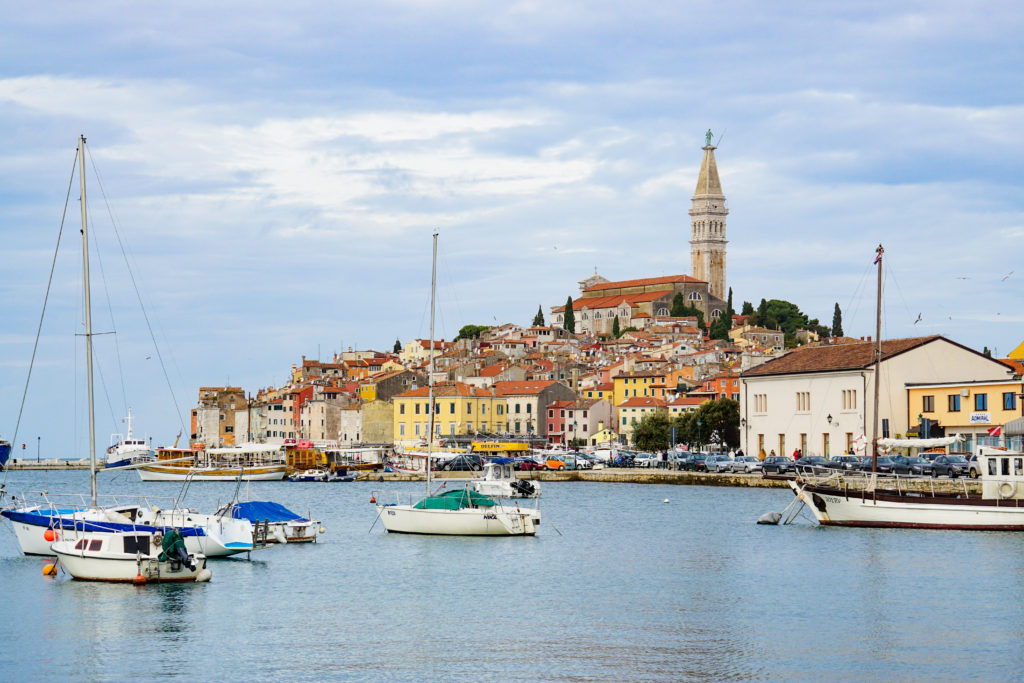
Along the craggy shoreline, the rolling hills of Istria’s bucolic interior make way for robust fishing villages and seaside port towns, perhaps the most charming of which is Rovinj. Italophiles will feel right at home here as most of the population is bilingual, speaking both Italian and Croatian – even road signs in Rovinj are written in both languages. This is a testament to Istria’s tumultuous past, having been a part of Austro-Hungary, Italy, Yugoslavia, and finally Croatia, over the course of the past century. Though each flag flown has left an indelible mark, Rovinj carries on seemingly unchanged. The fishing boats which fill the harbor still come and go, the bells of St. Euphemia’s campanile still ring out high above the city, carrying on with business as usual as they have for hundreds of years. It is this unchanging nature, this timelessness, which is part of Rovinj’s charm, and adds to its romance. Steep, narrow streets wind the interior of the old town, lined with boutiques, galleries, and colorful doorways which are charmingly timeworn. Once an island, the old town of Rovinj was connected to the mainland in 1763 when the narrow channel separating it was filled. Though now a peninsula, it still has an insular feel, with the sea as much a defining characteristic of the town as any of its architecture is. While visiting, be sure to sample the fresh seafood at one of the many waterfront restaurants, such as La Puntulina, where tables line the rocky shore. It’s the perfect place to watch the sun kiss the sea as it sets for the evening.
5) Luxurious and Varied Accommodation
Istria’s rustic countryside and medieval villages may not seem the most likely backdrop for some of Croatia’s most exciting contemporary properties, but it is. From high design and eye-catching architecture to traditional style and understated luxury, you can find a hotel to meet any taste and budget in this multifarious region.
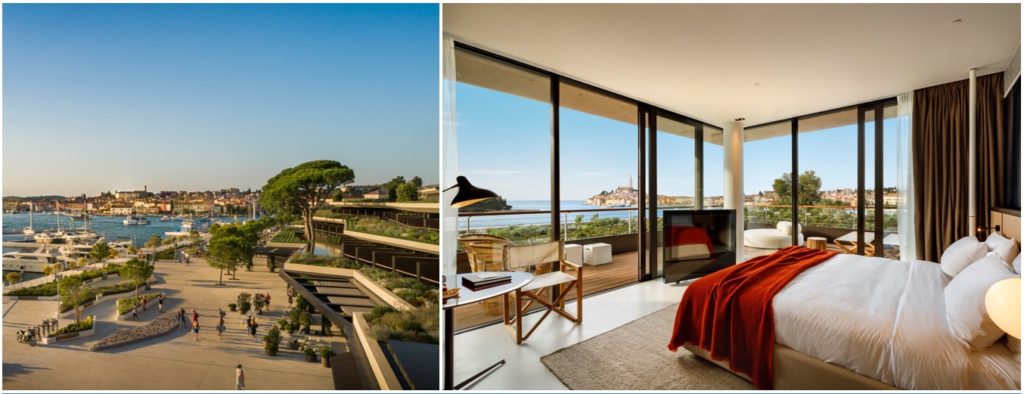
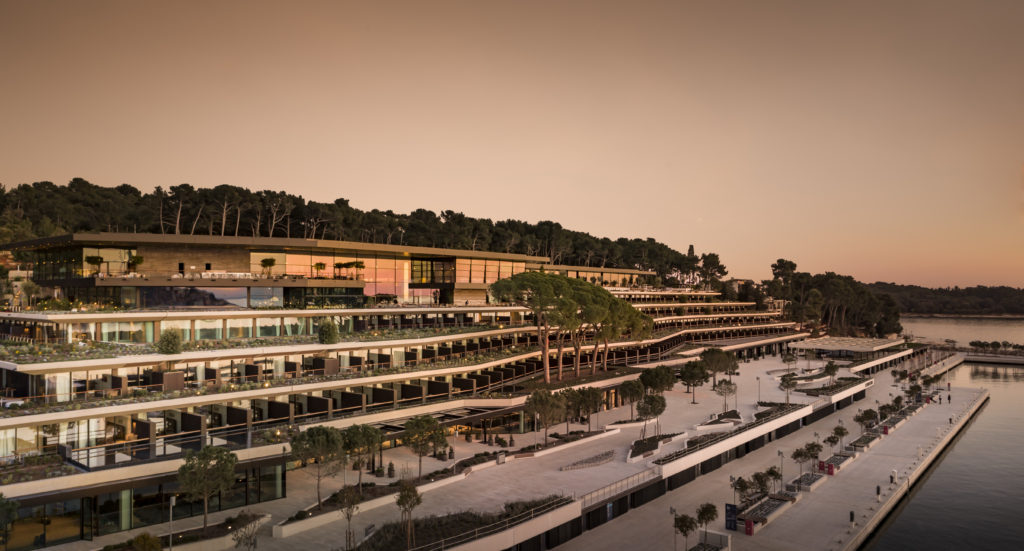
Opening to much acclaim for the 2019 season, the Grand Park Hotel sprawls across a gentle slope along the marina, stepping down toward the Adriatic Sea. Topped with a series of planted terraces, the hotel is designed to have a minimal impact on the natural landscape. It was one of several hotels in the area designed by Croatian architecture firm 3LHD Studio. Its interiors are the vision of Italian architect and designer Piero Lissoni, who uses deep earth tones to contrast the blue of the sea and sky, the effect of which seems to enhance the spectacular view of Rovinj across the bay – colors pop in such a way that it feels almost artificial. A true five-star property, it is no surprise that the Grand Park Hotel has already seen its share of celebrity guests.
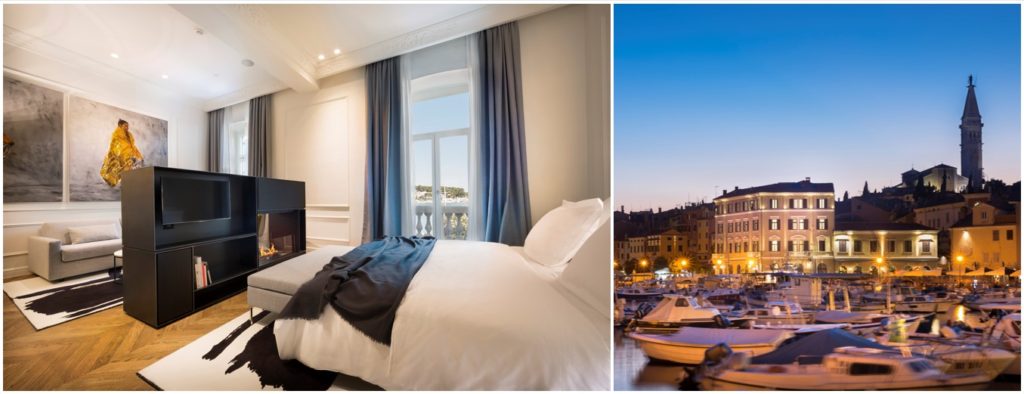
Just across the bay, in a lively square of Rovinj’s old town, the Hotel Adriatic offers a boutique alternative to The Grand Park’s swagger. The Adriatic’s café and restaurant offer the perfect terrace from which to watch the world go by and observe the hustle and bustle of the fishing and sailing boats in the harbor. The rooms are tastefully decorated with modern furnishings, contemporary art, and thoughtful touches such as room mists, developed by local perfumerie Profumo di Rovigno, to suit your mood.
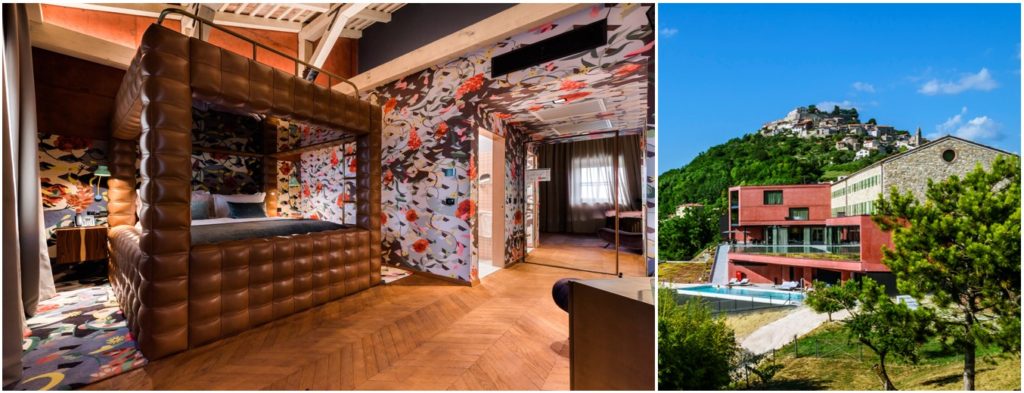
A short drive inland, the Wine & Heritage hotel ROXANICH is shaking things up in Motovun. Not the typical heritage hotel, this new property is the creation of boutique winemaker Milan Rožanić, and architect/designer Idis Turato. Behind the traditional stone façade guests will find a flamboyant interior, replete with bold design elements and bespoke furnishings. Rooms feature bright wallpaper, or sometimes carpeted walls, “family size” bunk beds, wood beamed ceilings and marble bathrooms. Deep below the guestrooms, the Roxanich cellars offer opportunities for guests to do tours and tastings.
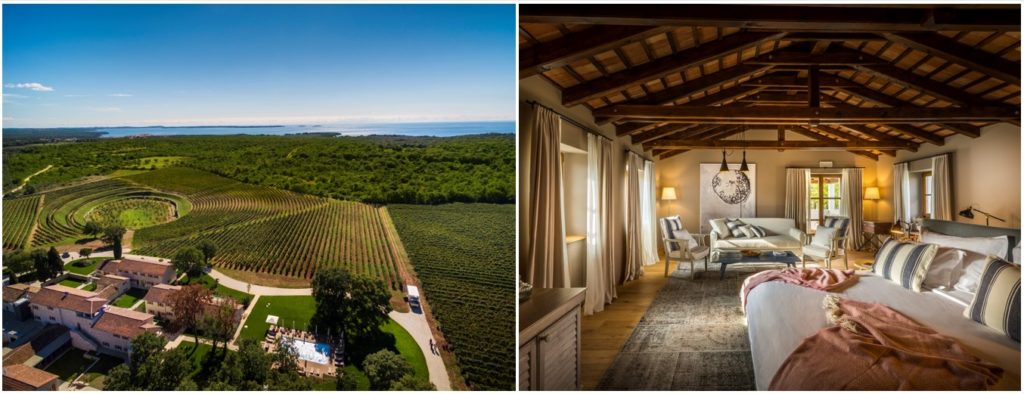
For those seeking a more traditional wine hotel experience, there is no better escape than the Meneghetti Wine Hotel & Winery. Originally known as the Villa Meneghetti, the Meneghetti Wine Hotel & Winery began as a single stone estate built at the beginning of the 20th century amid expansive vineyards and olive groves. It has since expanded to include rooms, suites, and villas, all tastefully furnished in traditional Istrian style which melds the local, Mediterranean aesthetic with modern elements. A true example of understated elegance. An excellent restaurant only furthers the appeal, as do the options for wine and olive oil tastings, the spa and wellness area, and proximity to the beach – just a bike ride away.
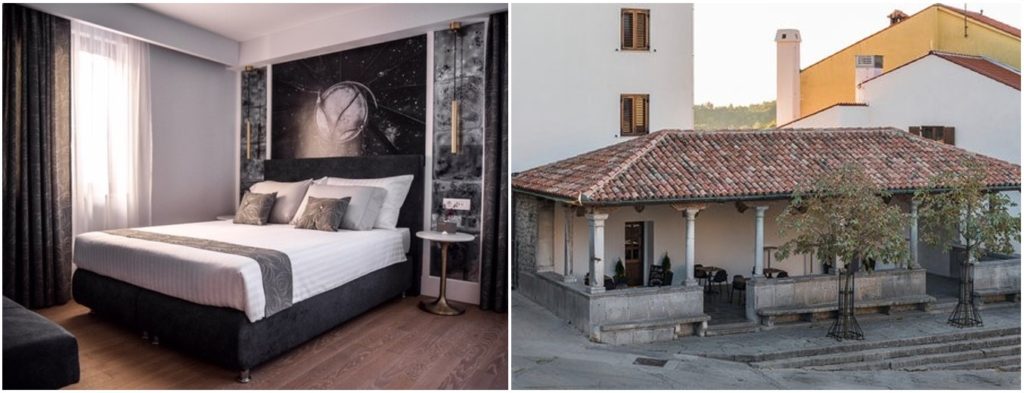
Roughly an hour away, a new concept takes shape in the form of La Loggia, a “diffused hotel” making its mark on Labin. La Loggia will eventually employ the albergo diffuso model, having a central reception with rooms in various structures around the small town, but at the moment it is contained to the small building behind the town’s pillared 16th-century loggia. An intimate setting with a warm and friendly staff, this property appeals to travelers who seek authentic experiences far from crowds, but still wish to retain modern conveniences. The eight light-filled guest rooms feature modern décor and contemporary photographic prints. The bar and lounge is the ideal spot for a nightcap, and is also occasionally the venue for live concerts of acoustic guitar, piano, jazz and blues on the weekends.
When to Visit Istria:
Tasteful Croatian Journeys is available to design your custom luxury itinerary through Istria in any season and can guide you in planning activities best suited for your particular dates of travel. Shoulder seasons (April/May, September/October) make for a wonderful time to visit Istria, with mild temperatures and minimal crowds. Contact us for more information and to begin planning your Istrian interlude.
About the Author:
Luxury Travel Designer and Destination Specialist, Tia Lovisa Moreira, Joined the Tasteful Croatian Journeys Team after nearly a decade spent living abroad in Munich, Germany. Having traveled to more than 40 countries across 4 continents, she brings with her a wealth of first-hand travel experience and a deep love of European peoples and cultures. Learn more about Tia here.
Hotel Excelsior Dubrovnik
For a top choice in luxury accommodations directly on the Adriatic sea, and only minutes to the heart of Old Town Dubrovnik, look no further than the Hotel Excelsior.
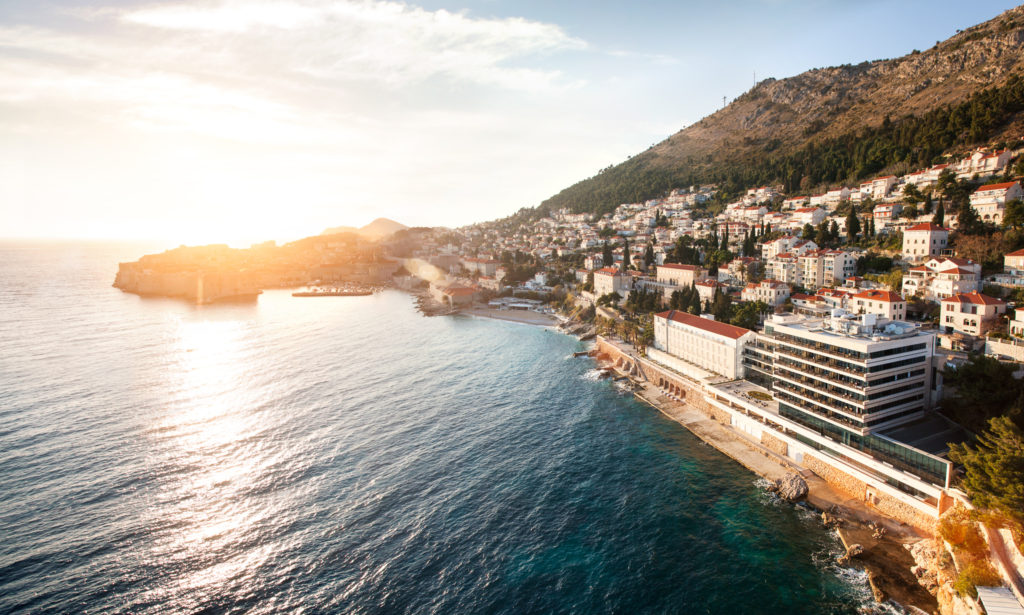
Perfectly Located in Dubrovnik
Located just a 10-minute walk outside of the walled city along the Dubrovnik Riviera and offers an unparalleled view of the old town and its harbor. The property consists of the newest addition, the Tower, alongside the historic 1913 royal Villa Odak, recently remodeled to compliment the elegantly modern interiors of Tower rooms.
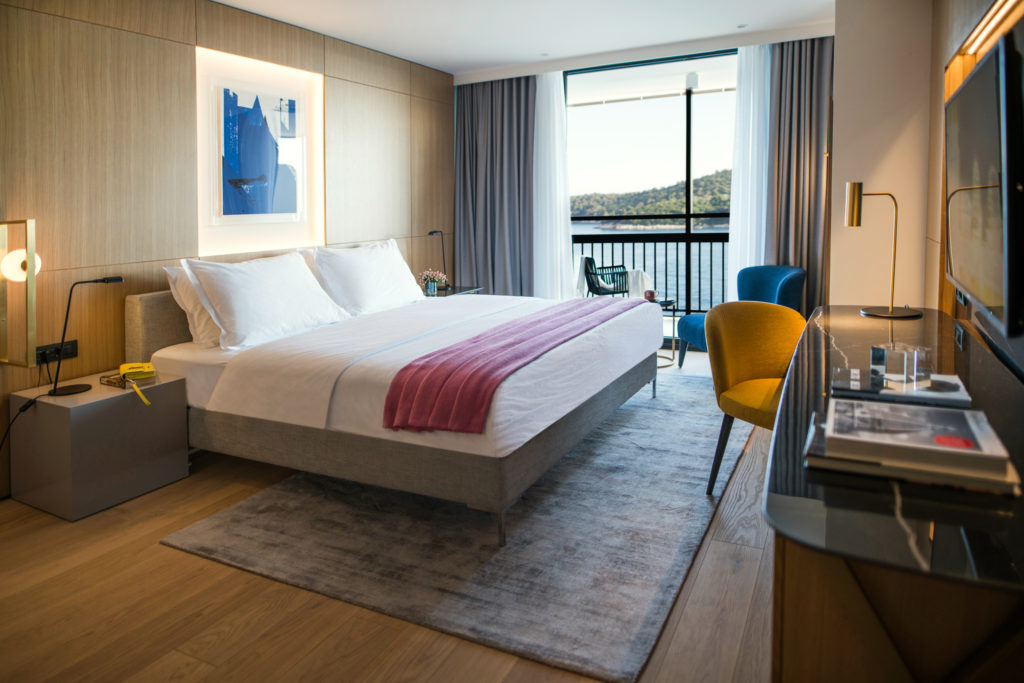
Tower Deluxe Suite
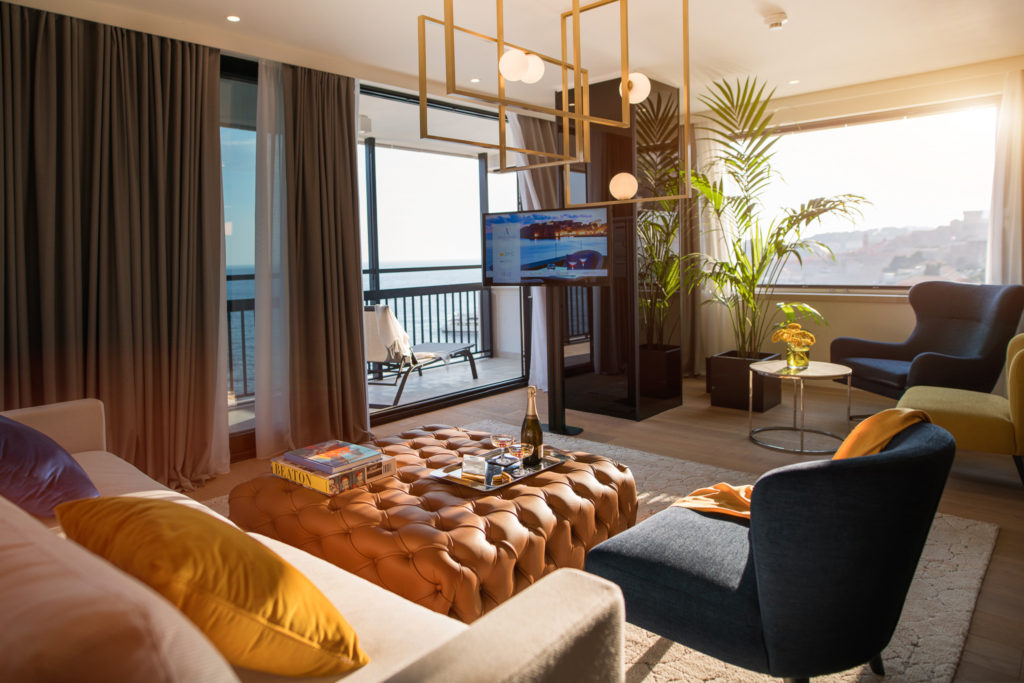
Tower Deluxe Suite Living Room
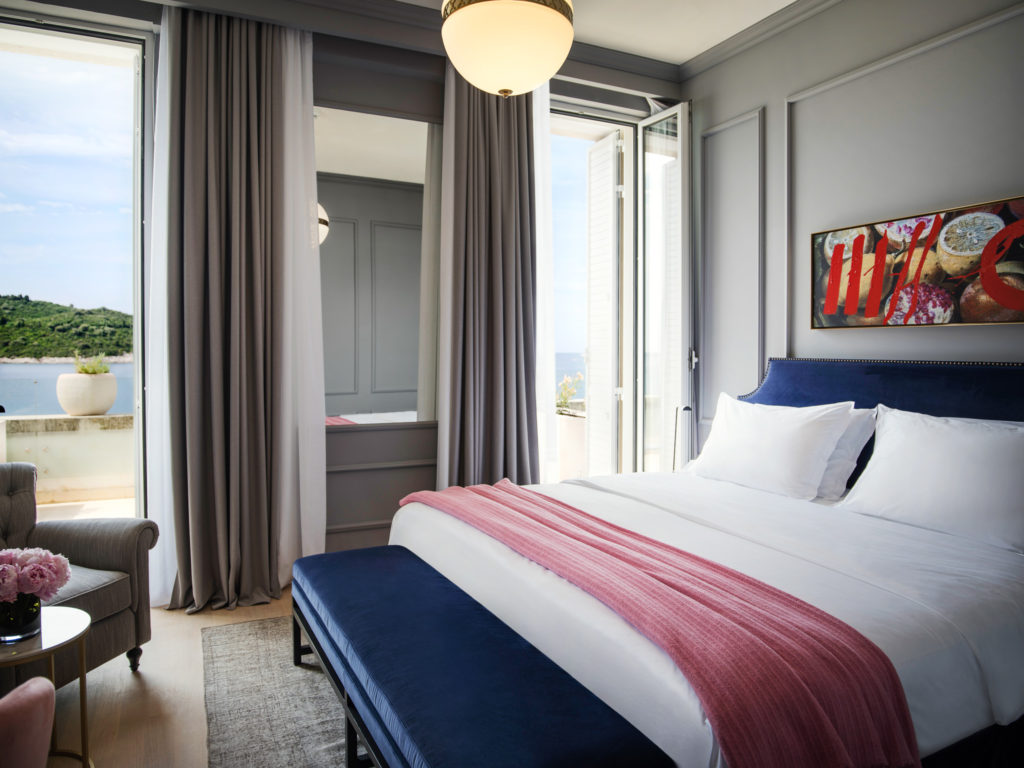
Villa Odak Deluxe Room
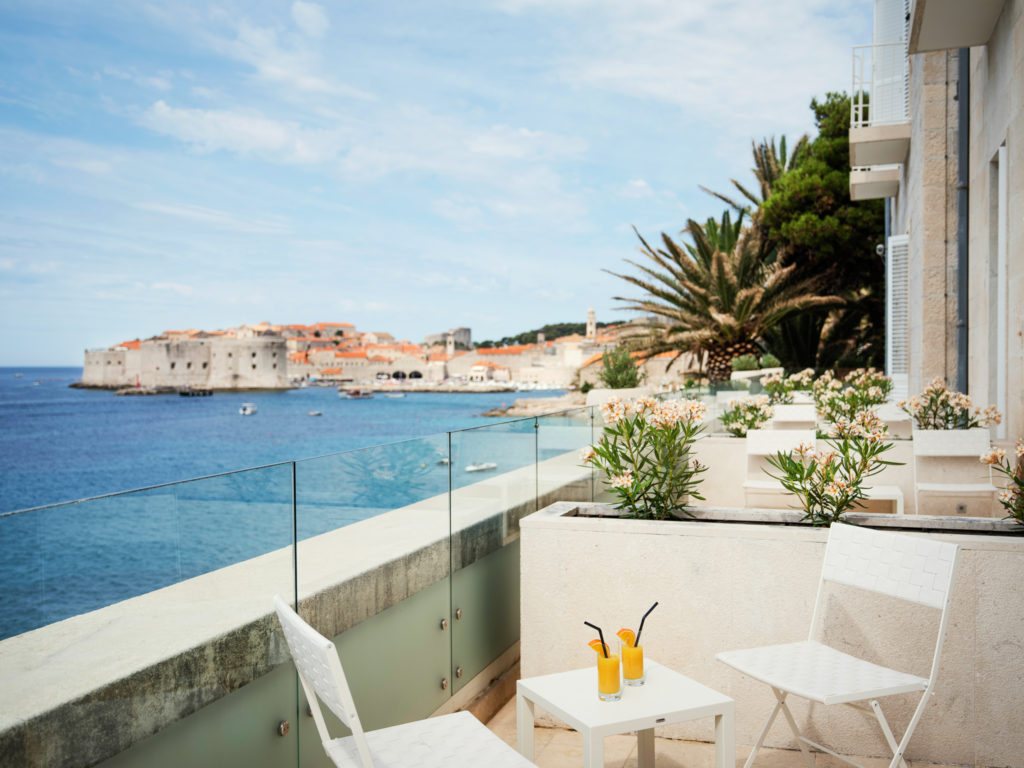
Villa Odak Deluxe Room Terrace
The sea front setting of the Excelsior entices you to stay, unhurried, gazing upon the unforgettable views.
We love having a cocktail on the hotel’s terrace, known as the Abakus Piano Bar, as the sun sets and the lights of the city and harbor begin to glow in the evening. If you prefer to stay indoors, the lounge offers another alternative for drinks and socializing, while still providing stunning sea views. If the moment is right, you may even wish take your favorite person and dance to the music of the moment.
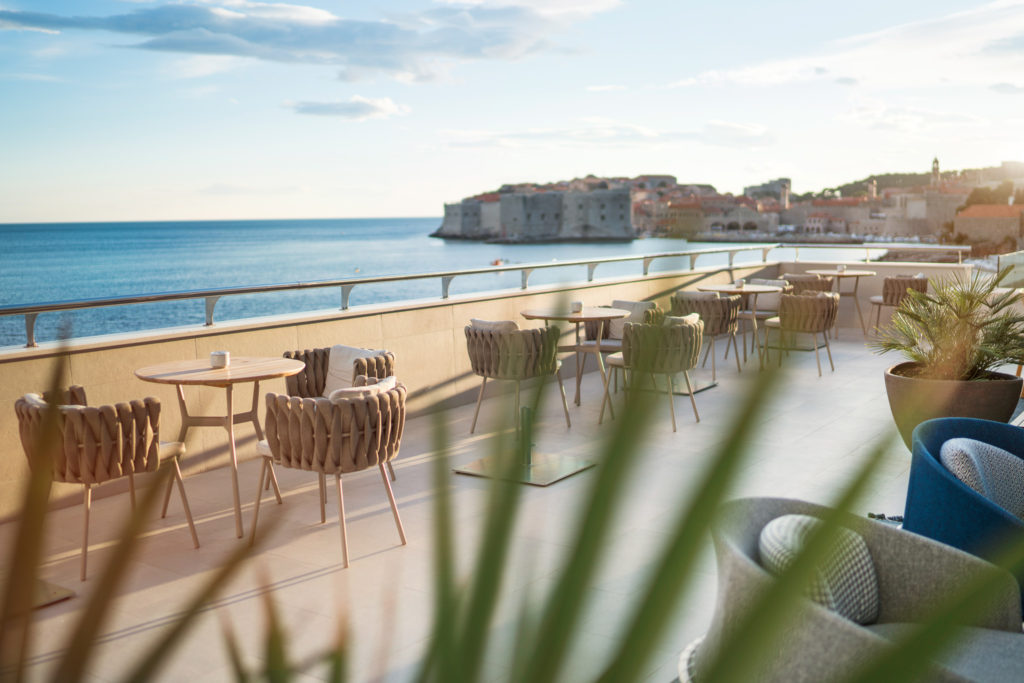
The Abakus Piano Bar Terrace
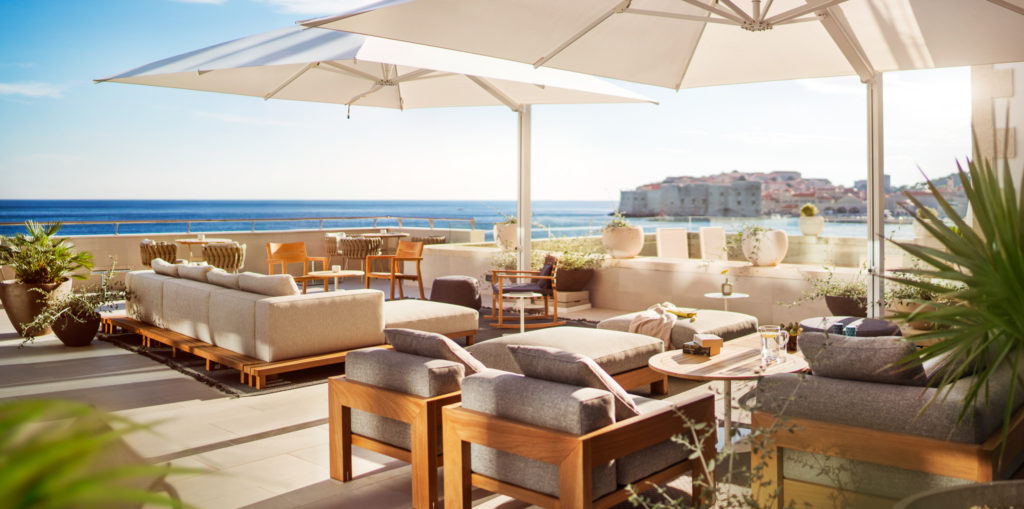
The Abakus Piano Bar Terrace
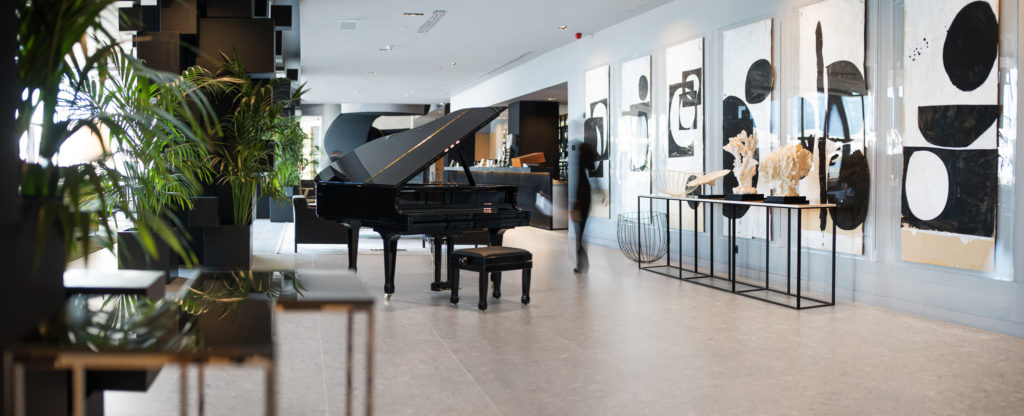
Abakus Piano Bar Interior
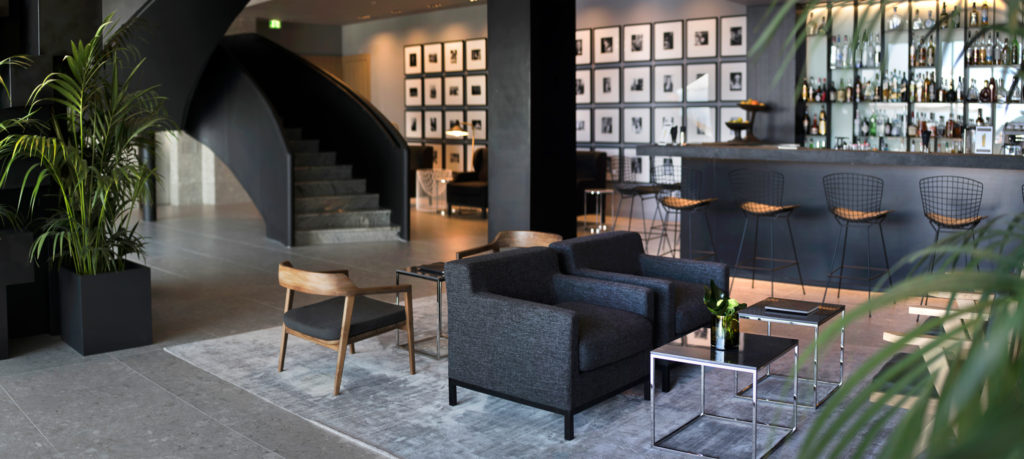
Abakus Piano Bar Interior
Refresh & Relax
Direct access to the sea invites you to dive into the fresh waters of the Adriatic from the seaside deck. An elegant indoor pool provides a second option for enjoying the water. The spa and wellness area is thoughtfully designed to care for the needs of every guest. Perhaps a post-flight treatment to revive sore muscles, and reduce fatigue? Or enjoy a relaxing steam bath to bring you fully into the moment. Their team of therapists offer a range of European treatments to leave you feeling refreshed, relaxed, and beautiful.
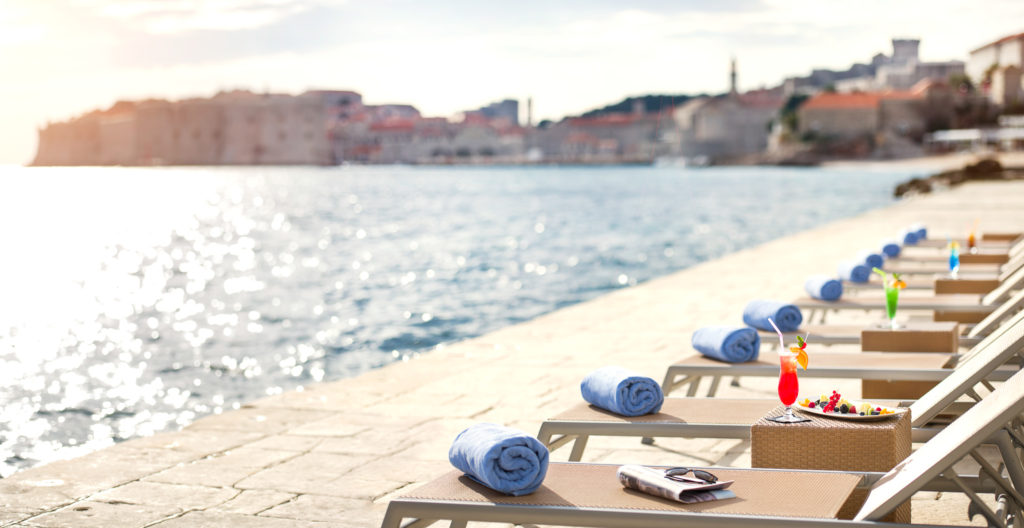
The Hotel Excelsior Seaside Beach Deck
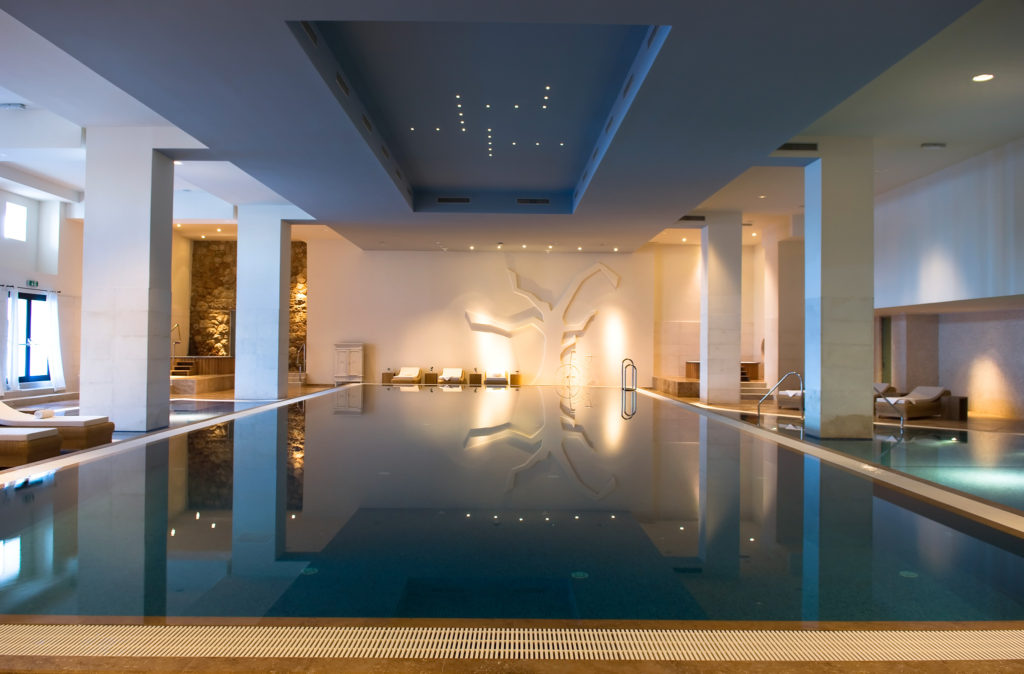
Indoor Pool and Wellness Area
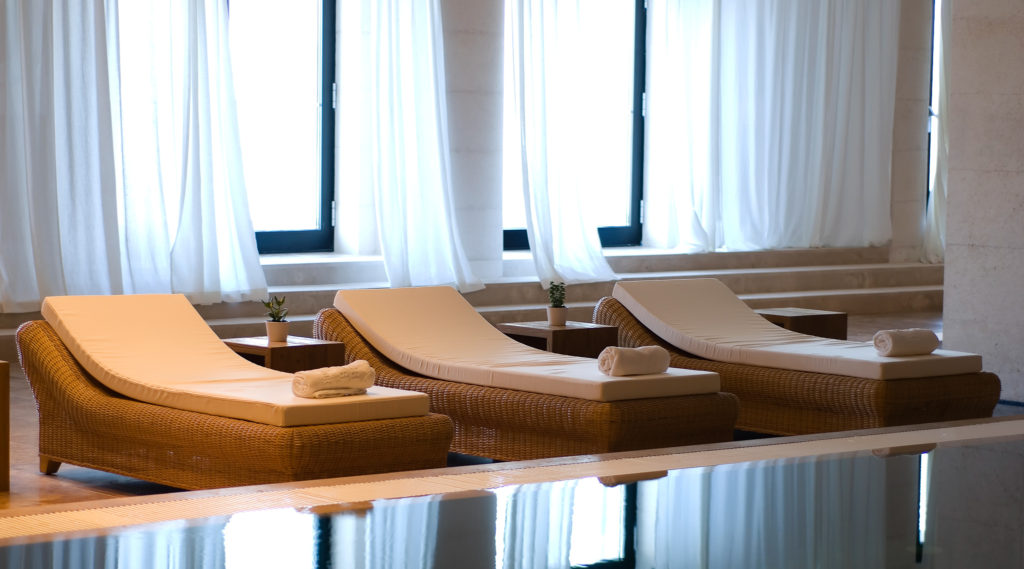
Pool and Wellness Area
Dining At The Excelsior
Each of the three restaurants at the Excelsior present panoramic views of the Adriatic, and Dubrovnik’s Old Town. From your morning Breakfast to an after dinner digestif, the comfortable elegance of the furnishings, paired with the careful attention of the staff, make every meal at the Excelsior memorable.
Dining at the Excelsior begins with a beautiful breakfast on the light-filled terrace of Restaurant Salin, serving a classic international breakfast with views of the Old Town.
We always enjoy a meal prepared with tender loving care by our friend, and dedicated Executive Chef, Mr. Peter Obad at the Restaurant Prora. Whether a lite lunch, or a feast of seafood and regional dishes infused with Mediterranean aromas, the romance of the meal, and ambience tempts you to lose yourself in the present moment. Chef Obad’s passion, and artistry is also behind the Sensus Restaurant. Here he and his talented team create modern reinterpretations of local cuisine. The menu is fitting to the sleek, contemporary design of the stunning interiors, complete with floor to ceiling windows to bask you in views of the Adriatic and the Old Town.
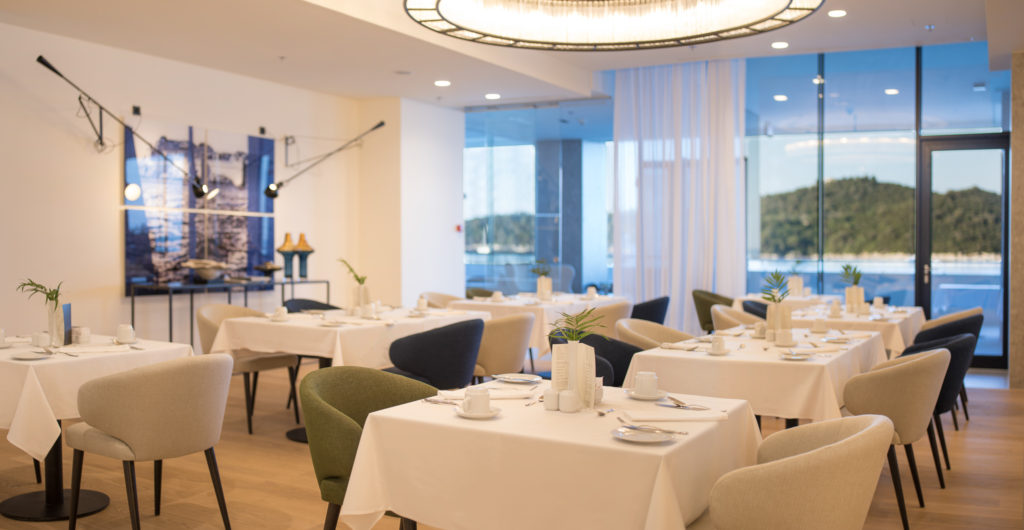
Salin Restaurant
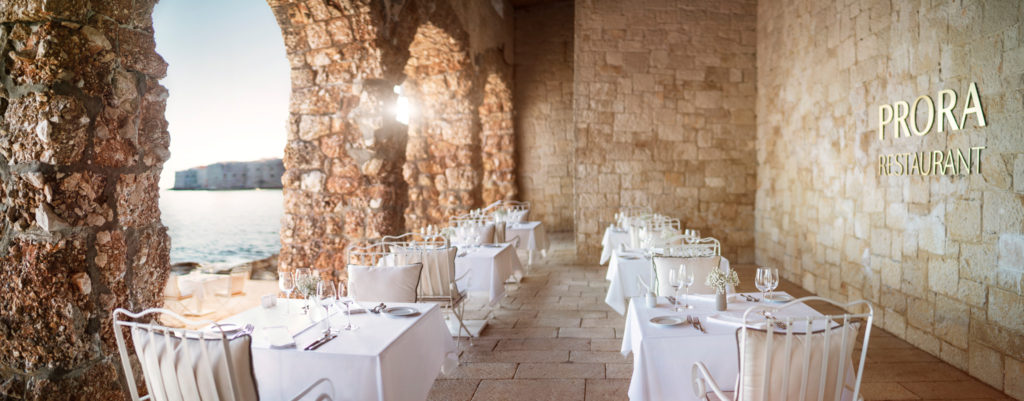
Prora Beach Restaurant
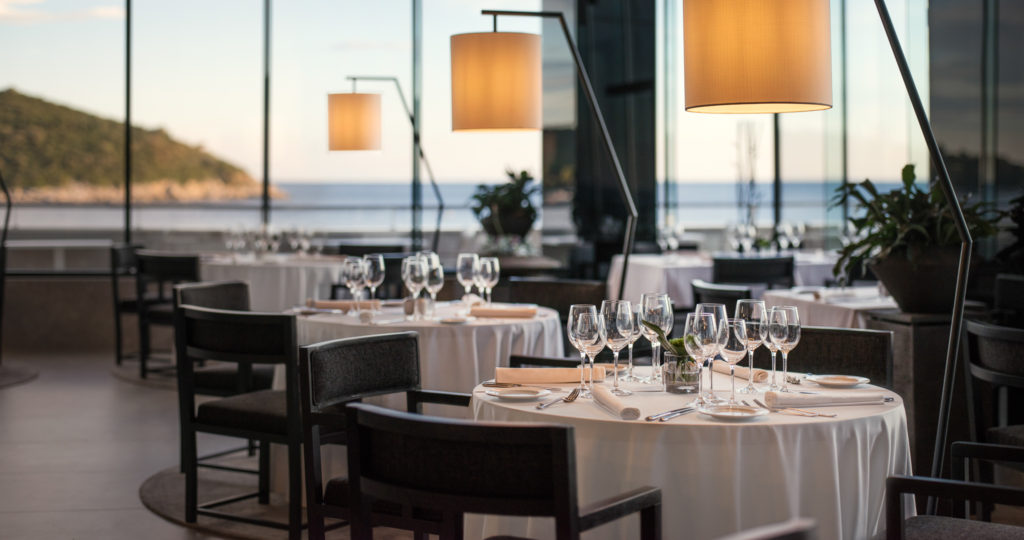
Fine Dining Sensus Restaurant
Hear what our travelers are saying…
“We loved the Excelsior in Dubrovnik. Our room with the balcony looking out on the old city was perfect”
“As I sit out on our balcony of hotel Excelsior , looking at the old town of Dubrovnik, I can only reflect on what has been an amazing vacation. Literally a trip of a lifetime”